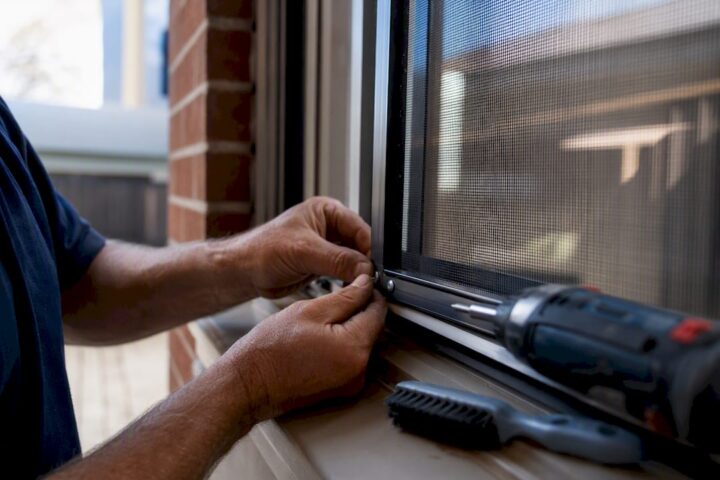
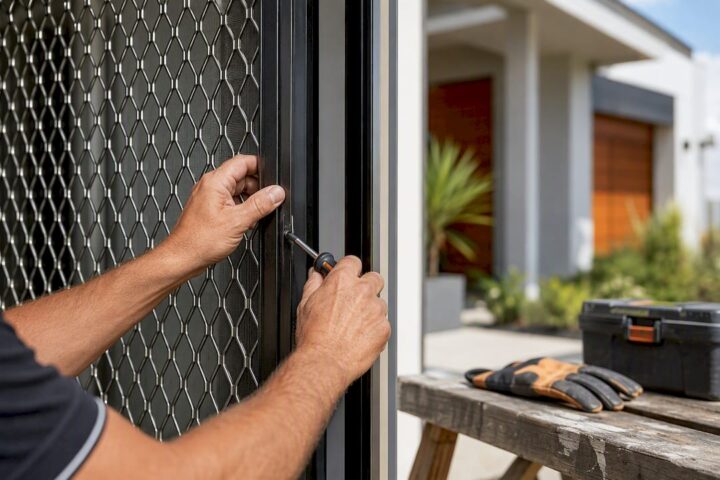
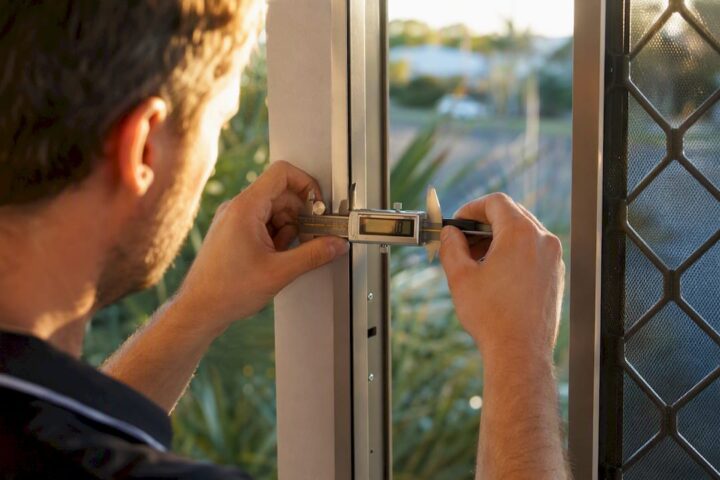
The three main security door frame types are steel, aluminium and stainless steel. Steel suits homeowners who want maximum strength and easy onsite repair. Aluminium fits coastal or budget-conscious buyers who want a lightweight, corrosion-resistant frame. Stainless steel is the premium option where salt exposure or a high-end finish matters most.
- Steel — highest strength, best for heavy-use doors and easy field repair.
- Aluminium — lighter, corrosion-resistant, budget-friendly, suits coastal homes.
- Stainless steel — marine-grade durability with an upscale finish.
Pro Tip: Frame material only tells half the story. The lock type and how the frame is fixed into your wall matter just as much for actual security as what the frame is made from.
Key Takeaways
The right security door frame depends on matching material strength, corrosion resistance and fixing method to your home’s exposure and security priorities, not on material alone.
| Point | Details |
|---|---|
| Steel for strength | Steel frames offer the highest strength and are easiest to repair onsite after damage. |
| Aluminium for coastal budget | Aluminium resists rust naturally and is typically the most budget-friendly frame option. |
| Stainless steel for premium coastal | 316 marine-grade stainless mesh suits direct salt exposure and gives an upscale finish. |
| Fixing method matters | A frame anchored poorly into masonry or timber undermines even a high-rated frame material. |
| Easterndoors covers the full process | Easterndoors measures, manufactures and installs aluminium, steel and stainless security doors with fast turnaround. |
Table of Contents
- What are security door frame types and why does the material matter?
- Steel, aluminium and stainless steel frames compared
- How security door frames are built and fixed on site
- Frame-linked security features worth checking before you buy
- Maintenance, lifespan and coastal performance
- How to choose the right frame and what to ask your installer
- Matching the right frame to your priority
- What installers see on site that homeowners often don’t
- Get a measured quote for the right frame, fast
- Sources
What are security door frame types and why does the material matter?
A security door frame does more than hold a door in its opening. It anchors the locking hardware, absorbs the force of a kick or pry attempt, and transfers that load into your home’s structure rather than letting the door pop free. Get the frame wrong and even a well-built door leaf will fail at the hinges or lock stiles.
Material choice shapes four practical things: how easy the frame is to repair after a knock, how it copes with weather and salt air, how heavy it is to install and operate, and what finishes are available. A good installer will also confirm the frame suits your chosen lock, since multi-point locking hardware needs a stile with enough depth and reinforcement to sit properly.
- Structural role: anchors locks, resists forced entry, carries load to the wall or reveal.
- Repairability: steel can usually be welded or patched onsite; aluminium and stainless typically need a replacement section.
- Finish options: powder coating, anodising and mill finishes all behave differently depending on the base metal.
- Measurement and fixing are the installer’s job, but knowing what to ask keeps quotes honest.
Steel, aluminium and stainless steel frames compared
Each material earns its place for different reasons, and the right pick depends on what you’re weighing up: strength, weight, cost, or how the frame will hold up near the coast.
Steel frames deliver the highest strength-to-cost ratio of the three. Hollow metal, or cold-rolled steel, framing is durable, relatively cheap to produce, and easy to maintain compared with more exotic materials. Steel tubular sections can achieve slim profiles while still hitting high forced-entry resistance classes, which is why some manufacturers use them on glazed security doors where a bulky frame would ruin the look. The trade-off is weight and corrosion risk: bare steel needs a proper coating system, and a scratched or chipped powder coat left untreated will eventually rust, especially near the sea.
Aluminium is the lightest of the three and doesn’t rust the way steel does, which makes it a common default for standard suburban installs. It’s typically the most budget-friendly frame material, and indicative retail pricing for a grille panel starts from a few hundred New Zealand dollars, rising to a higher amount for a fully framed unit. Extruded, thermally broken aluminium profiles can also be specified to accommodate a wide range of glazing thicknesses, which is useful if you’re fitting a security door onto a large glazed opening or a French door setup. Aluminium’s thermal break also matters if the door sits on an exterior wall exposed to direct sun, since it reduces heat transfer through the frame compared with a plain metal extrusion.
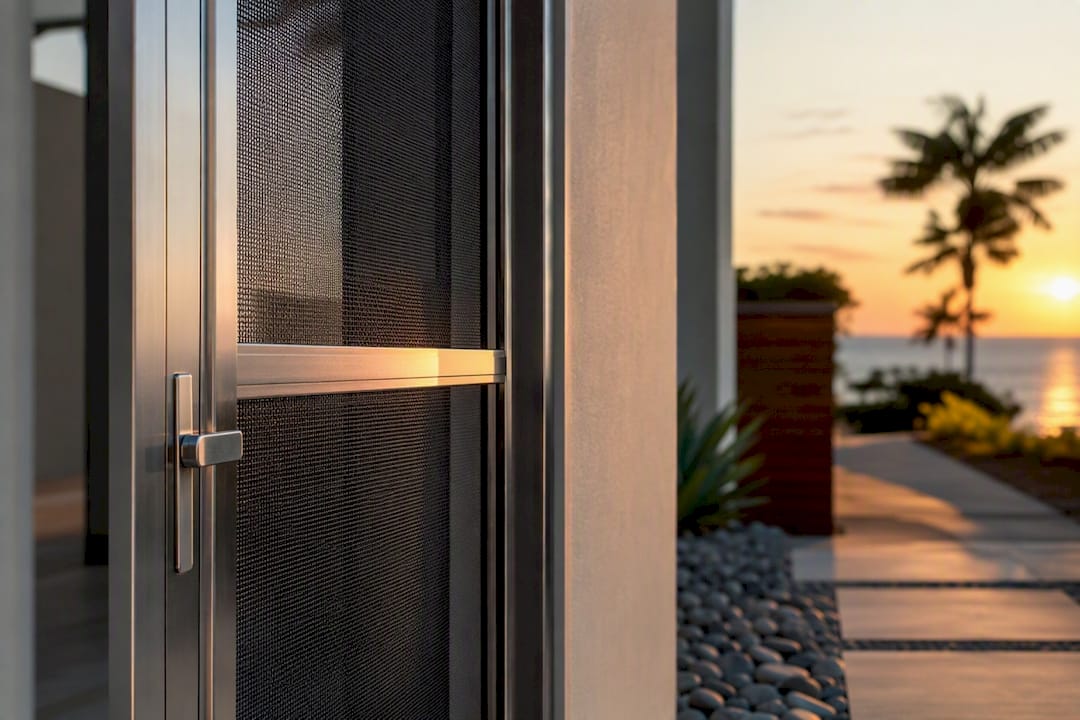
Stainless steel is the premium tier. Marine-grade 316 stainless resists salt corrosion far better than standard steel or even aluminium, which is why it’s the usual pick for homes right on the coast. It also gives a cleaner, more upscale look than a powder-coated frame, though you’ll pay a noticeable premium for it.
| Material | Strength | Weight | Coastal suitability | Typical cost position |
|---|---|---|---|---|
| Steel | Highest, easy to repair | Heaviest | Needs good coating; can corrode if damaged | Mid-range |
| Aluminium | Good, lighter gauge | Lightest | Naturally corrosion-resistant | Most budget-friendly |
| Stainless steel (316) | High, premium finish | Moderate | Best for direct salt exposure | Premium |
Powder-coating quality and hardware grade matter across every one of these materials. A cheap coating or mild-steel screws will undermine even a well-chosen frame within a couple of years near the coast.
How security door frames are built and fixed on site
Most residential security frames fall into a few recognisable types. Welded frames are assembled as one rigid unit, generally stronger and preferred for heavy-use or custom openings. Knock-down frames arrive in sections and are bolted together onsite, which suits standard sizes and faster turnaround. Steel and aluminium tubular or box-section frames are common where a slim profile and high resistance rating both matter.
Fixing method matters as much as frame type. Installers typically anchor into masonry with mechanical or chemical anchors, fix into a timber reveal with packers to keep the frame square, or line into block work depending on your wall type. Standard specifications for steel doors and frames detail exactly how these anchorage methods should be executed for a secure result.
- Welded frames: strongest, best for custom or heavy-use openings.
- Knock-down frames: faster, cost-effective for standard sizes.
- Panel-only leaves suit a sound existing frame; a full framed assembly is the safer choice if your current frame is damaged or out of square.
Pro Tip: Ask any measured quote to specify how the frame will be anchored, not just what material it’s made from. A great frame fixed with four undersized screws into plasterboard offers far less protection than a modest frame anchored properly into solid masonry.
Frame-linked security features worth checking before you buy
Some of the most important security decisions have nothing to do with the door leaf itself. They come down to how well the frame supports the lock and hardware.
- Lock compatibility. Multi-point and motorised locking systems need stiles with enough depth and internal reinforcement, particularly around the strike points.
- Rated systems. If you’re after ballistic or forced-entry rated protection, the frame, glazing and hardware all need to be tested together as one assembly, not mixed and matched.
- Glazing retention. Check how the frame holds glass or mesh infill, and whether it can accommodate a heavier security screen without flexing.
- Red flags. Thin unsupported profiles, a sparse anchor layout, or an installer unwilling to reinforce around the lock area should all give you pause.
A tested frame system is only as strong as its weakest component. Pairing a rated frame with mismatched hardware, or fixing it poorly, can undo the protection the rating was meant to guarantee.
A fine woven stainless mesh preserves your outward view better than a grille, but the mesh or grille choice matters less for actual break-in resistance than whether the frame is properly anchored and the lock is decent.
Maintenance, lifespan and coastal performance
Corrosion resistance separates these materials fastest once they’re near salt air. A powder-coated aluminium grille can perform well for years if the coating stays intact, but chips and scratches near the coast need prompt touch-ups. 316 marine-grade stainless mesh handles direct salt exposure with far less fuss, which is why it’s the standard recommendation for beachfront properties.
- Steel: inspect coating annually, touch up scratches immediately, check for rust at weld points.
- Aluminium: rinse salt residue periodically, inspect fixings and hinges twice yearly.
- Stainless steel (316): lowest maintenance near the coast, occasional wipe-down keeps the finish bright.
Quality fixings and a correct anchor layout extend life on any material, but where salt exposure is extreme, 316 stainless remains the safer long-term bet over powder-coated aluminium.
How to choose the right frame and what to ask your installer
Start with your own priorities, then let the trade-offs follow. If security is non-negotiable, steel or a tested steel tubular frame usually wins. If you’re near the coast and want low maintenance, aluminium or 316 stainless mesh takes the lead. If budget is tight, a panel-only aluminium option into a sound existing frame keeps costs down.
- Confirm whether you need panel-only or a full framed replacement.
- Ask what anchoring method suits your wall type (masonry, timber, block).
- Check lock compatibility and whether stile reinforcement is included.
- Ask about warranty length and expected lead time for manufacture.
- Get the coating or finish specified in writing, not just described verbally.
- Cost drivers: custom sizing, powder coat colour, stainless mesh premium, and full-frame versus panel-only.
- Red flags: vague measurements, no mention of anchor type, or reluctance to reinforce around the lock.
Matching the right frame to your priority
If security is the priority, steel wins on strength and repairability. If you want low maintenance near the coast, aluminium or 316 stainless mesh are the sensible picks. If you want a premium, upscale look that shrugs off salt air, stainless steel earns its price tag.
- Existing frame is solid and square → panel-only replacement.
- Frame is damaged, out of square, or you’re upgrading security level → full framed assembly.
- Next step: measure the opening, ask your installer the questions above, then request a measured quote.
What installers see on site that homeowners often don’t
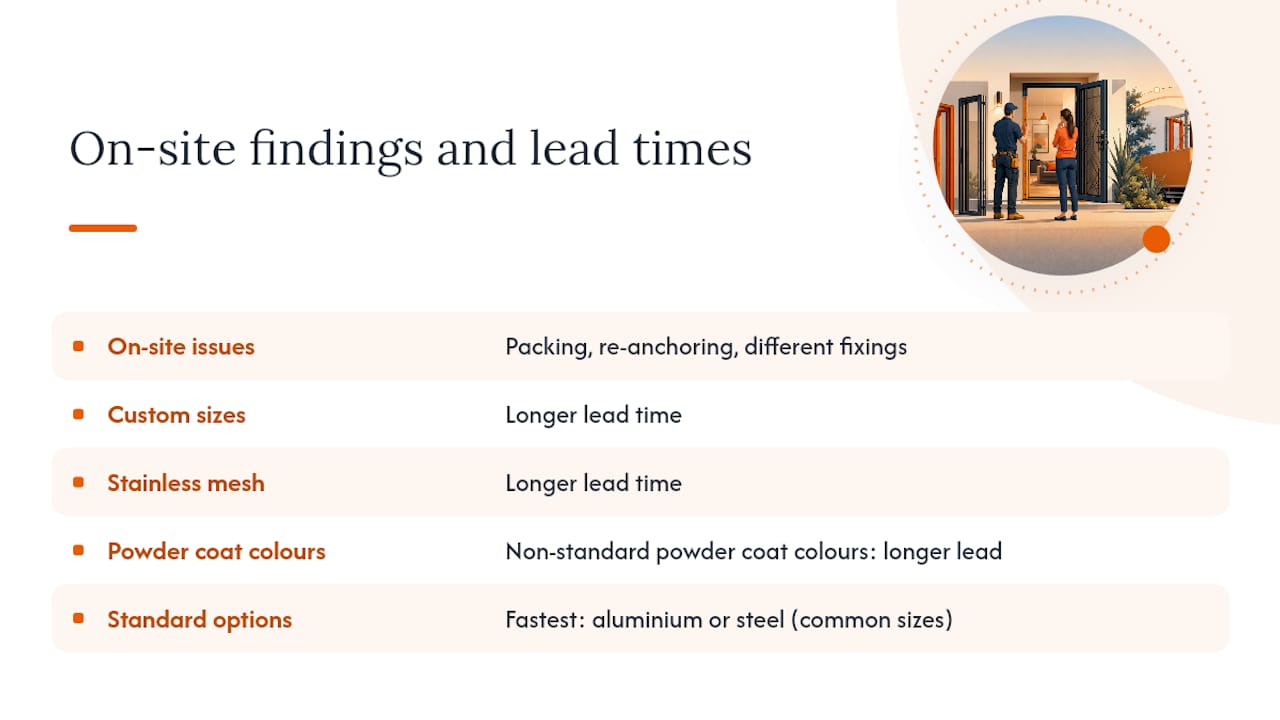
Openings are rarely as square as they look. A frame that seems like a simple swap can need packing, re-anchoring, or a different fixing method once the wall condition becomes clear onsite. That’s often why an installer recommends a different frame type to what you first pictured.
Lead times generally run longer for custom sizes, stainless mesh, and non-standard powder coat colours. Standard aluminium or steel in common sizes moves fastest through manufacturing.
Get a measured quote for the right frame, fast
Choosing between steel, aluminium and stainless steel is only half the job. The real difference in a secure, long-lasting door comes down to accurate measurement, correct anchoring and hardware that matches the frame, and that’s where a proper installer earns their fee rather than a generic supplier.
Easterndoors handles the full process for aluminium, steel and stainless security doors, from initial measurement through custom manufacture to onsite installation and aftercare. Turnaround is fast because everything is built to the exact opening rather than trimmed from stock sizes, and finishes are matched to your home rather than picked from a limited shelf range. If you’ve landed on steel for strength or stainless for a coastal property, browse the full aluminium, steel and stainless steel door range to see finish and configuration options, then book a measure to get a firm, itemised quote for your opening.
Sources
- Security Doors NZ: Grille vs Mesh, Cost and How to Choose (2026)
- Bulletproof & Bullet-Resistant Framing | Total Security Solutions
- ANSI/SDI A250.8-2023 Steel Door & Frame Specifications
- S-Spec Master Guide Specification
Recommended
- Choosing the Right Security Door For Your Home
- French door security: the complete Australian guide | Eastern Security Doors
- Should You Install a New Security Door or Powder Coat an Existing One? | Eastern Security Doors
- Front door security: a complete guide for Australian homes | Eastern Security Doors