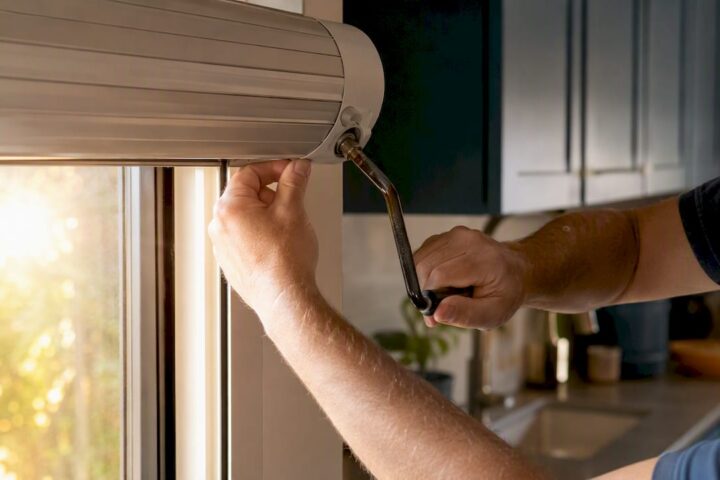
Yes, roller shutters can be bushfire-rated. Correctly certified shutters are available for BAL 12.5 through BAL 40, and specialised steel designs with AS 1530.8.2 test reports can support BAL-FZ claims. The BAL rating system links each risk level to a specific radiant heat threshold. Shutters must be tested and documented against the relevant Australian Standard to count as compliant protection for that level.
Before you accept any quote, confirm these items:
- AS test standard referenced: AS 1530.8.1 (radiant heat and ember attack) or AS 1530.8.2 (direct flame impingement) — the product must specify which
- Independent test report number: a CSIRO or accredited laboratory report number tied to the exact slat profile and span being quoted
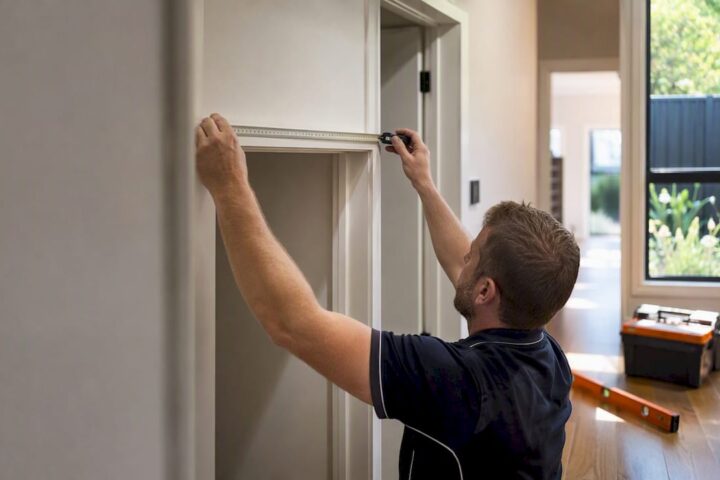
- Builder and installer credentials: licensed installer with on-site measurement records and a compliance pack for council and insurer sign-off
BAL bands and what shutters typically address:
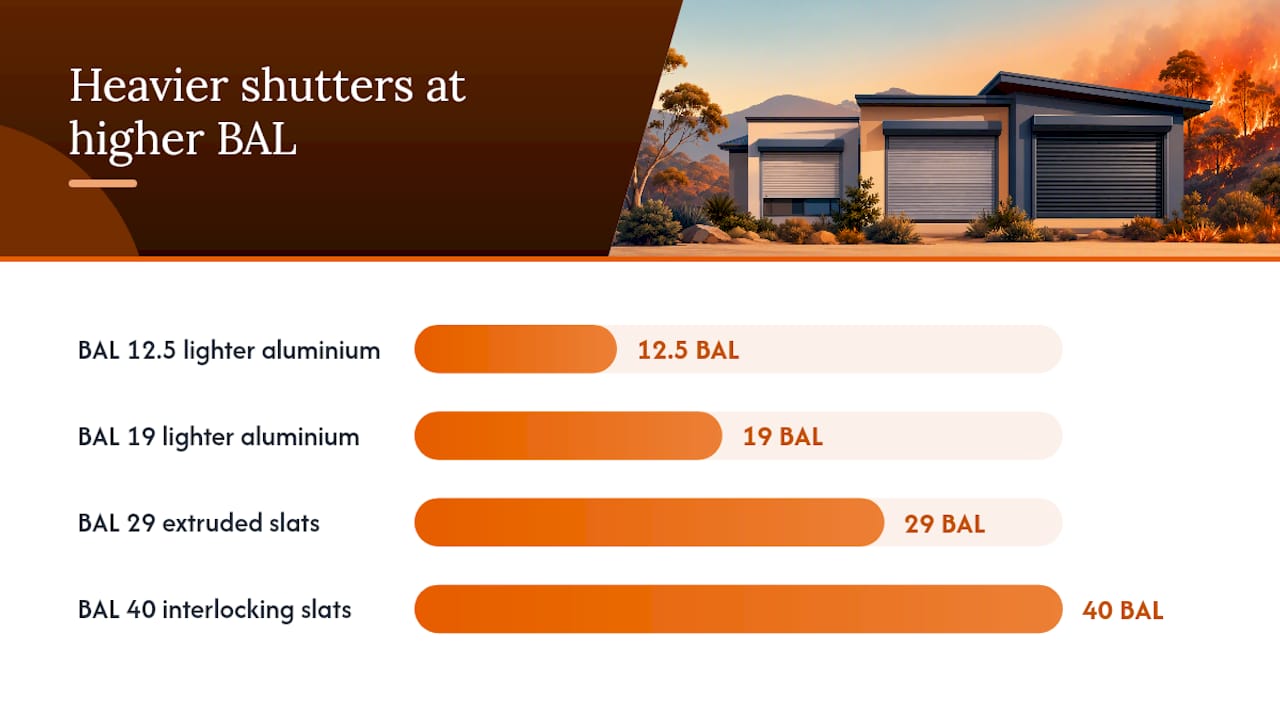
- BAL 12.5 and BAL 19: lighter aluminium shutters with some perforation permitted; tested under AS 1530.8.1 for ember and moderate radiant heat
- BAL 29: thicker extruded slats, reduced or zero perforation, stronger side guides; AS 1530.8.1 full-scale test evidence required
- BAL 40: heavy-gauge interlocking slats, robust tracks and locks; AS 1530.8.1 full-scale test evidence required; council sign-off is standard practice
- BAL-FZ: steel or specialised alloy construction, mineral-wool cores, zero perforation; AS 1530.8.2 direct flame test reports required; not all suppliers can supply this level
Pro Tip: Ask every supplier for the test report number before signing a contract. A credible BAL-rated product will always have a specific CSIRO or accredited lab report number you can reference. If a supplier cannot provide one, the product is not genuinely certified.
Key takeaways
Roller shutters can be genuinely bushfire-rated from BAL 12.5 through BAL-FZ, but only when the product carries a specific AS 1530.8.1 or AS 1530.8.2 test report that matches the installed configuration, and the installation is completed by a licensed installer with a full compliance pack.
| Point | Details |
|---|---|
| Verify the test report | Ask for the CSIRO or accredited lab report number and confirm it covers your opening’s exact span and slat profile. |
| Match shutter to site BAL | BAL 29 and above require heavier slats, zero perforation, and full-scale AS 1530.8.1 test evidence; BAL-FZ requires AS 1530.8.2. |
| Check installer credentials | A licensed installer must provide on-site measurement records and a compliance pack for council and insurer sign-off. |
| Budget for motor and installation | BAL 40 shutters typically require a 240 V tubular motor; include this in your budget alongside the curtain cost. |
| Combine with site ember management | Shutters protect openings; ember-resistant vents, upgraded glazing, and cleared vegetation address the rest of the property. |
| Easterndoors compliance pack | Easterndoors supplies BAL-matched shutters with test reports, specification sheets, and installer sign-off ready for council and insurer use. |
Table of Contents
- What is a BAL and which Australian standards apply to bushfire-rated shutters?
- How roller shutters protect openings in a bushfire
- Which BAL ratings can roller shutters meet and what specifications are typical?
- How do you verify a shutter is genuinely bushfire-rated?
- Material and design choices that affect bushfire performance
- What do bushfire-rated shutters cost and how does compliance affect approvals?
- When are shutters alone not enough?
- How Easterndoors can supply and install compliant bushfire-rated shutters
- Why certified shutters are worth prioritising in bushfire-prone areas
- Easterndoors: BAL-matched shutters with full compliance documentation
- Sources
What is a BAL and which Australian standards apply to bushfire-rated shutters?
A Bushfire Attack Level (BAL) is a measure of the severity of a building’s potential exposure to ember attack, radiant heat, and direct flame contact during a bushfire. Under AS 3959, a site assessment assigns one of six BAL categories to a property based on vegetation type, slope, and distance from that vegetation. Each category corresponds to a radiant heat exposure level measured in kilowatts per square metre (kW/m²).
The BAL categories in plain terms:
- BAL 12.5: low risk; up to 12.5 kW/m² radiant heat; ember attack is the primary concern
- BAL 19: moderate risk; up to 19 kW/m²; increased ember attack and some radiant heat
- BAL 29: high risk; up to 29 kW/m²; significant radiant heat and ember attack
- BAL 40: very high risk; up to 40 kW/m²; severe radiant heat and ember attack; flame contact possible
- BAL-FZ (Flame Zone): extreme risk; radiant heat exceeds 40 kW/m²; direct flame contact and burning debris are likely
The two key test standards for roller shutters are AS 1530.8.1 and AS 1530.8.2. AS 1530.8.1 covers radiant heat and ember attack testing, which is the relevant test for BAL 12.5 through BAL 40. AS 1530.8.2 covers direct flame impingement and is required for any product claiming BAL-FZ performance. These are not interchangeable. A shutter with only an AS 1530.8.1 report cannot be used to satisfy a BAL-FZ requirement, regardless of how it is marketed.
European fire shutter classifications such as E30 and E60 measure containment duration in minutes under EN test conditions. These are not equivalent to Australian BAL designations and carry no weight with Australian councils or certifiers. Always confirm that test reports reference AS standards, not European equivalents.
How roller shutters protect openings in a bushfire
Roller shutters defend openings through three overlapping mechanisms. Understanding each one also clarifies where the limits are.
The three protection mechanisms:
- Physical ember barrier: a closed shutter prevents burning embers from reaching glazing, timber frames, and interior materials. Ember ingress through gaps around windows and doors is a leading cause of house ignition during bushfires
- Radiant heat reduction: the shutter curtain absorbs and reflects radiant heat before it reaches the glass. This delays or prevents glass failure, which is significant because a broken window creates an immediate ember entry point
- Delayed flame impingement: at BAL 40 and BAL-FZ levels, heavier slat profiles and interlocking designs slow the rate at which direct flame contacts the building fabric, buying time for the fire front to pass
A fire-rated roller shutter reduces the likelihood of ember ingress and delays heat transfer to glazing, but no shutter is guaranteed to be fireproof in all conditions. Shutters are tested to specific radiant heat levels and durations; a fire that burns longer or hotter than the test parameters can still cause failure.
The practical implication is straightforward. A shutter tested to BAL 40 under AS 1530.8.1 has demonstrated performance at up to 40 kW/m² for the test duration. It is not a structural firewall and does not protect the roof, eaves, or adjacent cladding. Glazing behind the shutter still matters — if the shutter fails or is not deployed, single-pane glass offers minimal resistance to radiant heat at BAL 29 and above.
Pro Tip: Deploy shutters before you leave. A shutter that is not closed when the fire front arrives provides no protection. If your property is in a BAL 29 or higher zone, consider motorised shutters with a manual override so you can close them quickly under stress.
Which BAL ratings can roller shutters meet and what specifications are typical?
The specifications required for a shutter to meet a given BAL increase significantly as the risk level rises. The table below summarises the typical construction requirements at each level.
BAL-A40 shutters with CSIRO testing are available with specified maximum spans, curtain weights, and slat specifications. Installers typically specify minimum slat gauges, track depths, and motor types for these levels, and maximum width and height limits apply because curtain weight increases with size.
What to confirm on any BAL 29, BAL 40, or BAL-FZ quote:
- Slat profile designation and gauge (thickness in millimetres)
- Maximum span covered by the test report (width and height)
- Side guide depth and fixing method
- Bottom rail seal type and material
- Motor rating and whether a manual override is included
- Whether the test report covers the exact configuration being quoted, not just a similar one
A shutter tested at one span and slat gauge does not automatically certify a larger or differently configured installation. The test report scope must match the actual opening dimensions and product configuration.
How do you verify a shutter is genuinely bushfire-rated?
Not all shutters share the same fire-safety rating, and a marketed BAL badge must be backed by test evidence to prove performance. The verification process is straightforward when you know what to ask for.
Step-by-step verification checklist:
- Request the test report number. Ask for the CSIRO or accredited laboratory report number, the test date, and the testing organisation. Products referencing CSIRO Report FSZ1379, for example, have a specific, traceable document behind the claim.
- Check the test scope. Confirm the report covers the slat profile, span, and fixing configuration being quoted for your opening. A report for a 2,400 mm wide shutter does not certify a 3,600 mm installation.
- Confirm the standard referenced. AS 1530.8.1 for BAL 12.5–40; AS 1530.8.2 for BAL-FZ. The report must name the standard and the test conditions.
- Verify installer licensing. In most states, installation of BAL-rated products on a building subject to AS 3959 requires a licensed builder or registered installer. Ask for their licence number.
- Request the compliance pack. This typically includes the test report, product specification sheet, installation instructions, and a Form 16 or equivalent statutory declaration that the installation complies with the approved documents.
- Confirm council and insurer acceptance. Some councils require the compliance pack to be submitted with development drawings before installation. Check with your building certifier before ordering.
Pro Tip: Keep a physical and digital copy of the compliance pack after installation. Insurers handling bushfire claims routinely ask for evidence that openings met the site BAL at the time of construction. A missing test report can complicate a claim significantly.
What councils and certifiers typically want to see:
- Product test report number and scope
- Specification sheet showing the product matches the tested configuration
- Installer’s licence details and on-site measurement records
- Statutory compliance declaration (Form 16 or state equivalent)
- Confirmation that the product is installed per the manufacturer’s installation instructions
Material and design choices that affect bushfire performance
The choice between aluminium and steel is the most consequential material decision for bushfire-rated shutters, but slat profile, seals, and drive system all affect long-term performance.
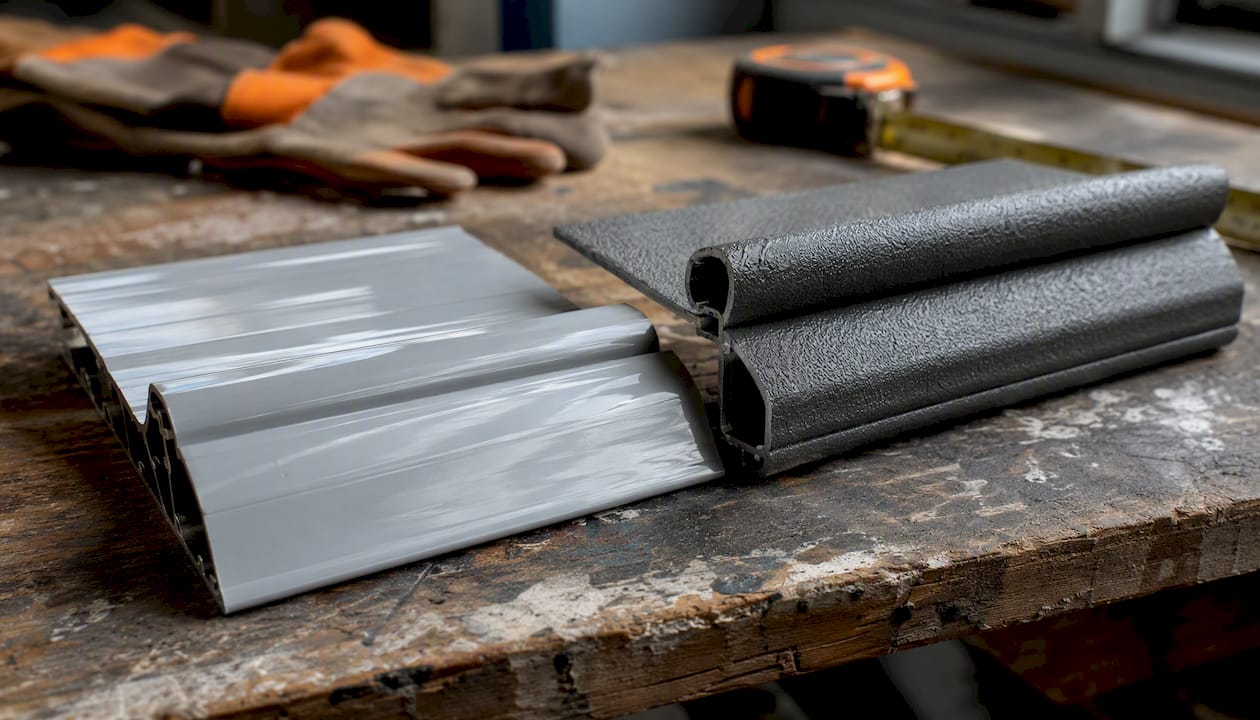
Aluminium vs steel: key trade-offs
| Property | Aluminium | Steel |
|---|---|---|
| Weight | Lighter; easier to handle and motor | Heavier; requires larger motor |
| Corrosion resistance | High; suited to coastal and humid areas | Lower; requires coating and maintenance |
| Melting point | Lower | Higher |
| BAL suitability | BAL 12.5 through BAL 40 | BAL 40 and BAL-FZ |
| Cost | Generally lower | Generally higher |
For BAL 40 and below, quality extruded aluminium with interlocking profiles performs well and is the most common choice in Australian installations. Steel becomes necessary at BAL-FZ, where direct flame contact is a design condition. Coastal properties in bushfire zones present a dual challenge: steel’s corrosion vulnerability means aluminium is often preferred unless the BAL-FZ requirement makes steel mandatory.
Design details that affect performance:
- Slat gauge: thicker slats resist deformation under radiant heat; minimum gauges are specified in test reports
- Interlocking profiles: prevent gaps forming between slats as the curtain expands under heat
- Perforation: any perforation reduces ember and radiant heat resistance; BAL 40 and above require zero perforation
- Bottom rail seals: brush or rubber seals at the bottom rail and side guides prevent ember ingress at the edges
- Insulated rails: some designs include mineral-wool or similar insulation in the slat core to reduce heat transmission
Drive system and maintenance:
Heavier curtains at BAL 40 and above typically require a 240 V tubular motor. Manual operation of a heavy curtain under stress is impractical, and a manual override remains important for power-failure scenarios. Smart roller shutter controls can automate closure on a schedule or via remote trigger, which is useful for properties that may be unoccupied during a fire event.
- Annual service: check motor amperage draw, spring tension, and track alignment
- Seal inspection: inspect bottom rail and side guide seals for cracking or compression set; replace if degraded
- Track cleaning: remove debris from tracks and guides; bushfire ash and grit accelerate wear
- Manual override test: operate the manual override annually to confirm it functions under load
- Slat inspection: check for dents, corrosion, or deformation that could compromise the interlocking profile
Consistent maintenance preserves the tested performance of the shutter. A degraded seal or misaligned track can create gaps that undermine the ember barrier the product was tested to provide. For more on roller shutter maintenance and insulation performance, the Easterndoors homeowner guide covers service intervals in detail.
What do bushfire-rated shutters cost and how does compliance affect approvals?
Cost varies with BAL level, opening size, and whether motorisation is required. The figures below are indicative ranges for the Australian market; actual pricing depends on supplier, location, and site conditions.
For detailed budgeting guidance, the Easterndoors roller shutter cost guide covers cost drivers and installation add-ons for the Australian market.
Insurance and council implications of non-compliant openings:
- Councils in BAL 29 and above zones typically require compliant openings as a condition of development approval. A non-compliant opening can prevent an occupancy certificate from being issued
- Insurers handling bushfire claims may reduce or deny payouts if openings did not meet the site BAL at the time of construction. Documentation is the homeowner’s protection
- Retrofitting compliant shutters after construction is possible but usually more expensive than specifying them during the build
Approval steps checklist:
- Obtain a site BAL assessment from a qualified assessor under AS 3959
- Include the product test report number and specification in development drawings
- Submit drawings for council or private certifier approval before ordering
- Arrange licensed installation and obtain the compliance pack on completion
- Lodge the compliance pack with the certifier for inclusion in the occupancy certificate file
- Retain copies for your insurer and future property sale documentation
When are shutters alone not enough?
Roller shutters protect openings, but a home in a BAL 29 or higher zone has multiple exposure pathways that shutters cannot address on their own.
Situations where shutters provide limited protection:
- Roofline and eave flame contact: shutters cover windows and doors, not the roof structure. Ember entry through roof vents, gaps in eaves, and damaged roof tiles remains a significant ignition risk
- Adjacent unprotected glazing: a large uninterrupted glazed area without a shutter, or a shutter that is not deployed, creates a radiant heat and ember entry point that can compromise the whole opening strategy
- Vegetation proximity: shutters reduce the effect of radiant heat from distant fire fronts, but burning vegetation in direct contact with the building fabric can exceed any shutter’s tested performance
Complementary measures that work alongside shutters:
- Upgraded glazing: toughened or laminated glass behind the shutter provides a secondary barrier if the shutter is damaged or not deployed. Window security screens can also contribute to ember management at openings
- Ember-resistant vents: roof and subfloor vents should be fitted with ember guards rated to AS 3959 requirements for the site BAL
- Ember management around openings: clear combustible materials from within several metres of the building; ember accumulation against walls and under decks is a common ignition pathway
- Gutters and roof: metal gutters with leaf guards and a well-maintained roof reduce ember accumulation and ignition risk from above
Pro Tip: Check your state fire authority’s website — the NSW RFS and CFA publish free property assessment checklists that go beyond openings and cover roof, gutters, decks, and vegetation management. A shutter that meets BAL 40 is most effective when the rest of the property is also prepared.
How Easterndoors can supply and install compliant bushfire-rated shutters
Easterndoors provides on-site consultations that include a cross-check of your site BAL against the shutter specifications being considered, certified product options matched to your BAL level, and a compliance pack suitable for inclusion with development drawings and insurer records.
What the service covers:
- On-site measurement and BAL cross-check against AS 3959 requirements
- Certified product options for BAL 12.5 through BAL 40, with test report numbers available on request
- Licensed installation with on-site records and a compliance pack including test report, specification sheet, and installer sign-off
- Fast local turnaround with warranty and ongoing service options
What to prepare before making contact:
- Your site BAL assessment (from your building certifier or a qualified assessor)
- Opening dimensions (width and height for each opening requiring protection)
- Preferred operation: manual or motorised
- Project timeline and whether council approval is still pending
Pro Tip: If you do not yet have a formal BAL assessment, your local council or a registered building surveyor can advise on the process. Having the BAL confirmed before requesting quotes means suppliers can match products to the correct test standard from the outset, avoiding delays in the approval process.
Why certified shutters are worth prioritising in bushfire-prone areas
The gap between a shutter that looks right and one that is genuinely certified is not always visible in the product itself. It shows up in the paperwork, and specifically in whether a test report number exists, covers the right configuration, and references the correct Australian Standard.
Homeowners who specify certified, BAL-matched shutters consistently report smoother council approvals and fewer complications with insurers after bushfire events. The compliance pack is not bureaucratic overhead; it is the evidence that the product was selected and installed for the specific risk level the site faces. That evidence matters most when a claim is being assessed after a fire, not before.
Combining certified shutters with upgraded glazing, ember-resistant vents, and cleared vegetation around the building perimeter gives the best practical outcome. No single product eliminates bushfire risk, but a correctly specified and installed shutter, backed by a real test report, addresses one of the most significant ignition pathways in a measurable and documentable way.
Easterndoors: BAL-matched shutters with full compliance documentation
Easterndoors supplies and installs BAL-matched roller shutters with the compliance documentation councils and insurers require. Every BAL-rated job includes the test report number, product specification, and installer sign-off in a compliance pack you can lodge with your certifier and keep on file for your insurer.
The practical difference is straightforward: you get a shutter specified to your site BAL, installed by a licensed team, with paperwork ready for your development approval and occupancy certificate. No chasing documents after the fact.
To get started, request a measure and quote through the Easterndoors product range. Bring your site BAL assessment, opening dimensions, and preferred operation type, and the team will match you to the right certified product and prepare a compliance pack from day one.
Sources
The following documents and organisations are the authoritative references for verifying bushfire-rated shutter products and approvals in Australia.
Key standards and testing documents:
- Bushfire Rated Roller Shutter: BAL Ratings, Costs & Guide
- Shutter Fire Ratings Explained | Titan Shutters
State fire authority guidance:
What a compliance pack should contain:
Recommended
- Roller shutters insulation: the Australian homeowner’s guide | Eastern Security Doors
- Solar roller shutters: the Australian homeowner’s guide | Eastern Security Doors
- Smart roller shutters: security and energy savings for homeowners | Eastern Security Doors
- Roller shutter cost in Australia: 2026 price guide | Eastern Security Doors