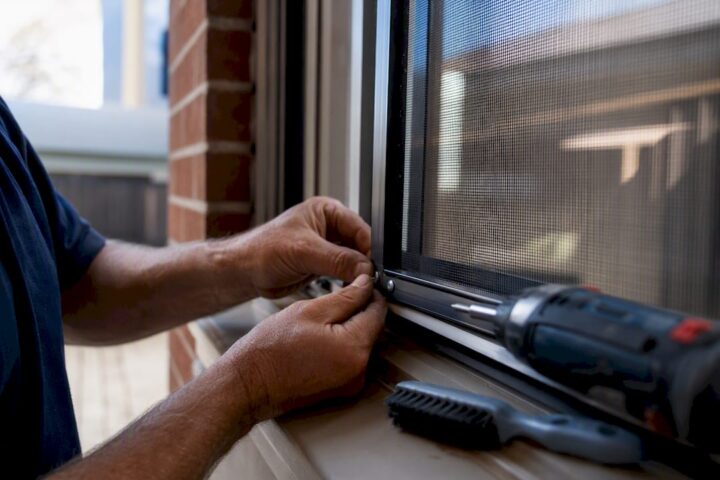
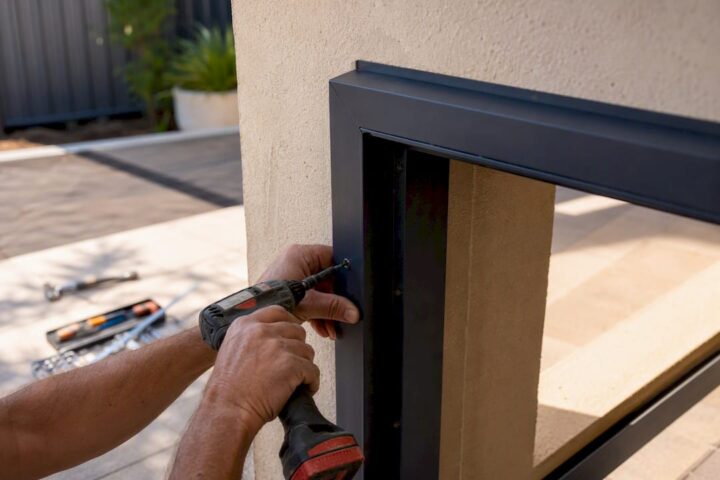
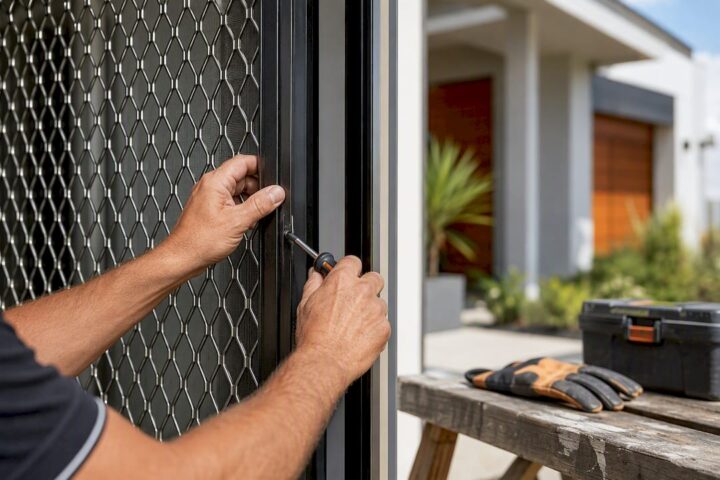
The strongest security screens are properly constructed steel doors and well‑fitted stainless‑steel mesh systems tested against a named Australian Standard. Basic aluminium flyscreen‑style grilles look similar but typically stop insects, not intruders. A strength rating or grade tells you how a screen performed against specific attacks, including impact, cutting, prying, and repeated force. Before you buy anything, ask for a certified test report against AS 5039.1 or AS 5040 covering your exact door configuration.
- Steel doors and stainless mesh consistently rate highest for forced‑entry resistance.
- Aluminium grilles often provide little more than fly‑screen protection.
- A rating is only valid for the configuration actually tested, not the product name alone.
Quick fact: the AS 5039 standard explicitly states that unsuitable fixings or installation into a weak frame can seriously undermine a screen’s resistance to forced entry, no matter how the mesh itself performed in a lab.
Key Takeaways
Steel doors and mechanically fixed stainless‑steel mesh deliver the strongest tested resistance, but only when installed into a frame assessed for that exact configuration.
| Point | Details |
|---|---|
| Check the grade name | Confirm “Security” grade specifically, since Safety and Barrier grades aren’t tested for forced entry. |
| Request the matching report | Insist the lab report covers your exact door size, mesh, and frame configuration. |
| Know the standards | AS 5039.1:2023 and AS 5040 cover product testing and installation; AS 3555.1 applies to higher-security needs. |
| Prioritise attachment method | Mechanical clamp fixings outperform spline or adhesive systems under repeated force. |
| Get a professional frame assessment | Easterndoors assesses existing frames and matches tested steel or stainless mesh systems to each entry point’s risk. |
Table of Contents
- Security screen grades and how to spot them
- What standards and test programmes actually define strength?
- How are security screens actually tested?
- How material and construction choices affect strength
- How do you pick the right strength rating for your home?
- What red flags should you watch for in strength claims?
- What should you ask suppliers and what documents should you request?
- Security screen strength ratings: what homeowners must check
- Get a security screen assessed for your actual frame, not just your budget
- Frequently asked questions
- Sources
Security screen grades and how to spot them
Suppliers generally use three grade labels: Safety, Barrier, and Security. Each implies a different level of testing and a different job the product is meant to do.
Safety grade products are designed mainly to stop falls, particularly from upper‑storey windows. They’re not built or tested for forced‑entry resistance, and treating one as a security product is a common and costly mistake.
Barrier grade sits in the middle. These products create a physical obstacle but haven’t necessarily been through the full battery of impact and jemmy tests that a security‑rated product requires.
Security grade is the one that matters for home protection. A genuine security‑grade product has been tested against a named standard, usually AS 5039.1:2023, covering impact, jemmy, pull, and knife shear resistance.
The problem is that all three can look identical from the footpath. Here’s how to tell them apart on-site:
- Ask for the specific grade name in writing, not just “security screen.”
- Check for a test certificate number you can independently verify.
- Inspect welds at the corners. Continuous welds generally outperform spot welds.
- Look at the fastener type. Screws into a mechanical frame beat spline or adhesive fixing every time.
Pro Tip: Run your fingers along the mesh edge where it meets the frame. If you can flex it away from the frame with light hand pressure, it’s unlikely to have passed a genuine jemmy test.
What standards and test programmes actually define strength?
Australia has a specific standard for this exact product category, and it’s worth knowing its name before you talk to any supplier.
AS 5039.1:2023 covers classification and performance requirements for security door and window screens, including hinged, sliding, and fixed configurations. It’s the standard most Australian‑made security screens are tested against, and it specifies test categories including impact, jemmy, pull, and knife shear.
AS 5040 covers installation requirements, which matters just as much as the product test. A screen can pass every lab test and still fail in practice if it’s fitted incorrectly. For homeowners after commercial‑grade resistance, particularly on ground‑floor properties in higher‑risk areas, the earlier AS 5039 foreword points toward AS 3555.1, which covers intruder‑resistant panels with tougher classification bands than typical residential screens.
You’ll also come across branded test references like RC2 (a European resistance classification) and SL200 (a repetitive‑impact specification). These aren’t Australian Standards, but reputable suppliers sometimes cite them alongside local testing as extra evidence.
| Standard/test | What it measures | What to request from suppliers |
|---|---|---|
| AS 5039.1:2023 | Impact, jemmy, pull, knife shear on the screen product | A certificate matching your exact door size and frame |
| AS 5040 | Installation and fixing requirements | Written confirmation the installer follows this standard |
| AS 3555.1 | Higher-grade intruder-resistant panels | Only relevant for elevated security needs |
| RC2 / SL200 | Branded repetitive-impact and resistance classes | Supplementary evidence, not a substitute for AS 5039.1 |
Pro Tip: A genuine lab report header should show the testing lab’s accreditation number, the exact test date, and the configuration tested. If any of those three details are missing, ask why.
How are security screens actually tested?
Lab tests simulate specific ways an intruder might try to get through a screen. Knowing what each one measures helps you read a supplier’s claims properly rather than taking the word “tested” at face value.
- Impact test: a weighted object is dropped or swung at the mesh to simulate a kick or shoulder strike.
- Repetitive-impact test: the same force is applied multiple times in sequence, closer to how a real break-in attempt actually unfolds.
- Jemmy or static stress test: a lever is applied at multiple points around the frame to simulate prying with a crowbar.
- Knife shear test: a blade is drawn across the mesh under pressure to check whether it can be cut through.
- Pull/probe test: checks whether the mesh can be pulled away from its frame fixings.
A single impact test tells you almost nothing about how a screen holds up under a determined, repeated attempt. That’s why repetitive-impact testing carries more weight in a genuine strength claim than a one-off pass. A door that survives one strike but fails on the third or fourth blow hasn’t really passed anything meaningful.
Pro Tip: If a screen was lab-tested in a purpose‑built steel test rig but you’re installing it into an old timber doorframe, the test result may not apply to your situation at all. Ask the installer to assess your actual frame, not just the product.
How material and construction choices affect strength
Material choice does most of the heavy lifting when it comes to real-world resistance. Industry consensus, including CHOICE’s own buying guide, identifies properly constructed steel doors as the strongest option, with well‑made stainless‑steel mesh close behind and offering the advantage of maintaining clear outward visibility.
- Steel doors: highest strength, heaviest, best for front entries and high‑risk points.
- Premium aluminium sheet: can occasionally approach mesh performance, but only in heavier‑gauge products.
- Basic aluminium grilles: typically offer little beyond insect protection, a point worth understanding before comparing aluminium security door options.
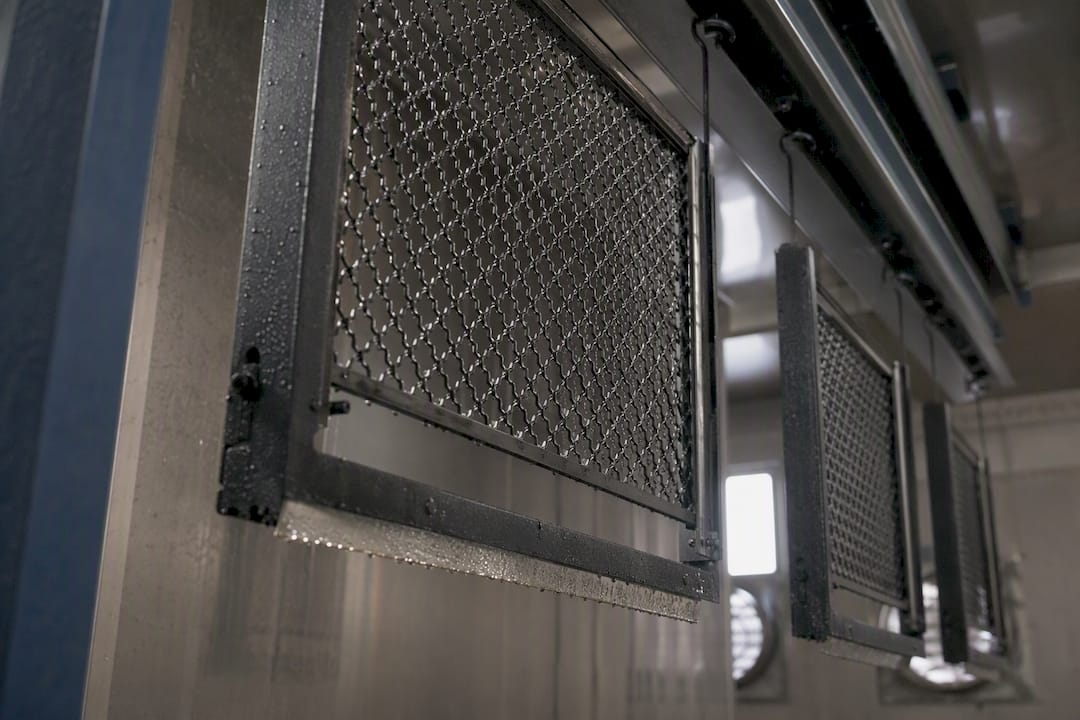
Attachment method matters just as much as the mesh itself. Mechanical clamp or screw‑clamp systems resist pull‑out and repeated impact far better than spline, adhesive, or plastic wedge fixings, which can work loose under sustained force.
Pro Tip: If you’re near the coast, ask for salt‑spray or corrosion test data on both the mesh and the fixings. Corrosion weakens fastenings well before it’s visible on the surface, and a powder‑coated finish with documented corrosion testing adds real longevity.
How do you pick the right strength rating for your home?
Matching the rating to the actual risk at each entry point avoids both underspending on your front door and overspending on a low-risk laundry window.
Start with these questions before you talk to any supplier:
- Which entry points face the street or are hidden from neighbours?
- Does the household need quick emergency egress from any screened opening?
- Is the property in a coastal, cyclone-prone, or bushfire-rated (BAL) zone?
- What’s the realistic budget across all doors and windows, not just one?
- Has the existing frame been assessed by an installer, not just measured?
Front doors and other high-risk entry points generally warrant the strongest combination available. A tested steel door, or stainless mesh in a mechanically fixed frame, is the sensible baseline there. Sliding doors need particular attention to track and lock strength, since the sliding mechanism itself can be a weak point regardless of mesh quality. Lower-risk windows, especially upper-storey ones without easy access, can reasonably use barrier or safety grade products.
- Match rated products to genuine risk, not the biggest number on the brochure.
- Get written confirmation the tested configuration matches what’s being installed.
- Check local safety rebate guides, since some programs specify eligible products.
What red flags should you watch for in strength claims?
Marketing language around “security screens” is loosely policed, and a few recurring problems catch out honest buyers every year.
- No certified lab report available on request, only marketing copy.
- A test claim for a product size or frame type different from what’s being quoted.
- Corner welds that look continuous but are actually spot-welded and filled.
- Spline or adhesive mesh attachment marketed as equivalent to mechanical clamping.
- Installation into an existing timber or aluminium frame with no strength assessment.
The biggest misconception is that a “security” label alone guarantees protection. As CHOICE points out, the onus is on the installer to confirm the existing frame can actually support the product being fitted.
Pro Tip: During a quote visit, watch whether the installer physically checks your doorframe’s condition, or just measures the opening. A frame check is the single clearest sign of a competent installer.
What should you ask suppliers and what documents should you request?
Verifying claims comes down to a short set of direct questions and a document checklist you insist on before signing anything.
Ask suppliers:
- Which standard or test programme was this exact configuration tested against?
- Can I see the lab report, including the test lab’s accreditation details?
- Was this specific door size, mesh gauge, and frame type used in the test?
- What corrosion or salt-spray data exists for the mesh and fixings?
Documents to collect before signing:
- Certified lab report matching your configuration, not a generic product sheet.
- Corrosion or workmanship test data, particularly for coastal properties.
- Installer accreditation and insurance details.
- A written installation checklist showing the frame was assessed.
A genuine third‑party lab report names an accredited testing facility and a specific date. A manufacturer’s self‑issued claim, without that detail, isn’t independent verification.
Security screen strength ratings: what homeowners must check
The conventional advice on this topic stops at “buy a security-rated screen,” which misses the point entirely. A rating only describes what happened in a lab, to one specific configuration, on one specific frame. Homeowners who fixate on finding the highest-numbered test pass often overlook the frame their installer is fixing it to, which is exactly where the AS 5039 foreword places the real risk.
What actually matters first isn’t the grade name on the brochure. It’s whether the tested configuration matches your doorway, and whether the installer has assessed your existing frame before quoting. A brilliant stainless mesh system fitted into a soft, rotting timber frame with cheap screws will fail long before the mesh itself is tested.
Prioritise the paperwork over the pitch. Ask for the lab report first, the grade name second. Any supplier unwilling to produce a certificate matching your actual door size and frame type is telling you something, whether they mean to or not.
Get a security screen assessed for your actual frame, not just your budget
Most of the products discussed above are only as strong as the frame they’re bolted into, and that’s precisely where Easterndoors focuses its consultations. Rather than quoting a product off a brochure, Easterndoors assesses your existing doorframe first, then matches it to a tested steel or stainless‑steel mesh configuration that suits the entry point’s actual risk, whether that’s a front door, a sliding door, or a window.
Homeowners comparing options often get stuck weighing brand names against each other without knowing which test reports actually apply to their home. Easterndoors skips that guesswork by starting with a proper frame assessment and manufacturing to fit, backed by a fast turnaround for both new installs and repairs. If you’re ready to move past marketing claims and get a straight answer on what will actually hold up at your front door, browse the steel door range or request a quote for your property today.
Frequently asked questions
What does a security screen strength rating actually measure?
It measures how a specific product, in a specific configuration, performed against tests like impact, jemmy, pull, and knife shear under a named standard such as AS 5039.1:2023.
Are stainless-steel mesh screens as strong as steel doors?
Well‑made stainless mesh systems offer strong cut and impact resistance while keeping visibility clear, though properly constructed steel doors generally rate highest for forced‑entry resistance overall.
Do all “security” screens meet the same standard?
No. Products labelled Safety or Barrier grade haven’t necessarily been tested for forced-entry resistance the way a genuine Security-grade product has.
Can a strong mesh still fail if installed poorly?
Yes. The AS 5039 foreword is explicit that installation into a weak frame with unsuitable fixings can seriously undermine a screen’s tested resistance, regardless of how strong the mesh itself is.
What should I ask for before signing a quote?
Request a certified lab report matching your exact door size, frame, and mesh type, plus written confirmation the installer has assessed your existing frame’s condition.