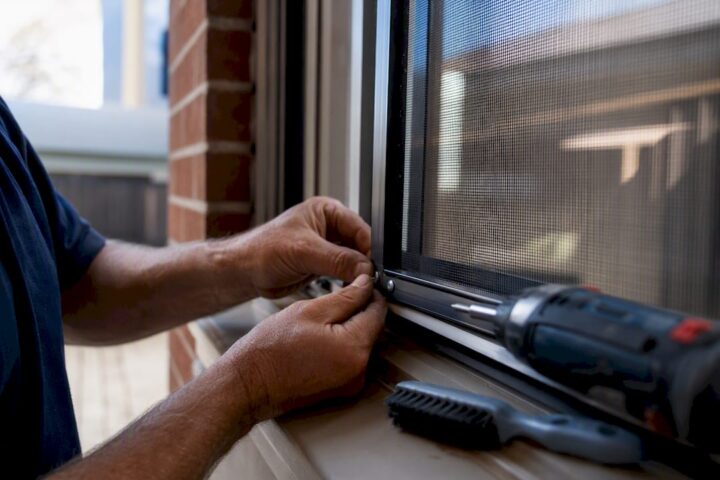
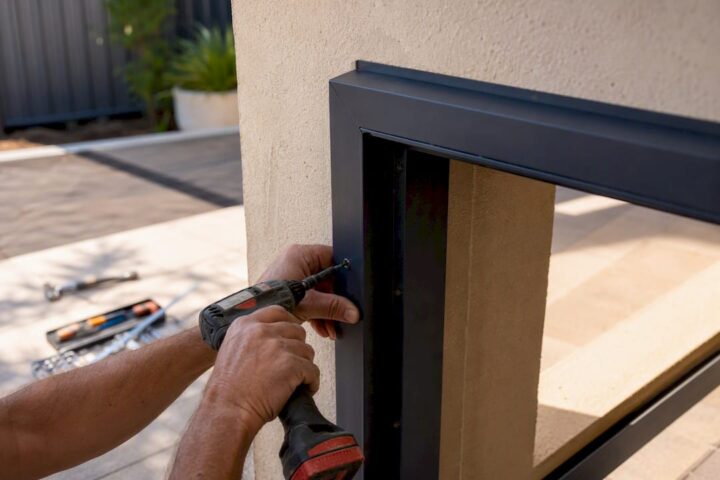
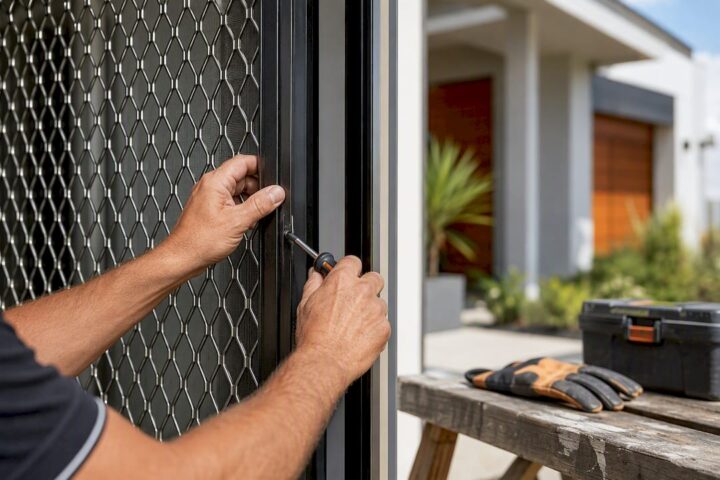
The most practical modern security screen designs pair slimline aluminium or stainless-steel framing with decorative or micro-mesh infill to balance protection, view, and ventilation. For most Australian homes, a powdercoated slimline frame combined with high-tensile stainless-steel micro-mesh delivers the best all-round results: strong sightlines, good airflow, and compliance with Australian security standards. If your priority is a statement entry, a laser-cut decorative panel in a geometric or nature-inspired motif adds visual impact without sacrificing rated performance.
Before you commit to a style, do three things:
- Measure your opening accurately, including frame rebates and any heritage moulding that affects the fit.
- Request physical samples of mesh and powdercoat colours from your supplier so you can assess them in your home’s natural light.
- Book a consultation with a local manufacturer such as Easterndoors, who can advise on compliance, coastal siting, and finish continuity before you sign off on a design.
Key takeaways
Modern security screen designs work best when the performance specification and the aesthetic brief are developed together, not in sequence.
| Point | Details |
|---|---|
| Start with your priority | Decide between maximum security, maximum view, airflow, or decorative impact before selecting a style. |
| Match material to environment | Coastal sites need marine-grade fixings and 316-grade stainless or powdercoated aluminium throughout. |
| Custom fit beats off-the-shelf | Heritage, oversized, and architect-designed openings almost always require bespoke fabrication for a correct fit. |
| Budget realistically | Custom aluminium screens typically cost $800–$1,800 installed; cladding-ready or pivot doors run $2,000–$4,000+. |
| Easterndoors for local custom work | Easterndoors covers measure, manufacture, and installation with local warranty support across Melbourne’s eastern suburbs. |
Table of Contents
- Top 10 modern security screen styles and where they work best
- Materials, finishes, and colour choices that create a modern look
- How design choices affect security, visibility, and ventilation
- How do Australian security screen systems compare?
- What does a modern security screen cost in Australia?
- A practical checklist for choosing the right screen
- Why a local custom manufacturer usually gives the best result
- Installation challenges for different home types
- Easterndoors: custom security screens for modern Australian homes
- Sources
Top 10 modern security screen styles and where they work best
Australian homeowners now expect security screens to carry their own design weight. The ten styles below cover the full range, from barely-there mesh to bold architectural statements.
1. Minimalist slimline frames
The slimmest aluminium or steel perimeter frames available, often under 40 mm wide. Best for contemporary facades where the screen should read as part of the glazing rather than a separate element. Excellent airflow; visibility depends on mesh choice.
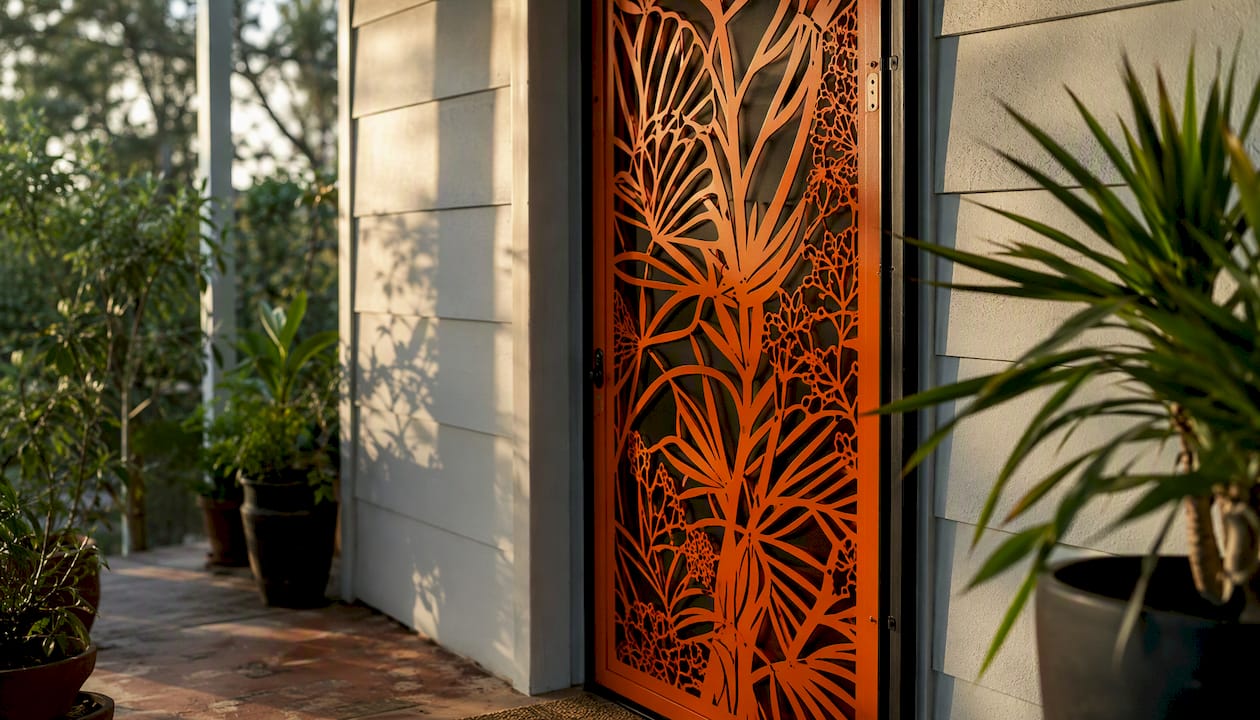
2. Laser-cut decorative panels
Aluminium sheet cut into geometric, botanical, or abstract patterns. Front entries and feature side panels are the natural home for these. Privacy is high, airflow is moderate, and the visual impact is strong. Pair with a bold powdercoat colour for maximum effect.
3. Perforated metal infill
Punched aluminium or steel sheet with a regular grid of small holes. Works well on patios and alfresco areas where you want a degree of privacy without blocking light entirely. Airflow is lower than open mesh but the surface is easy to clean.
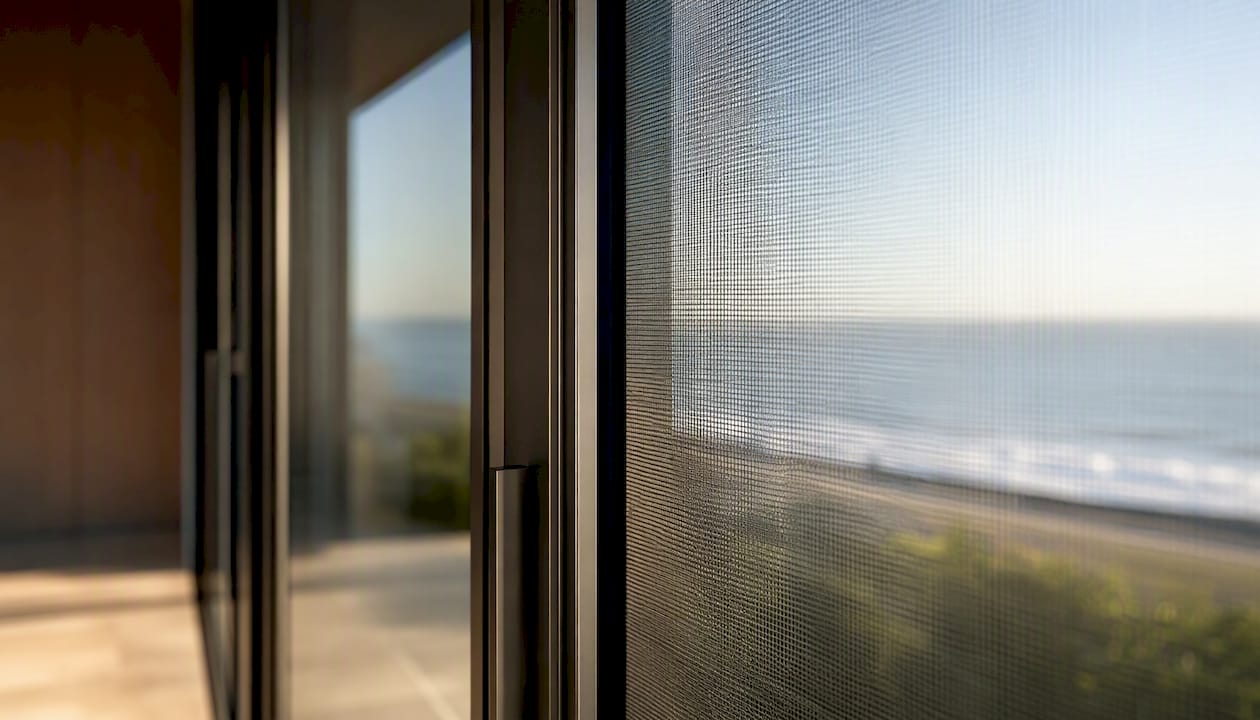
4. Stainless-steel micro-mesh
High-tensile woven mesh in a very fine aperture, typically used in systems such as Crimsafe and Invisi-Gard. Micro-mesh stainless steel offers a high security-to-visibility ratio that suits entries where an unobstructed view and airflow are priorities. Complies with AS 5039 when correctly installed.
**
5. Frameless or invisible mesh
Systems such as Invisi-Gard use a near-invisible stainless mesh tensioned into a minimal frame. The result reads almost like an open window or door. Best for heritage homes where you want protection without visual intrusion, and for contemporary builds where the view is the feature.
6. Geometric laser-cut patterns
A sub-category of laser-cut work, but specifically using repeating geometric motifs: hexagons, chevrons, or grid arrays. Popular on mid-century and contemporary homes. The pattern density controls privacy and airflow, so discuss aperture size with your manufacturer before ordering.
7. Nature-inspired laser motifs
Leaf, branch, and botanical patterns cut from aluminium sheet. Common on Queenslander-style and coastal homes where the organic form echoes the surrounding landscape. Works particularly well on side gates and patio screens.
8. Pivot and security pivot doors
A full-height security door hung on a central or off-centre pivot rather than a traditional hinge. The Axial pivot security door illustrates how large-format capability and decorative finishes can be combined with structural strength for a statement entry. Best suited to double-height or wide openings on architect-designed homes.
**
9. Flush-to-wall and flush-with-trim doors
These doors sit level with the surrounding wall or trim, creating an uninterrupted exterior plane. The Synkro 4 achieves RC4-level anti-burglary protection while maintaining a minimalist, uninterrupted aesthetic with improved thermal and acoustic performance. For Australian builds, a local manufacturer can replicate this approach using aluminium or steel cores with cladding applied to the external face.
10. Custom cladding-ready security doors
The external face of the security door is clad with project-specific materials: HPL panels, Alucobond, or timber veneer. The Flawless series by Sabadoor demonstrates how absolute external planarity, multi-point locking, and insulation can coexist in a single door. Cladding the external face is a practical way to match a modern façade while retaining a security-rated internal core.
**
Pro Tip: When choosing between laser-cut and micro-mesh infill, hold a physical sample at arm’s length in your actual doorway at the time of day you use the entry most. Laser-cut panels that look open in a showroom can feel quite enclosed in a shaded porch.
Materials, finishes, and colour choices that create a modern look
The material you choose sets the ceiling on both security performance and aesthetic longevity. Getting this decision right early saves costly changes later.
Aluminium (powdercoated)
Aluminium security doors are the most common choice for modern residential screens in Australia. Lightweight, corrosion-resistant, and available in virtually any Dulux powdercoat colour, aluminium suits both coastal and inland environments. The powdercoat finish is the maintenance point: rinse with fresh water every four to six weeks in coastal areas, and inspect for chips annually. A chipped edge left untreated will corrode faster than bare steel in a salt-air environment.
Stainless steel (micro-mesh)
High-tensile stainless-steel mesh, as used in Crimsafe and Invisi-Gard systems, resists cutting and impact at a level aluminium mesh cannot match. The mesh itself requires little maintenance beyond a wipe-down with a damp cloth, but the aluminium frame that holds it still needs the same rinse schedule in coastal locations.
Structural steel (heavy-duty doors)
Steel security doors suit applications where maximum forced-entry resistance is the priority: ground-floor entries in high-risk areas, or architectural pivot doors where the sheer size demands a heavier core. Steel is heavier and requires quality hinges and a robust locking system to perform correctly. Powdercoat or epoxy primer plus topcoat is standard; galvanised substrate adds a further layer of corrosion protection for coastal sites.
Decorative metal panels and cladding
Laser-cut aluminium panels are typically 3–6 mm thick and powdercoated. For flush-to-wall or cladding-ready doors, HPL (high-pressure laminate) and Alucobond composite panels are bonded to the external face over the security core, as demonstrated by the Flawless series. Timber-clad faces are possible but require a sealed, UV-stable finish and annual inspection for delamination, particularly in Queensland and coastal WA.
Finish options at a glance:
- Dulux powdercoat: thousands of colours, durable, repairable on-site if chipped
- Natural anodised aluminium: silver-grey, no paint layer to chip, suits minimalist and industrial aesthetics
- Timber-look powdercoat: printed grain effect, lower maintenance than real timber cladding
- HPL or Alucobond cladding: project-matched colour and texture, used on high-spec custom doors
Pro Tip: Request a powdercoat sample on the same aluminium alloy your door will use. Colour matching from a swatch card to the actual extrusion can shift noticeably under different light conditions.
How design choices affect security, visibility, and ventilation
Every design decision is a trade-off. Understanding the mechanics helps you prioritise correctly rather than discovering the compromise after installation.
Micro-mesh (stainless steel, fine aperture)
- High security: resists cutting, impact, and jemmy attack when correctly tensioned
- Good visibility: the fine aperture creates a slight tint effect but does not obstruct the view significantly
- Good airflow: the open area is lower than a standard fly screen but adequate for natural ventilation
- Maintenance: wipe clean; inspect tension annually
Laser-cut decorative panels
- Moderate security: the panel itself is rigid and difficult to deform, but the aperture pattern must be fine enough to prevent hand or tool insertion
- Reduced airflow: solid sheet with cut-outs moves less air than open mesh; aperture density is the key variable
- High privacy: dense patterns block sightlines effectively
- Maintenance: dust accumulates in cut edges; blow out with compressed air or a soft brush
Perforated metal
- Moderate security: similar to laser-cut; hole diameter and sheet thickness determine resistance
- Low-to-moderate airflow: smaller holes mean less air movement
- Moderate privacy: the regular grid partially obscures the interior
Frameless/invisible mesh
- High security when tensioned correctly to AS 5039
- Excellent visibility and airflow
- Low privacy: the mesh is nearly transparent
Frame thickness matters beyond aesthetics. A thicker perimeter frame adds rigidity and allows more locking points, which directly affects the door’s resistance to forced entry. Three-point locking (top, bottom, and centre) is standard on quality modern security doors; five-point systems are available for high-risk applications.
Coastal siting note: In salt-air environments within roughly 1 km of the ocean, specify marine-grade stainless-steel fixings, a powdercoat system rated to AS 3715, and aluminium or 316-grade stainless components throughout. Standard mild-steel fixings will corrode within months in these conditions.
Pro Tip: Ask your installer to show you the mesh and framing options side by side on a light box. The difference in visible aperture between a 0.9 mm and a 1.2 mm mesh aperture is immediately obvious and will change your decision.
How do Australian security screen systems compare?
The table below covers the main systems and categories you will encounter when getting quotes in Australia.
For a detailed side-by-side of mesh systems, the Amplimesh vs Crimsafe guide and the SecureView vs Crimsafe comparison on the Easterndoors site cover performance trade-offs without requiring you to visit competitor pages.
Verdict by application:
- Front entry, high security: Crimsafe or Invisi-Gard micro-mesh in a slimline frame, or a custom steel door from Easterndoors
- Patio or alfresco: Amplimesh or a custom aluminium screen with laser-cut or perforated infill
- Heritage home: Invisi-Gard invisible mesh or a custom frameless solution that does not alter the facade character
- Contemporary architect-designed build: Custom cladding-ready door or pivot door from a local manufacturer
What does a modern security screen cost in Australia?
Prices vary considerably based on material, size, locking complexity, and whether the job involves a standard opening or a custom architectural fit.
Main price drivers:
- Material: aluminium is the most affordable; structural steel and stainless-steel mesh add cost
- Custom sizing: non-standard openings (heritage arches, oversized pivots) require bespoke fabrication
- Laser-cut complexity: intricate patterns with fine detail take longer to cut and finish
- Locking system: three-point locks are standard; five-point and high-security deadbolts add to the price
- Cladding: HPL or Alucobond cladding on a custom door adds material and labour cost
- Installation difficulty: heritage mouldings, uneven reveals, and multi-storey access all affect labour time
Approximate cost bands (supply and install, per door or screen):
- Standard aluminium screen, off-the-shelf size, basic mesh: $400–$900
- Custom aluminium screen, powdercoated, stainless micro-mesh: $800–$1,800
- Laser-cut decorative panel, custom size and pattern: $900–$2,000
- Custom steel security door, multi-point locking: $1,200–$2,500
- Custom cladding-ready or pivot security door: $2,000–$4,000+
Lead times for custom jobs typically run two to four weeks from measure to installation, depending on the manufacturer’s current workload and whether cladding materials need to be sourced separately. Off-the-shelf systems can sometimes be installed within a week. To shorten your timeline, have your opening measurements ready before the consultation and confirm your colour and mesh choice at the first meeting rather than after the quote.
A practical checklist for choosing the right screen
Use this list during consultations and when comparing quotes from different suppliers.
Before you consult:
- Measure the opening width and height, including any rebate or stop moulding.
- Note the door swing direction and whether a hinged or sliding screen suits the space.
- Decide your top priority: maximum security, maximum view, maximum airflow, or a decorative statement.
- Photograph the facade and any existing hardware so the supplier can advise on colour matching.
Questions to ask at consultation:
- Which Australian standard does this product comply with, and can you show me the test certificate?
- What mesh aperture and thickness are used, and how does that affect cutting resistance?
- What corrosion protection is applied to fixings and frame extrusions?
- Which lock brand is fitted, and is it rekeyed to my existing key?
- What is the lead time from signed order to installation, and what happens if there is a delay?
- Will you make on-site adjustments if the frame is out of square?
From inspiration to signed order:
- Gather design references (photos, material samples, colour swatches).
- Book an on-site measure and consultation.
- Review the quote, including compliance documentation.
- Approve samples of mesh, powdercoat, and any cladding material.
- Sign the order and confirm the installation date.
Pro Tip: Ask to see the security door selection guide before your consultation. Arriving with a clear sense of your priorities cuts the consultation time in half and usually results in a more accurate first quote.
For French door openings specifically, the requirements differ from a single entry: read the French door security screens guide for custom-fit considerations before your appointment.
Why a local custom manufacturer usually gives the best result
Off-the-shelf security screens solve a standard problem. Custom manufacture solves your problem, which is rarely standard.
Easterndoors specialises in custom residential security doors and screens, covering the full process from consultation and on-site measurement through to manufacture, installation, and ongoing service. That end-to-end ownership matters because the most common failure points in security screen installations are measurement errors and finish mismatches, both of which are eliminated when one team handles every step.
Custom manufacture also means:
- Exact fit: no filler strips, no visible gaps at the frame, no compromise on the reveal depth
- Finish continuity: powdercoat colour matched to existing hardware or window frames
- Matched hardware: lock cylinders rekeyed to your existing key, hinges sized for the door weight
- Local warranty and service: if a hinge wears or a lock needs adjustment, the same team returns
The Larson Geneva security door illustrates how contemporary steel detailing and structural strength can coexist in a modern entry, and local manufacturers can replicate that approach with materials and finishes suited to Australian conditions.
Installation challenges for different home types
The opening is rarely as straightforward as it looks. Each architectural style brings its own set of complications.
Heritage and period homes present the most complex installations. Ornate timber mouldings, out-of-square frames, and non-standard opening sizes mean that off-the-shelf screens rarely fit without modification. The screen frame must be fabricated to the actual measured opening, and fixings must avoid damaging heritage fabric. In some local government areas, heritage overlays restrict the colour and profile of security screens on the street-facing facade, so check with your council before ordering.
Architect-designed contemporary homes often feature oversized openings, pivot doors, or floor-to-ceiling glazing that requires a security screen engineered for the specific load and span. Standard hinge arrangements are not adequate for a door over 2.4 m tall or 900 mm wide; heavier hinges, a reinforced frame, and additional locking points are needed.
Coastal and high-humidity environments demand marine-grade fixings and a corrosion-resistant frame system throughout. Even a single mild-steel screw in a coastal installation will streak rust across a white powdercoat finish within a season.
Multi-panel openings such as French doors and bi-fold configurations require screens that stack or fold in sequence with the primary door. Double security screen doors need coordinated astragal seals and flush bolts to maintain the security rating across both leaves. Getting this right requires a manufacturer who has done it before and can show you completed examples.
Sloping or uneven floors affect the bottom rail clearance and the door’s ability to close flush. A good installer will scribe the bottom rail to the floor profile rather than leaving a gap that compromises both security and weather sealing.
A note on balancing design and security
The most common mistake homeowners make is treating design and security as competing priorities. They are not. A well-specified modern security screen can be genuinely beautiful and genuinely secure, but only when the design brief includes the performance specification from the start, not as an afterthought. Choosing a decorative panel because it looks right and then asking whether it meets AS 5039 is the wrong order of operations.
The consultative route, where you bring your design references to a manufacturer who can cross-reference them against compliance requirements and material availability, consistently produces better outcomes than selecting a product online and hoping it fits. Request samples before you commit, and ask to see the test documentation for any system you are considering.
Easterndoors: custom security screens for modern Australian homes
Easterndoors offers something most suppliers cannot: a single point of contact from the first measure to the final adjustment, with a product range that covers aluminium, steel, and stainless-steel doors in custom sizes and finishes. For homeowners who have spent time selecting the right facade materials and hardware, that continuity of finish and fit is the difference between a screen that completes the home and one that detracts from it.
The process is straightforward: book an on-site consultation, review mesh and powdercoat samples in your actual light conditions, approve the quote, and Easterndoors handles manufacture and installation with a lead time that suits your renovation schedule. Local warranty and service support means any adjustment after installation is handled by the same team. To get started, request a measure and quote or browse the full door range to shortlist your preferred style and material before the consultation.
Sources
- Flawless – Sabadoor