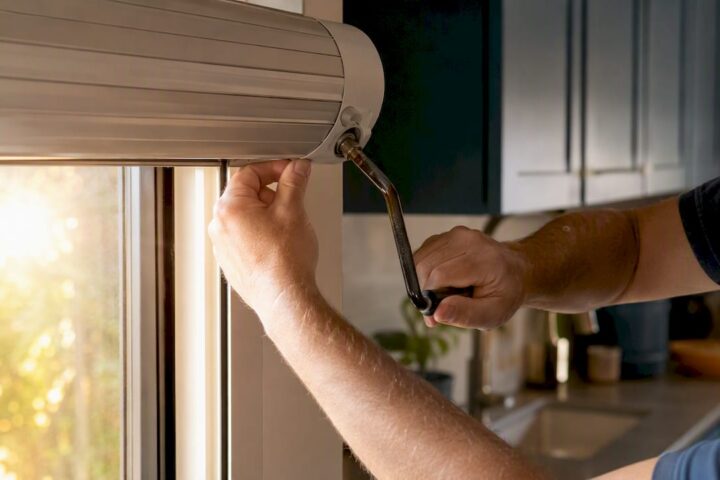
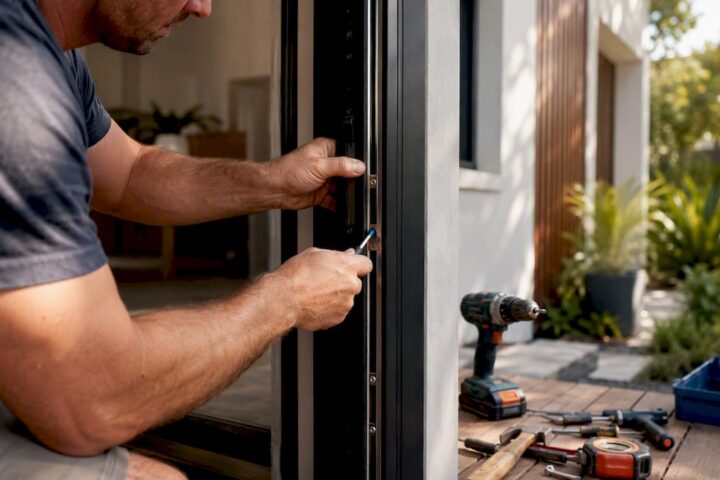
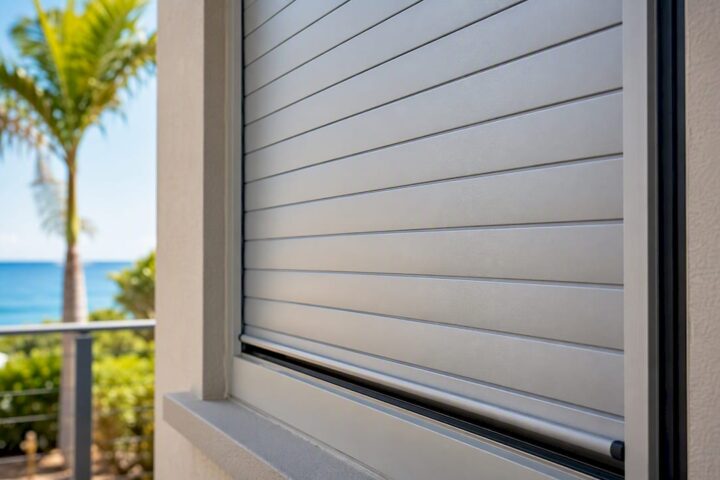
Smart roller shutters are a practical, energy-saving security upgrade for most Australian homes. If you want automated control over your home’s security, climate, and privacy, the immediate next step is to arrange an on-site measure and a written quote from a professional installer. Easterndoors provides custom-manufactured roller shutters with professional installation, so contact them directly to book a site visit and get a fixed-price scope before committing to any system.
Table of Contents
- What are smart roller shutters and how do they differ from basic motorised ones?
- Why homeowners install motorised smart roller shutters
- What key features should you look for in a smart shutter system?
- Power and control options: which setup suits your home?
- What to expect from installation: timeline, site work, and cost factors
- Warranties, maintenance, and Australian compliance
- How to choose the right installer and what to ask at quote time
- Easterndoors’ approach to custom motorised roller shutters
- Key takeaways
- What installers wish homeowners knew before buying
- Ready to get a measure and quote from Easterndoors?
What are smart roller shutters and how do they differ from basic motorised ones?
Motorised roller shutters have been available for decades, but the “smart” category adds a layer of control and awareness that changes how you actually use them day to day.
A smart roller shutter system combines the physical shutter assembly (aluminium or steel slats, a headbox, and guide rails) with a tubular motor, a control module or gateway, and software that connects to a smartphone app, a smart-home hub, or a voice assistant. The critical difference from a basic motorised shutter is what happens beyond the open/close command.
Smart systems offer:
- Real-time status feedback so you can confirm from anywhere whether shutters are open or closed
- Scheduled operation based on time of day or sunrise/sunset
- Sensor-triggered automation responding to temperature, light levels, or wind speed
- Presence simulation that opens and closes shutters on randomised schedules while you are away
- Integration with voice assistants including Amazon Alexa, Google Home, and Apple HomeKit for whole-home scenes
A basic motorised shutter takes a command and acts on it. A smart system monitors, responds, and reports back.
Why homeowners install motorised smart roller shutters
The benefits split into four practical categories, and understanding which matters most to you helps when specifying a system.
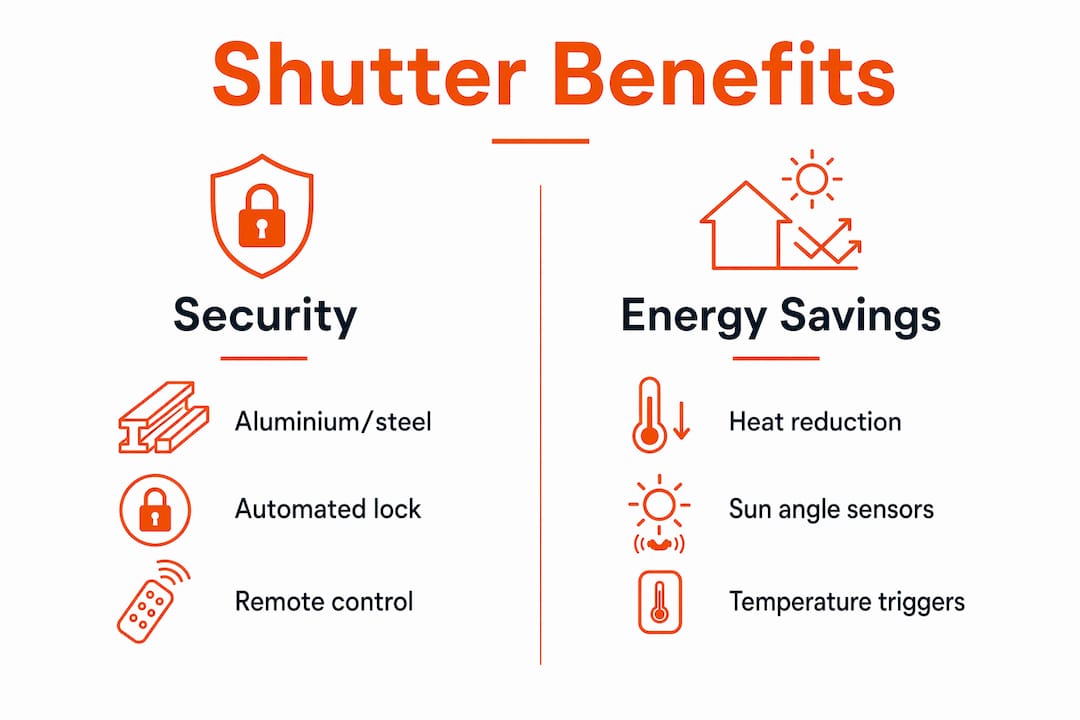
Security is the most common reason Australian homeowners invest in automated shutters. Aluminium and steel slat assemblies are a visible, physical deterrent, and advanced systems detect obstructions and combine high-strength materials to increase resistance against intruders. Scheduled closures at sunset and presence simulation routines add a layer of protection that a static shutter cannot provide.
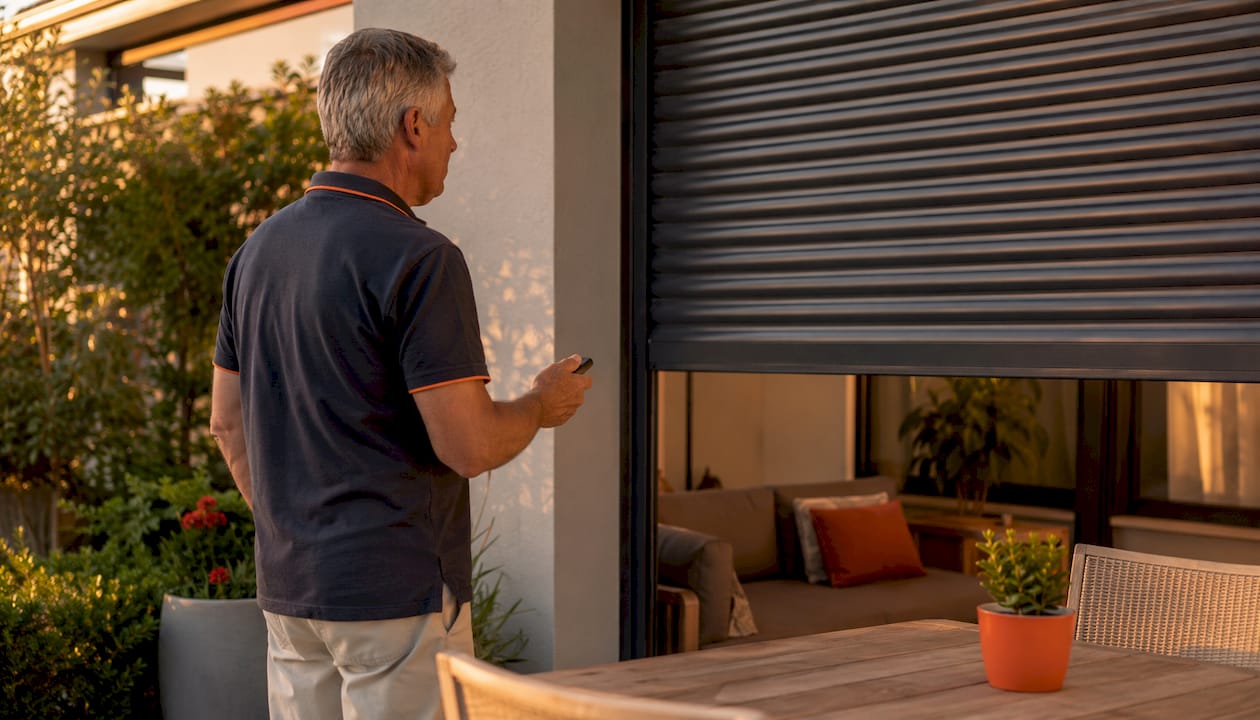
Energy efficiency is where the ongoing savings accumulate. Closed shutters reduce solar heat gain through windows significantly, delaying air-conditioning use on hot days and retaining warmth overnight in winter. Systems that respond to internal temperature thresholds can close automatically before a room overheats, protecting furniture from UV fade and cutting HVAC runtime.
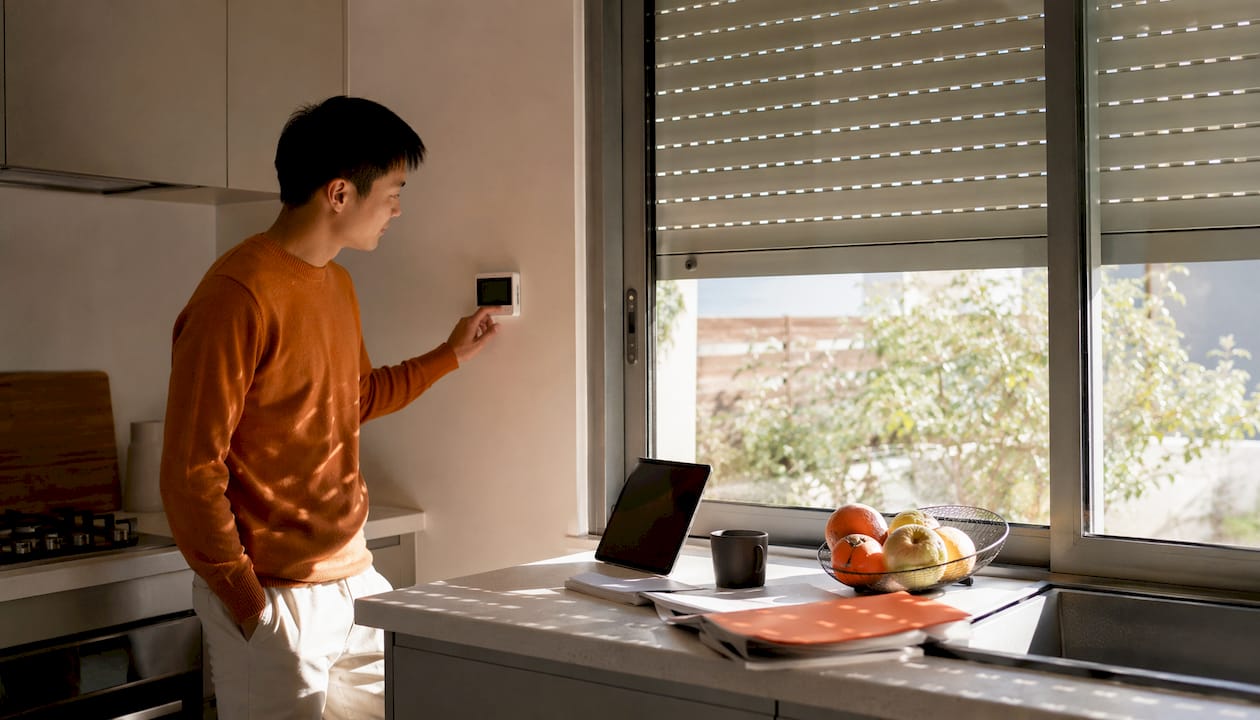
Convenience is often underestimated until you have it. A single “leave home” scene can close every shutter, lock every door-connected device, and arm a security system with one tap. Voice commands handle the rest.
Noise reduction, blackout, and weather protection round out the case. Fitted shutters provide meaningful acoustic dampening for bedrooms near busy roads, and full blackout capability that curtains rarely match.
Scenario-based automation delivers the biggest ongoing savings. A shutter that closes when the room temperature hits a set threshold prevents heat build-up before it starts, which means the air conditioner runs less often and for shorter periods. Simple timers help, but temperature and light sensors are where the real efficiency gains come from.
Pro Tip: Set your system to use both a temperature trigger and a sun-angle sensor together. This way shutters close when solar load is highest, not just at a fixed time, which accounts for seasonal variation without any manual adjustment.
What key features should you look for in a smart shutter system?
Not every system on the market is built to the same standard. These are the features that materially affect performance, safety, and long-term value.
- Motor torque rating matched to the shutter’s size and local wind loads. An undersized motor strains under a large, heavy slat assembly and fails prematurely.
- Obstacle detection and auto-reverse that stops or reverses the shutter when resistance is detected. Professional systems tune detection sensitivity to distinguish genuine obstructions from frost or minor friction.
- Mechanical limit switches and manual override for fail-safe operation if power or connectivity is lost.
- Power redundancy: mains-hardwired with battery backup is the preferred configuration for security-rated shutters.
- Smart integration: compatibility with Alexa, Google Home, and Apple HomeKit, plus reliable app status feedback and local hub support so the system works without internet access.
- Sensor and scenario support: temperature, light, wind, and presence simulation routines.
- Material and security suitability: aluminium slats suit most residential applications; steel provides higher impact resistance for security-critical openings. Fit and installation quality determine whether the assembly performs to its rated specification.
- Warranty and commissioning: separate manufacturer warranty (motor, electronics) and installer warranty (workmanship and calibration), with a documented commissioning visit included.
Independent reviews consistently rate quiet, reliable motors and solid smart-home platform integration as the top factors in long-term user satisfaction with motorised window coverings.
Commissioning matters as much as the motor. A correctly specified motor installed without proper limit-switch calibration and obstacle-detection tuning will underperform and may cause damage. Always confirm that commissioning is included in the quoted scope, not treated as an optional extra.
Power and control options: which setup suits your home?
Choosing the wrong power source is one of the most common specification mistakes. The three options each suit different situations.
| Power source | Best for | Key trade-off |
|---|---|---|
| Mains hardwired | Security-rated shutters, new builds, primary openings | Requires licensed electrical work; most reliable |
| Battery-operated | Retrofits with limited wiring access, secondary windows | No rewiring needed; requires periodic battery replacement |
| Solar with integrated battery | Remote locations, heritage buildings, minimal wiring | Suitable for Australian conditions; winter performance depends on panel placement |
For security-critical shutters, mains power with battery backup gives the best reliability. A purely battery-only system is acceptable for non-critical applications but requires a maintenance plan for battery replacement.
Control architecture follows a similar logic. Three tiers exist:
- Direct motor-to-remote: simple, reliable, no internet dependency, but no app or voice control.
- Hub or gateway-based: adds app control, scheduling, and smart-home integration while keeping local processing on-site. Scenes run even when the internet is down.
- Full smart-home integration: connects with Alexa, Google Home, or Apple HomeKit for whole-home scenes and voice commands, but cloud dependence introduces a single point of failure if the platform changes or connectivity drops.
For security shutters specifically, prefer a system with local hub control and cloud access as a secondary layer. If the internet drops, the shutter should still operate on its schedule and respond to manual commands.
The practical rule: choose mains with battery backup and a local hub for any opening where security is the primary goal. Solar and battery-only systems are a reasonable choice for secondary windows or locations where running new wiring is genuinely impractical.
What to expect from installation: timeline, site work, and cost factors
Custom smart roller shutter installation follows a defined sequence, and understanding it helps you compare quotes fairly.
- Enquiry and consultation: discuss openings, priorities, and control preferences.
- On-site measure: a professional measures each opening and assesses structural requirements, façade access, and wiring options.
- Design and specification: motor size, material, control module, and integration details are confirmed in writing.
- Manufacture: custom-sized assemblies are fabricated to the measured dimensions.
- Installation: shutters are fitted, wiring is completed by a licensed electrician, and guide rails are secured.
- Commissioning and handover: limit switches are set, obstacle detection is calibrated, app pairing is completed, and the homeowner is walked through operation.
For custom systems, expect 2–6 weeks from measure to installation, depending on manufacturing lead time and site complexity. Standard retrofit motors on existing shutter boxes can be faster.
| Cost driver | Impact |
|---|---|
| Custom sizing vs standard | Custom increases material and manufacturing cost |
| Aluminium vs steel slats | Steel adds cost; suits high-security openings |
| Motor size and smart integration spec | Higher torque and hub-based systems cost more upfront |
| Retrofit vs new build | Retrofit may require additional box or framing work |
| Number of openings | Per-unit cost typically reduces with volume |
A professional quote should itemise parts, motor make and model, integration details, warranty terms, and a commissioning visit. Vague line items are a red flag.
Warranties, maintenance, and Australian compliance
Two warranties apply to any professionally installed system, and both matter.
- Manufacturer warranty covers the motor, drive electronics, and control module. Duration varies by brand; ask for the specific term and what it covers.
- Installer warranty covers workmanship, commissioning, and calibration. This is the warranty that protects you if limit switches drift or guide rails work loose after installation.
Routine maintenance keeps systems performing reliably. Schedule an annual check that includes lubricating guide rails, verifying limit switch settings, testing obstacle detection across the full travel range, and checking battery health on backup or battery-powered systems.
Before signing a contract, confirm that the installer’s work complies with Australian electrical installation requirements and any relevant local building codes. Ask for a written commissioning checklist as part of the handover documentation.
Trust signals to verify before you commit: on-site measure (not a phone estimate), written commissioning checklist, documented warranty terms for both manufacturer and installer, and a local service contact for after-sales support.
How to choose the right installer and what to ask at quote time
A good installer is as important as a good motor. Use this checklist when comparing quotes.
Checklist before accepting a quote:
- Proof of local installations you can verify
- Confirmed on-site measure (not a remote estimate)
- Fixed-price scope with itemised parts list
- Motor make, model, and torque rating specified in writing
- Commissioning visit and handover included in the price
- Written warranty terms for both manufacturer and installer components
Questions to ask every installer:
- What motor brand and model are you specifying, and what is the torque rating?
- How is obstacle detection configured, and can sensitivity be adjusted after installation?
- What power options are available, and is battery backup included or an add-on?
- Does the system have local hub control, or is it cloud-dependent?
- What is the lead time from measure to installation?
- What does the installer warranty cover, and for how long?
Red flags to watch for:
- Vague motor specs (“a quality motor”) with no brand or torque rating
- No on-site measure offered
- Commissioning listed as an optional extra or not mentioned at all
- Cloud-only control with no local fallback
- Lifetime labour claims with no written terms
Choosing the right security product follows similar principles to selecting a quality security door: the specification details and installation quality determine whether the product performs to its rated capability.
Easterndoors’ approach to custom motorised roller shutters
Easterndoors manufactures and installs custom roller shutter assemblies designed to fit each opening precisely, with motor, material, and control options specified during an on-site consultation.
The process runs as follows: an Easterndoors consultant visits the site, measures each opening, and assesses structural and wiring requirements. From that visit, a tailored specification is produced covering motor size and torque, slat material (aluminium or steel), headbox configuration, and control integration. Assemblies are then manufactured to those dimensions and installed by Easterndoors’ own team, with commissioning completed before handover.
Custom manufacture means the shutter fits the opening correctly from day one. A correctly fitted assembly performs to its security and thermal rating; a poorly fitted one does not, regardless of how good the motor is.
After-sales service and repair are part of the offering, not an afterthought. Easterndoors maintains a local service contact for installed systems, which matters when limit switches need adjustment or a motor requires attention years after installation. Their security screen and door repair capability extends to shutter servicing.
Pro Tip: Before your site visit, note which openings you want to prioritise (bedroom blackout, street-facing security, or a living area with high solar load) and whether you have existing smart-home devices. This lets the consultant specify the right motor size and integration path for each opening rather than applying a one-size approach.
Key takeaways
Smart roller shutters deliver the most value when correctly specified, professionally installed, and properly commissioned for local conditions.
| Point | Details |
|---|---|
| Professional measure is non-negotiable | On-site measurement ensures correct fit, motor sizing, and structural assessment before manufacture. |
| Prioritise safety features | Obstacle detection, manual override, and mechanical limit switches protect both the shutter and the people using it. |
| Match power to the application | Mains with battery backup suits security-rated shutters; battery or solar suits secondary or retrofit openings. |
| Commissioning is part of the service | Limit switch calibration and obstacle detection tuning must be completed at installation, not left to the homeowner. |
| Easterndoors for custom installation | Easterndoors provides on-site measure, custom manufacture, professional installation, and after-sales service for Australian homeowners. |
What installers wish homeowners knew before buying
The most common mistake is accepting a vague specification. A quote that lists “motorised roller shutter with smart control” without naming the motor brand, torque rating, and obstacle detection capability tells you almost nothing about what you are actually buying. Insist on specifics.
Undersized motors are the second most frequent problem. A motor rated for a small, lightweight shutter will struggle with a large steel assembly, particularly in high-wind conditions. The torque rating should be matched to the shutter’s dimensions and the local wind load, not selected on price alone.
Skipping commissioning is where many DIY and low-cost installations fall short. The practical difference between professional and DIY systems is commissioning and safety tuning: installers set limit switches and detection sensitivity so shutters operate reliably under local wind and temperature conditions. A shutter that has not been commissioned properly may reverse unexpectedly, fail to close fully, or cause damage to the slat assembly over time.
For security-critical openings, always request battery backup or a dual-feed arrangement. A purely battery-only system on a front-facing security shutter is a maintenance liability. Ask for a signed commissioning checklist at handover. If an installer cannot produce one, that tells you something about how the rest of the job was done.
Easterndoors tests and commissions every system before handover, including obstacle detection calibration across the full travel range and a documented limit-switch setting for each motor.
Ready to get a measure and quote from Easterndoors?
Easterndoors offers a straightforward path from enquiry to installed, commissioned shutters: one site visit, a written specification, and a fixed-price quote that covers manufacture, installation, and commissioning.
The measure appointment includes a full site inspection, a specification recommendation covering motor, material, and control integration, and a written itemised quote. Manufacturing lead times are discussed at the appointment, and warranty terms for both the motor and the installation workmanship are documented before any contract is signed. Easterndoors’ full product range covers aluminium, steel, and stainless-steel assemblies, so the right material for your security and thermal requirements can be confirmed on the day.
Contact Easterndoors by phone or through the online enquiry form to book your on-site measure. Before the visit, note your priority openings, your existing smart-home setup (if any), and whether you need mains or battery power. That preparation means the consultant can produce a complete, accurate specification on the first visit.