For most Australian homeowners, the choice between Amplimesh and Crimsafe comes down to three practical priorities: coastal corrosion resistance, certified forced-entry performance, and how much hardware you want visible on your door. Neither brand is universally superior. Each suits a different risk profile, and the installation quality behind either system matters just as much as the product itself.
Both systems meet AS5039 security screen standards, which sets the baseline for dynamic impact, knife shear and jemmy resistance in Australia. Crimsafe Ultimate goes further, claiming to be the only mesh security screen door in Australia to pass the European RC2 test, a meaningful benchmark for high-risk street-facing entries. Amplimesh SupaScreen counters with 316 marine-grade stainless steel mesh and a screwless pressure-fit system that suits coastal homes and homeowners who prioritise clean sightlines.
Quick recommendations by priority:
- Maximum forced-entry resistance (street-facing doors): Crimsafe Ultimate, with its Screw-Clamp™ mechanical fixing and RC2 certification
- Coastal or marine-environment homes: Amplimesh SupaScreen, with 316 marine-grade mesh and no metal-on-metal contact points
- Minimal, screwless aesthetic: Amplimesh SupaScreen’s pressure-fit retention system
- Mid-range budget, solid security: Crimsafe Classic or comparable Amplimesh tiers
- Local measure, manufacture and install in Melbourne: Eastern Security Doors supplies and installs custom aluminium, steel and stainless security doors across Melbourne’s eastern suburbs
Stat to know: The AS5039 dynamic impact baseline is 200 joules. Some higher-tier products publish test results at multiples well above that figure. Always ask for the independent test report, not just the marketing claim.
Table of Contents
- How do Amplimesh, Crimsafe and Invisi-Gard compare at a glance?
- What mesh material and construction actually mean for strength and corrosion
- Screwless pressure-fit vs Screw-Clamp™: which fixing method is right for your home?
- What do AS5039 and RC2 actually mean for your security?
- Locks, hinges and hardware: what to check before you commit
- How do mesh type and frame profile affect your view and airflow?
- Coastal suitability and corrosion resistance: what you need to know
- Warranty terms and what they actually cover
- What does a security screen actually cost, and what drives the price?
- How to choose the right system for your situation
- How Eastern Security Doors approaches measure, manufacture and installation
- Final recommendation and practical next steps
- Key takeaways
- Why material and installation matter more than the brand name alone
- Easterndoors can measure, quote and install for your Melbourne home
- Useful sources, standards and where to verify test claims
How do Amplimesh, Crimsafe and Invisi-Gard compare at a glance?
| Product | Security / forced-entry | Mesh material | Fixing method | Warranty | Coastal suitability | Typical price band | Best for |
|---|---|---|---|---|---|---|---|
| Eastern Security Doors | Custom spec; aluminium, steel or stainless | Aluminium, steel or 316 stainless | Professional measure, manufacture and install | Manufacturer warranty + installer aftercare | Marine-grade options available | Quote-based; competitive for Melbourne | Homeowners wanting local custom fit and aftercare |
| Amplimesh SupaScreen | Exceeds AS5039; pressure-fit tested | 316 marine-grade stainless | Pressure-fit, screwless retention | Manufacturer warranty (confirm at quote) | Excellent; 316 grade, no visible fixings | Mid-range; slightly below top Crimsafe tiers | Coastal homes, aesthetic-first buyers |
| Crimsafe Ultimate | Exceeds AS5039; RC2 certified | 304 structural-grade stainless (0.9mm) | Screw-Clamp™ mechanical clamping | 10-year warranty | Good with powder coat; 304 grade | Premium | Maximum impact resistance, high-risk entries |
| Crimsafe Classic | Meets AS5039 | 304 stainless | Screw-Clamp™ | 10-year warranty | Good | Mid-range | Standard residential security |
| Invisi-Gard | Meets AS5039 | Stainless steel | Mechanical fixing | Manufacturer warranty (confirm tier) | Good | Mid-range | Homeowners seeking a third established supplier |
Notes on the table:
- Crimsafe’s RC2 claim and the “40% stronger than Crimsafe Regular” figure for Crimsafe Ultimate are manufacturer-published claims. Request the independent test report PDF at quote stage to verify.
- Amplimesh SupaScreen’s 316 marine-grade mesh specification is a published product feature. Independent test results should still be requested from your installer.
- Invisi-Gard is a legitimate third option in the Australian market; its specific test data should be confirmed with the local supplier.
- Published price comparisons indicate Amplimesh doors can start around the mid-$900s for standard hinged doors, while higher-spec mechanical clamp systems are typically priced higher. Final quotes depend on door size, hardware and finish.
What mesh material and construction actually mean for strength and corrosion
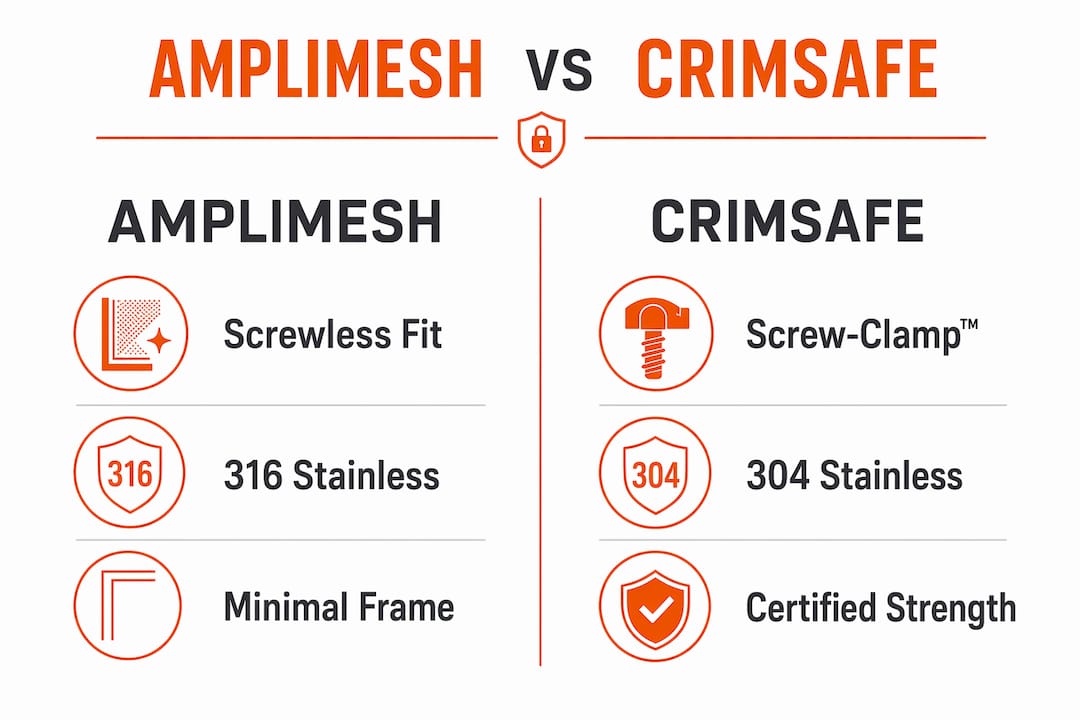
The two grades you will encounter most often are 316 marine-grade stainless and 304 structural-grade stainless. They are not interchangeable, and the difference matters depending on where you live.
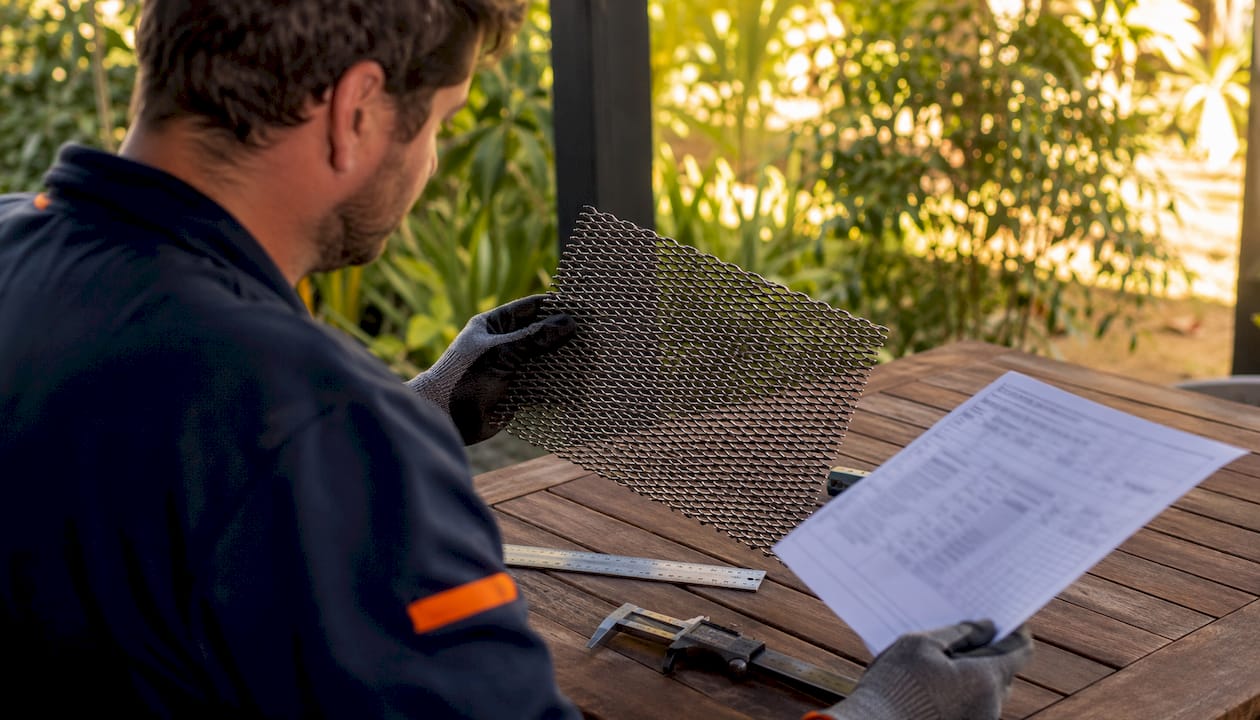
304 structural-grade stainless has higher tensile strength and hardness than standard stainless steel. Crimsafe uses 0.9mm 304-grade wires woven into 1.5mm squares, and that combination of wire diameter and weave density is what gives the mesh its knife-shear resistance. The tighter the weave and the thicker the wire, the harder it is to force an opening large enough to matter. Powder coating over 304 adds a corrosion barrier, but in high-salt environments, that coating does the heavy lifting.
316 marine-grade stainless contains molybdenum, which gives it substantially better resistance to chloride-induced corrosion. Amplimesh SupaScreen uses 316 mesh specifically for this reason. If your home is within a few kilometres of the coast, 316 is the grade worth specifying, even if it costs a little more upfront.
Three test types to ask about:
- Dynamic impact: simulates a body or object striking the screen at force; AS5039 baseline is 200 joules
- Knife shear: tests resistance to a blade being dragged across the mesh
- Jemmy resistance: tests the frame and fixing against a lever being used to prise the screen from its frame
Pro Tip: Ask your installer for the independent test report, not just the product brochure. The report will name the specific product tier tested, the joule rating achieved, and the testing body. A brochure that says “exceeds AS5039” without a report number is not the same thing.
Screwless pressure-fit vs Screw-Clamp™: which fixing method is right for your home?
The fixing method is where Amplimesh and Crimsafe diverge most clearly, and it has real consequences for both security performance and long-term corrosion.
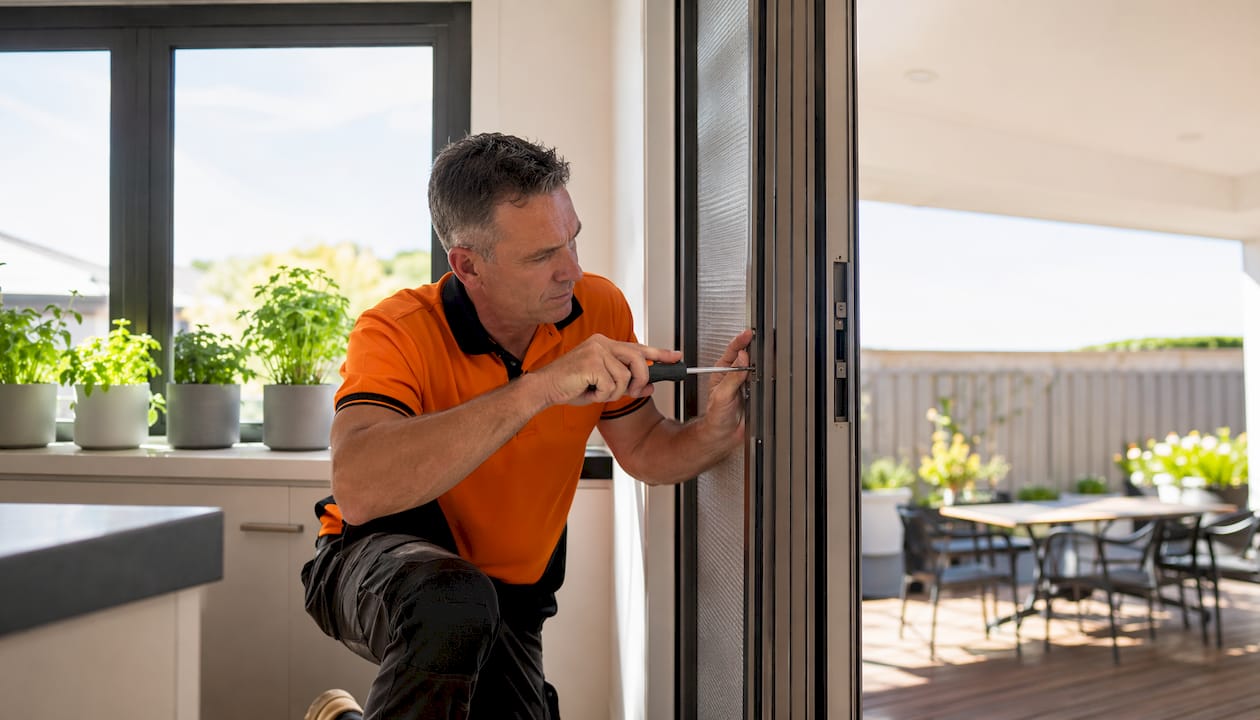
Amplimesh SupaScreen’s pressure-fit retention system locks the mesh into the frame without visible screws or rivets. That matters for two reasons. First, there are fewer metal-on-metal contact points, which reduces the galvanic corrosion pathways that accelerate deterioration in coastal environments. Second, the result is a clean, uninterrupted frame profile that suits modern and heritage homes equally well.
Crimsafe’s Screw-Clamp™ system works differently. The mesh sits between two serrated aluminium clamp bars, which are then fastened with tamper-resistant screws that are not sold outside authorised Crimsafe dealers. When force is applied to the screen, the clamp tightens rather than releasing, and the load transfers along the frame back into the wall structure. A rubber bead separates the aluminium components to reduce electrolytic corrosion. Crimsafe Ultimate uses twice as many screws as Crimsafe Regular, concealed within the fastening assembly.
Installation check: A well-fitted mechanical clamp system transfers impact load into the building structure, not just the frame. That means the substrate behind the frame matters. If the surrounding wall is soft, cracked, or poorly anchored, even the best screen will underperform. Ask your installer about hinge backing plates, frame rebate depth, and strike reinforcement before signing off on a quote.
During your measure appointment, confirm:
- Frame rebate depth and whether the existing opening needs modification
- Hinge backing plates and whether the door frame is solid enough to accept them
- Seal continuity around the perimeter (gaps compromise both security and insect control)
- Strike plate reinforcement on the lock side
Pro Tip: For sliding doors, check that the track and roller system is rated to match the screen’s security tier. A heavy-duty screen on a worn track is a weak point that an intruder will find before you do.
What do AS5039 and RC2 actually mean for your security?
AS5039 is the Australian standard that governs security screen doors and window grilles. It covers dynamic impact, knife shear and jemmy resistance, and passing it is the minimum credible claim any supplier should be able to substantiate. Both Amplimesh and Crimsafe exceed the AS5039 baseline across their main product lines, though the margin above that baseline varies by tier.
RC2 is a European standard (EN1627) that tests resistance to a skilled intruder using hand tools for a defined period. Crimsafe Ultimate is the only mesh security screen door in Australia that the manufacturer claims has passed RC2. For a street-facing front door in a higher-risk area, that certification is a meaningful differentiator.
Stat to know: The AS5039 dynamic impact baseline is 200 joules. Crimsafe Ultimate publishes impact resistance claims at multiples above that figure. Independent verification of those claims is available through the test report, which authorised dealers should provide on request.
Trust signals to request from any supplier:
- The independent test report PDF, naming the specific product tier and the testing body
- Confirmation of which tier the quote covers (Regular, Classic, Ultimate, SupaScreen, etc.)
- Written warranty documentation that references the tested product tier
- Evidence of AS5039 compliance, not just a verbal claim
Locks, hinges and hardware: what to check before you commit
The mesh and frame are only part of the security equation. Locks and hinges are where many installations fall short, and insurers increasingly check these details when assessing claims.
Crimsafe products typically use a three-point parrot-beak lock that engages the frame at three separate points, providing more resistance to forced entry than a standard single-point deadbolt. Amplimesh doors are commonly fitted with multi-point locking systems as well, though the specific hardware varies by installer and product tier. For any hinged security door, the hinge specification matters as much as the lock. Concealed or heavy-duty hinges with non-removable pins are the standard to ask for.
Hardware checklist for your quote appointment:
- Lock type: multi-point or triple-lock arrangement confirmed in writing
- Hinge spec: number of hinges, pin type (non-removable), and backing plate behind the frame
- Strike plate: reinforced strike box, not a standard builder’s plate
- Closer or hold-open mechanism if required (some insurers specify self-closing on security doors)
- Hardware finish: confirm powder coat or stainless to match the mesh grade
Insurance note: Many Australian home insurers require a compliant security door on the main entry to qualify for specific policy benefits. The lock type, installation quality and evidence of AS5039 compliance are the three details most commonly checked. Keep your warranty documentation and test report with your policy papers.
How do mesh type and frame profile affect your view and airflow?
Security screens do not have to look like security screens. The difference in visual impact between a screwless pressure-fit system and a mechanically clamped frame is noticeable, particularly on heritage or architecturally detailed homes.
Amplimesh SupaScreen’s screwless frame produces a smooth, minimal profile with no visible fixings. The 316 mesh itself has a fine weave that maintains good sightlines and allows reasonable airflow without compromising insect control. For homeowners who want the screen to recede visually, this system is the more discreet choice.
Crimsafe’s Screw-Clamp™ frame is slightly more visible, though Crimsafe Ultimate’s clip-on cover conceals the fasteners and creates a cleaner profile than earlier generations. Both systems are available in a range of powder-coat colours to match door frames and facades.
Use-case guide:
- Heritage or period homes: Amplimesh SupaScreen’s screwless profile is less intrusive on ornate door surrounds
- Modern or frameless looks: Either system works; Crimsafe Ultimate’s architectural profile suits contemporary facades
- High-traffic entries: Prioritise lock and hinge spec over aesthetics; both systems handle daily use well
- Patio or alfresco enclosures: Lighter mesh tiers are appropriate; confirm insect-control rating if that is a priority
Powder-coat options across both brands cover most standard Dulux and Colorbond colour ranges. Custom colours are available but typically add cost and lead time.
Coastal suitability and corrosion resistance: what you need to know
Salt air accelerates corrosion in ways that are not always visible until the damage is done. The grade of stainless steel, the fixing method, and the maintenance schedule all determine how long a screen performs in a marine environment.
316 stainless is the specification to ask for within roughly 1–2 kilometres of the coast, or in any location with consistent salt-laden air. Amplimesh SupaScreen’s 316 marine-grade mesh is the standout here. For inland homes, 304 structural-grade stainless with a quality powder coat is generally sufficient, and Crimsafe’s 3,000-hour prohesion salt spray testing (simulating approximately 30 years of environmental exposure) supports its durability claims for non-coastal settings.
Galvanic corrosion occurs when two dissimilar metals are in direct contact in the presence of moisture. Pressure-fit systems that avoid metal-on-metal contact reduce this risk. Crimsafe addresses it through rubber beading between aluminium components, which limits electrolytic activity.
Maintenance interval guide:
| Location | Rinse frequency | Detergent clean | Inspection cadence |
|---|---|---|---|
| Coastal (within 1 km of sea) | Weekly | Monthly | Every 6 months |
| Near-coastal (1–5 km) | Fortnightly | Every 2 months | Annually |
| Inland | Monthly | Every 3 months | Annually |
Pro Tip: Use a mild detergent and a soft brush, not a pressure washer. High-pressure water can force salt and debris into frame joints and behind mesh edges, accelerating the corrosion you are trying to prevent.
Warranty terms and what they actually cover
Both Crimsafe and Amplimesh offer manufacturer warranties, and Crimsafe publishes a 10-year warranty as standard across its range. That figure is meaningful, but the exclusions matter as much as the headline number.
Warranty comparison points:
- Crimsafe: 10-year warranty, covering manufacturing defects; exclusions typically include corrosion from inadequate maintenance, physical damage from misuse, and unauthorised modifications
- Amplimesh: manufacturer warranty applies; confirm the specific term and inclusions with your installer at quote stage, as terms can vary by product tier
- Invisi-Gard: manufacturer warranty available; confirm tier-specific terms with the supplier
Maintenance checklist to preserve your warranty:
- Rinse mesh and frame with fresh water at the intervals above
- Clean with a mild detergent and soft cloth; avoid abrasive pads
- Inspect frame seals and corner joints for cracking or separation
- Check hinge pins and lock mechanism for smooth operation
- Do not paint over mesh or apply chemical cleaners not recommended by the manufacturer
Documenting your installation:
- Keep the original invoice, which should list the product tier, mesh grade and hardware specification
- Store the warranty card or document with your home insurance papers
- Photograph the installation on completion, including hinges, locks and frame corners
- Request the test report PDF at handover and file it with the warranty
What does a security screen actually cost, and what drives the price?
Published comparisons indicate Amplimesh doors can start around the mid-$900s for a standard hinged door, while higher-specification mechanical clamp systems such as Crimsafe Ultimate are typically priced higher. Those figures are starting points. The final quote depends on several variables that are worth understanding before you compare prices.
Cost drivers to account for:
- Door or window size (larger openings require more material and heavier frames)
- Mesh grade (316 marine-grade costs more than 304 structural-grade)
- Product tier (Ultimate vs Classic vs standard; SupaScreen vs entry Amplimesh)
- Lock specification (multi-point vs single-point; keyless emergency exit systems add cost)
- Hinge type and backing plate requirements
- Custom powder-coat colour vs standard range
- Site access and any structural modifications to the opening
- Measure, manufacture and installation included vs supply-only
Comparing quotes on equal terms:
- Confirm the product tier and mesh grade are identical across quotes
- Check whether measure and installation are included or quoted separately
- Ask what post-install checks the installer performs (lock alignment, seal test, hinge adjustment)
- Confirm warranty documentation is provided at handover, not just promised verbally
Allocating budget to the highest-risk openings first is the practical approach. A premium-tier screen on the main street-facing entry, with a mid-range option on secondary windows, is a sensible split for most homes.
How to choose the right system for your situation
The right security screen is the one that matches your actual risk profile, location and maintenance appetite. Working through these questions before you request quotes will save time and produce better outcomes.
Decision checklist:
- Security priority: Is this a street-facing entry door, a rear sliding door, or a secondary window? Higher-risk openings justify a higher-tier product and independent test verification.
- Coastal exposure: Are you within 5 kilometres of the coast or in a high-humidity environment? If yes, specify 316 marine-grade mesh and a screwless or rubber-beaded fixing system.
- Appearance: Do you want the screen to be as unobtrusive as possible? Pressure-fit, screwless systems produce a cleaner profile.
- Maintenance appetite: Are you prepared to rinse and inspect regularly? Coastal homes require more frequent attention regardless of mesh grade.
- Budget: Allocate the highest spend to the main entry; use mid-range tiers for less critical openings.
Questions to ask installers at quote stage:
- Can you provide the independent test report for this specific product tier?
- Is the warranty linked to the tested product tier, and what are the exclusions?
- What substrate reinforcement do you recommend for this opening?
- What post-install checks do you carry out before sign-off?
Prioritisation framework:
- Protect the main street-facing entry first, with the highest-spec product you can justify
- Address coastal or high-humidity rooms next, specifying marine-grade materials
- Cover living areas and secondary openings where view and airflow matter, using mid-range mesh tiers
A good security door buying guide will walk you through the same logic in more detail.
How Eastern Security Doors approaches measure, manufacture and installation
Eastern Security Doors manufactures and installs custom security doors and screens across Melbourne’s eastern suburbs, covering areas including Mount Waverley, Box Hill, Scoresby, Rowville and surrounds. The service model is end-to-end: measure, custom manufacture, professional installation, and ongoing aftercare for the products installed.
The process starts with an on-site measure, which covers not just the opening dimensions but the frame condition, substrate quality, hinge backing requirements and lock alignment. Custom manufacture means the door or screen is built to the specific opening, not cut down from a standard size. That matters for both security performance and aesthetics, particularly on older homes where openings are rarely perfectly square.
What good installation looks like: A correctly installed security door should have no visible gaps at the frame perimeter, hinges that swing smoothly without binding, a lock that engages cleanly at all points, and a frame that sits flush against the rebate. If any of those elements are off at handover, they should be corrected before the installer leaves.
What to expect from a professional installation:
- On-site measure covering opening dimensions, frame condition and substrate
- Written quote specifying product tier, mesh grade, hardware and warranty
- Custom manufacture to the measured opening
- Professional installation with hinge backing, frame sealing and lock alignment
- Post-install check covering lock operation, seal continuity and hinge adjustment
- Warranty documentation and test report provided at handover
Eastern Security Doors works across aluminium, steel and stainless steel options, so the product can be matched to the security requirement and the home’s aesthetic. For homeowners who want to see the full product range before booking a measure, the range page covers door types, materials and finish options.
Final recommendation and practical next steps
For most Melbourne homeowners, the decision is straightforward once the priorities are clear.
By priority:
- Security-first (street-facing entry): Crimsafe Ultimate or a comparable heavy-duty stainless door from a local installer; request the RC2 or AS5039 test report before committing
- Coastal durability: Amplimesh SupaScreen with 316 marine-grade mesh, or a stainless steel door specified to marine grade; confirm the fixing system minimises metal-on-metal contact
- Aesthetic-first (minimal visible hardware): Amplimesh SupaScreen’s pressure-fit system, or a custom aluminium door with a clean frame profile
Steps to take now:
- Measure your main entry opening (width, height, and note whether it is hinged or sliding)
- Note the frame material and condition, and whether the hinge side has a solid backing
- Record the lock type currently fitted and whether it is a multi-point system
- Note any glass panels adjacent to the door that may need attention
- Contact at least two installers for written quotes specifying the same product tier and mesh grade
- Request the independent test report and warranty documentation from each supplier before deciding
Pre-measure checklist for when the installer arrives:
- Clear access to the door opening and surrounding wall
- Note any existing damage to the frame or threshold
- Have your preferred colour or finish in mind (or ask to see samples)
- Confirm whether you need a keyless emergency exit feature
Key takeaways
Crimsafe Ultimate is the strongest independently certified option for high-risk entries, while Amplimesh SupaScreen’s 316 marine-grade mesh and screwless fixing make it the better choice for coastal homes and minimal aesthetics.
| Point | Details |
|---|---|
| AS5039 is the baseline | Both Amplimesh and Crimsafe exceed the 200-joule AS5039 standard; always request the independent test report for the specific tier quoted. |
| Coastal homes need 316 mesh | Amplimesh SupaScreen’s 316 marine-grade stainless resists chloride corrosion better than 304-grade in salt-air environments. |
| RC2 certification matters for high-risk entries | Crimsafe Ultimate is the only mesh screen door in Australia the manufacturer claims has passed the European RC2 test. |
| Warranty needs documentation | Crimsafe publishes a 10-year warranty; confirm exclusions and obtain the written warranty and test report at handover for any brand. |
| Easterndoors offers local custom install | Eastern Security Doors measures, manufactures and installs custom security doors across Melbourne’s eastern suburbs, with aftercare included. |
Why material and installation matter more than the brand name alone
The security screen market has a tendency to sell brand names as if they were guarantees. They are not. A Crimsafe Ultimate screen installed with inadequate hinge backing into a soft timber frame will underperform a well-installed mid-range screen every time. The mesh grade and the test report matter, but so does the substrate the frame is anchored into.
Common installation pitfalls that homeowners miss include shallow frame rebates that allow the door to flex under impact, hinge backing plates that are undersized for the door weight, and DIY retrofits where the original opening was not prepared for a security-grade product. These are not hypothetical problems. They show up in warranty disputes and, occasionally, in failed forced-entry attempts where the screen held but the frame pulled away from the wall.
Hardware matching is another area where corners get cut. A 316 stainless mesh screen fitted with standard zinc-plated hardware will corrode at the hardware points first, regardless of the mesh grade. Specify matching hardware grades when you order, and confirm this in writing on the quote.
For renovators replacing front doors, coordinate the security screen installation with any glass or structural trades. A new security door fitted before adjacent glazing is replaced can be damaged during the glazing work, and the warranty may not cover that. Sequence the trades, and make sure each contractor knows what the others are doing.
Easterndoors can measure, quote and install for your Melbourne home
Choosing between Amplimesh and Crimsafe is one decision. Getting the installation right is another, and that is where a local manufacturer-installer makes a practical difference. Easterndoors supplies and installs custom security doors and screens across Melbourne’s eastern suburbs, from Scoresby to Box Hill and beyond, with no middleman between the measure and the finished product.
The range covers aluminium, steel and stainless steel options, so whether you need a marine-grade stainless screen for a coastal-style home or a heavy-duty steel door for a street-facing entry, the product can be matched to the requirement. Every installation includes an on-site measure, custom manufacture, professional fitting, and warranty documentation at handover.
To see the full range of door and screen options, or to book a measure and quote, visit the Easterndoors product range and request a consultation. A written quote with product tier, mesh grade, hardware specification and warranty terms is standard.
Useful sources, standards and where to verify test claims
When validating claims from any supplier, these are the sources and standards worth checking:
- AS5039:2008 — the Australian standard for security screen doors and window grilles; covers dynamic impact (200-joule baseline), knife shear and jemmy resistance. Confirm compliance at ablis.business.gov.au.
- EN1627 / RC2 — the European resistance class standard; RC2 is the relevant tier for high-risk residential entries. Crimsafe Ultimate is the manufacturer-claimed RC2 pass holder in Australia.
- Independent test reports — request the PDF from your installer at quote stage. The report should name the product tier, the testing body, the joule rating achieved, and the date of testing.
- Manufacturer warranty documents — Crimsafe publishes a 10-year warranty; Amplimesh and Invisi-Gard terms should be confirmed with the local installer.
| Source type | What it tells you | How to use it |
|---|---|---|
| AS5039 standard listing | Confirms the standard exists and what it covers | Cross-check supplier claims against the standard’s scope |
| Independent test report PDF | Names the specific tier tested and the result | Request from installer before signing the quote |
| Manufacturer warranty document | States coverage period and exclusions | File with insurance papers at handover |
| Installer written quote | Specifies product tier, mesh grade and hardware | Use to compare quotes on equal terms |
A note on manufacturer claims vs independent tests: Marketing materials for both Amplimesh and Crimsafe contain performance claims that are accurate for specific product tiers but may not apply to every product in the range. The independent test report is the document that ties a claim to a specific tier and a specific result. Ask for it at every quote stage, regardless of brand.