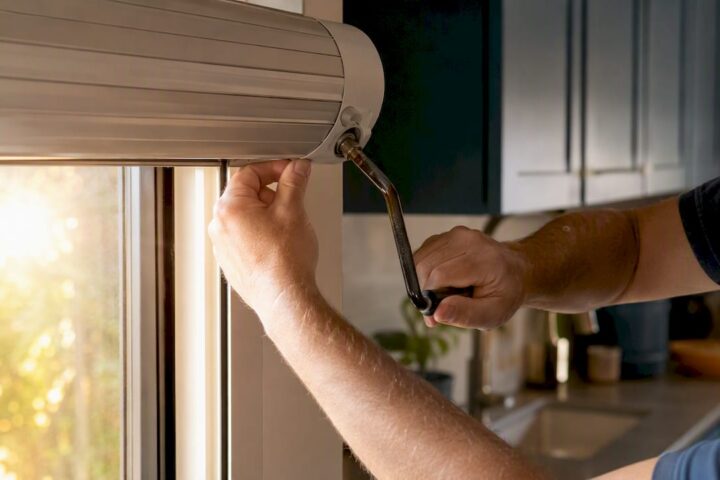
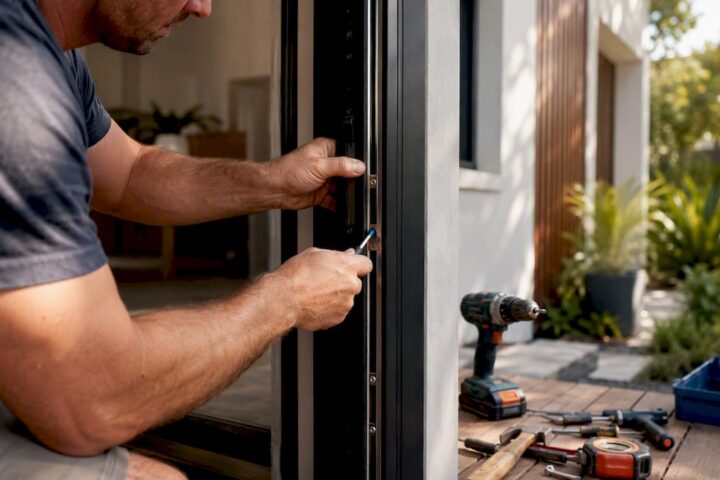
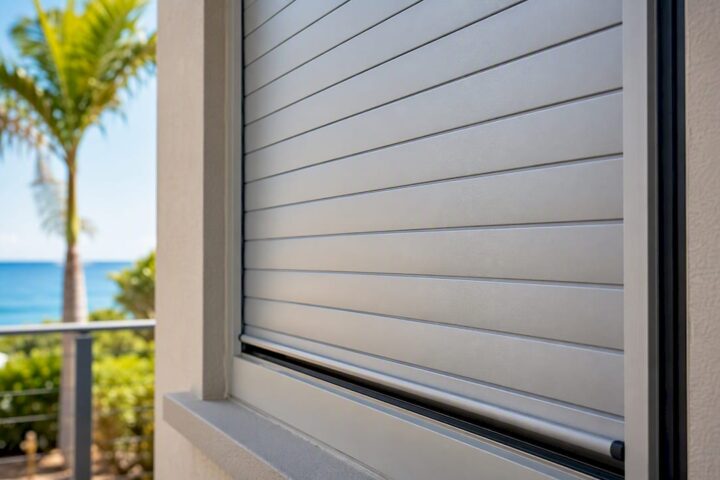
For most Australian homeowners, the best balance of strength, corrosion resistance and low maintenance is stainless-steel mesh set in a powder-coated aluminium frame. If maximum brute-force resistance is the priority, a welded steel door with hot-dipped galvanising is the stronger choice. For coastal properties within a few kilometres of the ocean, marine-grade 316 stainless mesh with stainless fixings is the specification to ask for.
Best pick by scenario:
- Coastal homes: Marine-grade 316 stainless-steel mesh in an aluminium frame with stainless fasteners and anodised or powder-coated finish
- Inland/suburban homes: High-tensile stainless-steel mesh (304 or 316) in a powder-coated aluminium frame
- Maximum security: Welded steel bar or diamond grille in a reinforced steel frame with multi-point locking
- Budget or rental: Powder-coated aluminium frame with perforated aluminium infill, where security risk is lower
- Heritage or design-sensitive properties: Aluminium frame with custom powder-coat colour and perforated or mesh infill to suit the façade
Whatever material you choose, always ask the supplier for evidence of compliance or testing to AS5039 or AS5041 and confirm the installer is certified. The door’s performance depends as much on correct installation as on the material itself.
Table of Contents
- What makes aluminium a practical choice for security doors?
- Why stainless-steel mesh is the most popular infill for Australian homes
- Where does perforated aluminium infill make sense?
- Diamond grille and welded steel bars: strength with maintenance obligations
- How coatings and hardware affect real-world performance
- What Australian standards and certification should you ask for?
- How to choose the right material for your home
- How long do different materials last in Australian conditions?
- Which material suits your situation best?
- Environmental impact and sustainability of security door materials
- Which properties suit which security door materials?
- Key takeaways
- What installers actually see on the job
- Easterndoors can help you choose and install the right door
- Useful sources and standards
- Perspective: what the material debate misses
What makes aluminium a practical choice for security doors?
Aluminium is lightweight, corrosion-resistant and highly adaptable in terms of colour and profile, making it the most common frame material in Australian residential security doors. Modern extruded multi-chamber aluminium profiles add meaningful rigidity, narrowing the gap with steel for forced-entry resistance. Independent stress testing showed that aluminium (6061-T6 alloy) withstood impacts somewhat lower than steel, with slightly shorter forced-entry resistance times, but still offering meaningful security for most residential applications. That is a meaningful difference in a high-risk scenario, but for most suburban homes it is not the deciding factor.
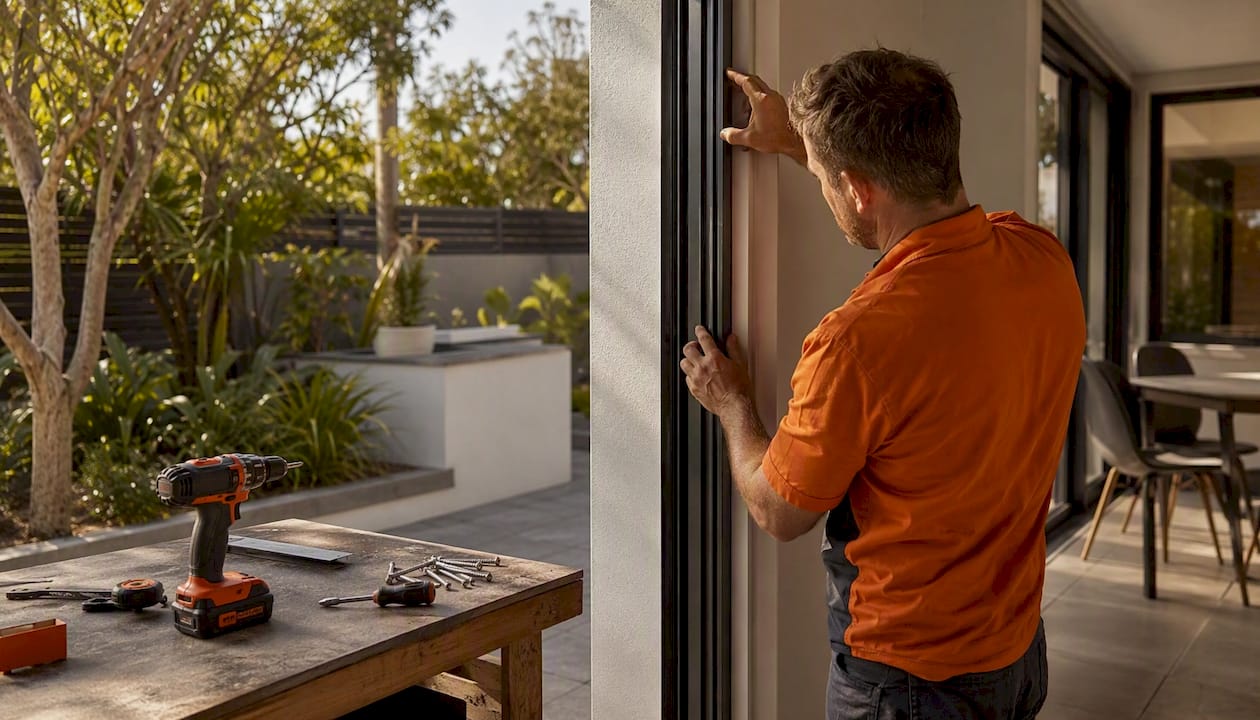
The real advantage of aluminium shows up in retrofit projects. Aluminium doors are notably lighter than comparable steel doors, often avoiding the need for structural reinforcement on older door frames, which can reduce installation cost and time. For homes with timber surrounds or lightweight brick veneer, that weight difference matters.
Pro Tip: Specify stainless-steel fasteners and hinges even on an aluminium door. Mixing aluminium with zinc-plated or mild-steel fixings creates a galvanic corrosion risk, particularly in coastal or humid environments. Stainless fixings add minimal cost and significantly extend service life.
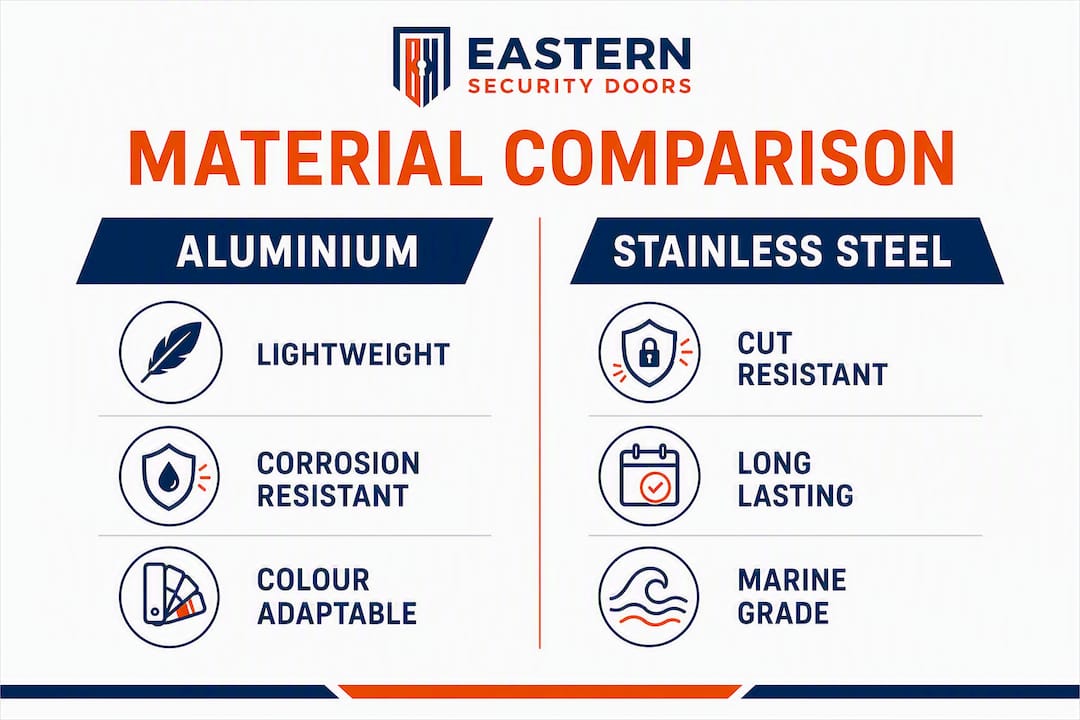
The trade-off is raw density. Steel is approximately 2.5 times denser than aluminium, so a welded steel frame will always outperform aluminium in a sustained brute-force attack. For most residential front doors, though, the deterrence value of a well-specified aluminium door with certified mesh infill is substantial. The infill, not the frame alone, is usually what an intruder encounters first.
For coastal properties, powder-coat or anodising on the aluminium frame is non-negotiable. Powder-coat provides a sealed barrier against salt air, while anodising integrates the protective layer into the metal itself. Either finish, applied correctly, delivers strong corrosion resistance. Accelerated salt spray testing demonstrated that powder-coated aluminium generally offers better corrosion resistance than galvanised steel, providing a useful basis for comparing product durability.
Why stainless-steel mesh is the most popular infill for Australian homes
Stainless-steel security mesh offers the best combination of cut resistance, visibility, ventilation and long-term durability for most Australian homes. It is the infill of choice across the industry precisely because it addresses the most common homeowner priorities at once.
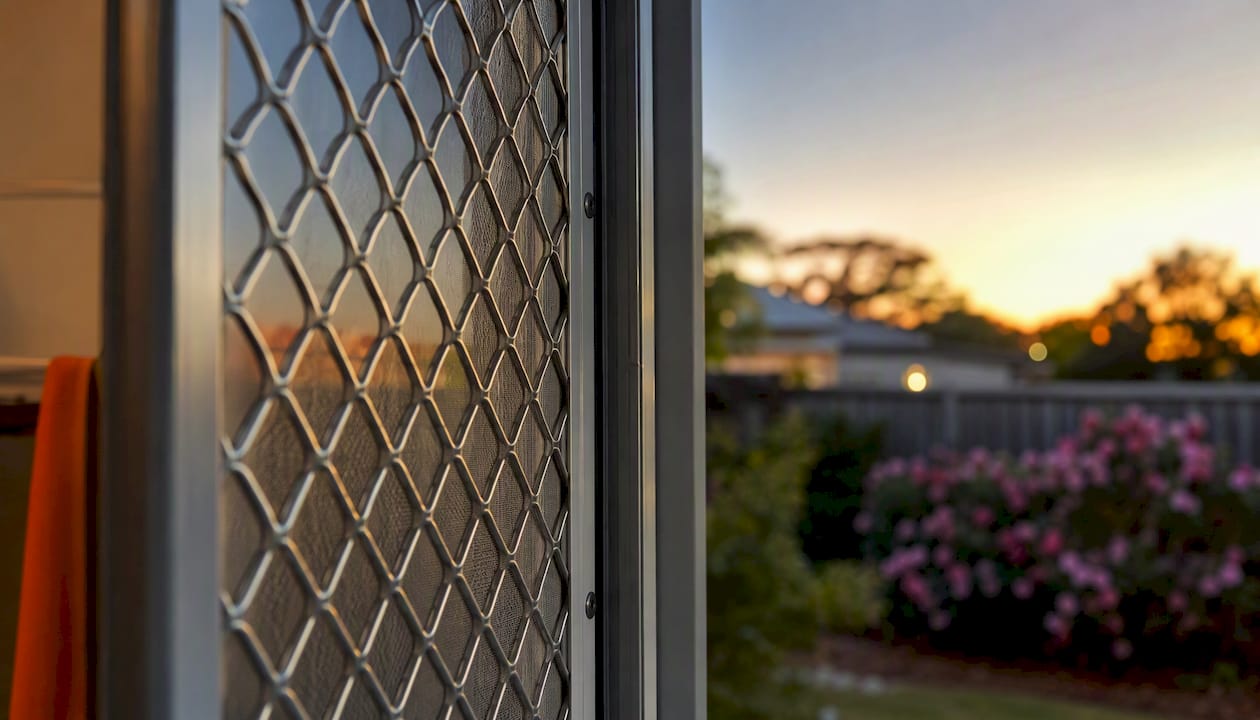
The performance difference between mesh grades matters. Marine-grade 316 stainless contains molybdenum, which significantly improves resistance to chloride corrosion. For homes within a few kilometres of the coast, 316 is the correct specification. Inland, 304-grade high-tensile mesh performs well and costs less. The tensile rating of the mesh wire itself determines cut resistance; a higher-tensile mesh resists cutting tools far better than standard wire of the same gauge.
| Property | Stainless-steel mesh (316) | Aluminium mesh/perforated | Mild steel / diamond grille |
|---|---|---|---|
| Cut resistance | High | Moderate | High (bars) / Low (thin sheet) |
| Corrosion resistance (coastal) | Excellent | Good (powder-coated) | Poor without galvanising |
| Visibility and airflow | Good | Moderate | Low (bars) / Moderate (perforated) |
| Relative cost | Medium–high | Low–medium | Low–medium |
| Maintenance needs | Low | Low–medium | Medium–high |
| Expected lifespan in coastal conditions varies, with stainless-steel mesh typically lasting longest, aluminium panels moderately long, and mild steel requiring more frequent maintenance, all depending on finish quality. |
Key practical points for stainless mesh:
- Mesh gauge and weave: A tighter weave with thicker wire provides better cut resistance; ask the supplier for the wire diameter and tensile rating, not just the mesh name.
- Frame clamping vs welding: Mesh clamped into the frame under tension performs better than mesh simply glued or stapled; ask how the mesh is retained.
- Warranty alignment: The mesh warranty and the frame warranty should both be provided in writing; mismatched warranties are a common gap in cheaper quotes.
- Visibility trade-off: Finer mesh reduces visibility from outside (a privacy benefit) but also slightly reduces airflow; discuss this with your installer before specifying.
Stainless-steel security doors with marine-grade mesh represent the highest-performing option for coastal Melbourne suburbs and anywhere within salt-air range of Port Phillip Bay.
Where does perforated aluminium infill make sense?
Perforated aluminium panels give a clean, modern appearance with good airflow and are significantly lighter than steel mesh or welded bars. The security limitation is straightforward: a perforated aluminium sheet, unless it is genuinely heavy-gauge, offers less cut resistance than high-tensile stainless mesh or welded steel bars. Hole size and panel thickness are the two variables that determine how much security the panel actually provides.
Perforated aluminium is best suited to secondary access points, courtyards, and areas where aesthetics and ventilation are the primary concern. For a front entry door on a property with a higher security risk, stainless-steel mesh or welded steel infill is the more appropriate specification.
Smaller perforations reduce the ability to grip or lever the panel, which improves security marginally, but the panel’s overall gauge is more important. A 1.6mm or 2mm perforated aluminium panel performs meaningfully better than a standard 1.2mm sheet. If a supplier quotes perforated aluminium for a front door without specifying panel thickness, ask directly.
Where perforated aluminium genuinely excels is in situations where airflow and light transmission matter as much as security. Back doors opening onto a courtyard, laundry doors, and secondary entry points in low-risk areas are all appropriate applications. The material also suits heritage streetscapes where a mesh look would be visually out of place.
Diamond grille and welded steel bars: strength with maintenance obligations
Welded steel bars and diamond grilles provide the strongest brute-force resistance of any infill type and carry a clear visual deterrence value. An intruder looking at a welded steel grille understands immediately that forcing entry will take time and noise. That deterrence effect is real and should not be underestimated.
The trade-off is maintenance. Steel corrodes, and the welds and fixing points are the first places rust appears. Key maintenance obligations for steel infill:
- Inspect welds annually for rust spots, particularly in coastal or humid environments.
- Touch up paint or powder-coat at the first sign of corrosion; once rust penetrates a weld, the structural integrity of that joint degrades quickly.
- Specify hot-dipped galvanising on the steel before powder-coating for coastal or high-humidity installs; this provides a sacrificial zinc layer that slows corrosion significantly.
- Check fixings every two years: Mild-steel screws or bolts corrode faster than the frame itself; replace with stainless-steel fixings if they were not specified originally.
For coastal properties, untreated or poorly finished steel requires more frequent maintenance and repainting than aluminium or stainless alternatives. This is not a reason to avoid steel in coastal areas, but it is a reason to specify the finish correctly from the outset and budget for periodic maintenance.
Heavy steel infill also places greater demands on hinges and locks. Multi-point locking and certified, heavy-duty hinges are not optional on a door carrying a welded steel grille; the additional weight concentrates stress on the hinge side, and an undersized hinge is the most common failure point on heavy doors.
How coatings and hardware affect real-world performance
The finish and fixings on a security door often determine its actual service life more than the base material. A correctly powder-coated aluminium door with stainless fixings will outlast a steel door with inadequate galvanising and zinc-plated screws in almost any Australian environment.
Pro Tip: When comparing quotes, ask for the powder-coat thickness in microns. A quality exterior powder-coat should be at least 60 microns; anything below 40 microns on an external door is a shortcut that will show up within a few years as chipping or fading, particularly in high-UV Australian conditions.
The key finish options and what to look for:
- Powder-coat (PPC): The most common finish on aluminium frames. Specify a minimum 60-micron thickness for exterior applications. Ask whether the coating is applied over a chromate or zirconium pre-treatment, which improves adhesion and corrosion resistance.
- Anodising: Integrates the protective oxide layer into the aluminium surface rather than sitting on top of it. More durable than powder-coat for raw corrosion resistance, though colour options are more limited. A good choice for coastal frames.
- Hot-dipped galvanising: The correct treatment for steel frames and infill destined for coastal or high-humidity environments. Electro-galvanising is cheaper but provides a thinner zinc layer and is not adequate for coastal use.
- Stainless fixings: Specify grade 316 stainless-steel screws, bolts and hinge pins on any coastal install. Installers commonly retrofit stainless fixings on coastal doors to prevent early corrosion at fixing points, and this single change extends service life considerably.
Finish warranties vary widely between suppliers. A five-year powder-coat warranty on an exterior door is reasonable; a ten-year warranty is available from quality manufacturers. Read the warranty conditions: most exclude salt-air environments unless the correct pre-treatment was applied, which is exactly the detail to confirm before signing.
What Australian standards and certification should you ask for?
Always request evidence of compliance or testing to AS5039 (security screen doors) or AS5041 (security screens) before accepting a quote. These are the relevant Australian Standards for residential security screen doors and screens, and they set minimum requirements for impact resistance, knife shear, and pull-out force. A door or screen that has been tested to these standards will have a test certificate or compliance documentation you can inspect.
A supplier who says their product is “tested” or “compliant” without being able to produce a test certificate referencing a specific standard and report number is not providing evidence of compliance. That distinction matters when you are comparing quotes.
Practical documents to request from any supplier:
- Test certificate: Names the standard (e.g. AS5039), the test house, and the report number. This is the primary evidence of performance.
- Certificate of compliance or installation warranty: Confirms the installer has fitted the door to the manufacturer’s specification. Without this, the product warranty may be void.
- Mesh or frame test reports: For stainless-steel mesh products, ask for the specific mesh-and-frame combination test report, not just a generic mesh test.
- Installer credentials: Ask whether the installer is trained and authorised by the manufacturer to install the specific product.
Red flags to watch for: vague “tested to Australian standards” claims with no document to support them; missing installation warranty; non-stainless fixings specified on a coastal install; and certification claims without a visible test reference (standard name and report number). These are common shortcuts in lower-cost quotes and they directly affect the door’s real-world performance and your ability to make a warranty claim.
How to choose the right material for your home
Match the material to your property’s risk profile, environment and door function. That single principle covers most of the decision.
- Assess your exposure zone. Are you within 1–2km of the coast or a tidal waterway? If yes, specify marine-grade 316 stainless mesh and stainless fixings throughout. Inland, 304-grade mesh and powder-coated aluminium frames are appropriate for most homes.
- Identify the door’s function. A front entry door warrants higher security specification than a back courtyard door. Match infill type (mesh, perforated, bars) to the actual risk and visibility requirements of each opening.
- Check structural limits. On older homes with timber surrounds or lightweight frames, confirm the opening can carry the door’s weight before specifying heavy steel. Aluminium’s lower mass often avoids the need for structural reinforcement.
- Request standards evidence. Ask every supplier for their AS5039/AS5041 test certificate and installation warranty before comparing prices. A door without certification evidence is not a like-for-like comparison with one that has it.
- Inspect sample finishes. Ask to see a powder-coat sample in the specified colour and confirm the micron thickness. Check that hinges and fixings are stainless, not zinc-plated.
- Compare warranty inclusions. Confirm what the product warranty covers (frame, mesh, finish) and what the installation warranty covers. Both should be in writing.
- Ask about lead time. Custom-made doors typically take two to four weeks from measure to installation; confirm this matches your timeline before committing.
For a detailed walkthrough of what to ask a supplier, the security door buying checklist covers the key questions in plain language.
Typical relative costs in the Australian market: perforated aluminium doors sit at the lower end of the price range; stainless-steel mesh doors in aluminium frames occupy the mid-range; welded steel and heavy-duty stainless options sit at the higher end. Custom sizing, heritage colours and multi-point locking all add to the base price. Get at least two itemised quotes and confirm each includes installation, fixings and warranty documentation.
How long do different materials last in Australian conditions?
A properly specified stainless-steel mesh door in a powder-coated aluminium frame typically delivers the longest service life with the lowest ongoing maintenance of any common configuration. In inland suburban conditions, that combination can last 20 years or more with basic annual cleaning. Coastal properties require more attention regardless of material, but the right specification dramatically reduces maintenance frequency.
Expected lifespan depends on three variables: base material, finish quality and environment. A welded steel door with inadequate finish in a coastal suburb may show significant corrosion within five years. The same door with hot-dipped galvanising and a quality powder-coat can last 15 years or more with periodic touch-ups.
Common failure modes by material:
- Aluminium frames: UV degradation of powder-coat (chalking or fading) after 10–15 years without maintenance; galvanic corrosion at fixing points if non-stainless fasteners were used.
- Stainless-steel mesh: Minimal corrosion in inland areas; surface staining near the coast if 304 rather than 316 grade was specified. Mesh tension can loosen over time if the clamping system was not correctly installed.
- Welded steel infill: Rust at welds and fixing points, particularly in coastal or high-humidity areas. Paint or powder-coat failure accelerates corrosion once the substrate is exposed.
- Perforated aluminium: Similar to aluminium frames; the main risk is panel distortion from impact or UV-related coating degradation.
Simple maintenance that extends life in Australian conditions: wash the door with fresh water every three to six months (monthly in coastal areas), inspect hinges and fixings annually, and touch up any coating damage promptly. For a full maintenance schedule, the front door security guide covers material-specific care in detail.
Which material suits your situation best?
| Scenario | Recommended material | Key trade-off |
|---|---|---|
| Coastal home | 316 stainless mesh, aluminium frame, stainless fixings | Higher upfront cost; lowest long-term maintenance |
| Inner-city/suburban | 304 stainless mesh, powder-coated aluminium frame | Moderate cost; excellent durability with minimal upkeep |
| Rental or budget | Perforated aluminium, powder-coated frame | Lower cost; less cut resistance; suitable for lower-risk openings |
| Maximum security | Welded steel bars or diamond grille, steel frame, multi-point lock | Heavier; higher maintenance; strongest brute-force resistance |
| Heritage or design priority | Aluminium frame, custom powder-coat, perforated or mesh infill | Aesthetic flexibility; confirm security rating matches the opening’s risk |
For every scenario, ask the supplier for AS5039/AS5041 test evidence and a written installation warranty before signing. Choosing the right security door involves matching material to environment and risk, not simply picking the most expensive option.
Environmental impact and sustainability of security door materials
Aluminium has a high embodied energy cost in primary production, but it is one of the most recycled metals in Australia. Recycled aluminium requires roughly 5% of the energy needed to produce primary aluminium, so specifying doors from manufacturers who use recycled-content aluminium meaningfully reduces the environmental footprint. The long service life of a well-specified aluminium door also offsets the initial production impact.
Steel is similarly recyclable and carries a high recycled content in Australian-manufactured products. The galvanising process introduces zinc into the waste stream, which requires careful handling at end of life, but the overall recyclability of steel remains high.
Stainless steel has a higher production energy cost than mild steel but a significantly longer service life, particularly in corrosive environments. When assessed over a 20-year lifespan, a stainless-steel mesh door that requires no replacement outperforms a cheaper mild-steel option that needs replacing after ten years, both in cost and in total material use.
Powder-coat finishes are generally low in volatile organic compounds compared to solvent-based paints, and quality powder-coat extends the service life of the substrate, reducing replacement frequency. Specifying a durable finish is one of the most practical sustainability decisions a homeowner can make when buying a security door.
Which properties suit which security door materials?
Residential homes are the primary application for stainless-steel mesh in aluminium frames. The combination suits the full range of suburban and coastal conditions, offers good aesthetics, and meets AS5039 requirements when correctly specified. For double-door configurations or double security screen doors, aluminium frames are preferred for their lower weight and easier multi-leaf installation.
Apartments and strata properties often have fire egress requirements and weight restrictions on door hardware. Aluminium frames with stainless mesh are the standard specification here; heavy steel doors may not be appropriate without structural assessment. The apartment door security guide covers strata-specific considerations in detail.
Commercial properties typically require heavier-duty specifications: welded steel frames, multi-point locking, and in some cases fire-rated cores. Galvanised steel with powder-coat finish is the common commercial specification, with stainless upgrades for coastal or food-service environments where hygiene and corrosion resistance are both priorities.
Coastal properties across all property types benefit from the same principle: specify 316 stainless mesh, anodised or powder-coated aluminium frames, stainless fixings throughout, and confirm the supplier’s warranty explicitly covers salt-air environments. A warranty that excludes coastal conditions on a door installed 500 metres from the beach is effectively no warranty at all.
Key takeaways
Stainless-steel mesh in a powder-coated aluminium frame with stainless fixings is the most practical security door specification for the majority of Australian homes, balancing strength, corrosion resistance and long-term value.
| Point | Details |
|---|---|
| Match material to environment | Coastal properties need 316 stainless mesh and stainless fixings; inland homes perform well with 304 mesh and powder-coated aluminium frames. |
| Finish quality determines lifespan | Specify a minimum 60-micron powder-coat and hot-dipped galvanising on steel; the finish often matters more than the base material. |
| Always request certification | Ask for AS5039/AS5041 test certificates and a written installation warranty before accepting any quote. |
| Weight affects installation cost | Aluminium doors at roughly 48kg often avoid structural reinforcement needed for 82kg steel doors on older frames. |
| Easterndoors supplies all three materials | Custom aluminium, steel and stainless-steel security doors with certified installation and written warranty are available through Easterndoors. |
What installers actually see on the job
The most common causes of poor security door performance are not material failures. They are wrong fixings, inadequate frame reinforcement and poor finish choice. A correctly specified door installed badly will underperform a modestly specified door installed correctly.
On coastal installs, the single most frequent issue is zinc-plated or mild-steel fixings used instead of stainless. These corrode within two to three years, loosening the door in its frame and creating gaps that compromise both security and weatherproofing. Retrofitting stainless fixings at that point costs more than specifying them correctly from the start.
Frame reinforcement is the second recurring problem. On older homes with timber surrounds, an installer who does not check the structural condition of the frame before fitting a heavy door is setting up a future failure. The door may look fine for a year, then begin to sag or bind as the timber moves. A proper site assessment before manufacture avoids this entirely.
Three things to check on site before installation:
- Confirm all fixings are stainless steel before the installer begins. Check the screws, hinge pins and any anchor bolts.
- Inspect the frame surround for rot, movement or inadequate depth. A security door is only as strong as the structure it is fixed into.
- Verify multi-point locking alignment after the door is hung. Lock points that do not engage cleanly under normal closing force will be forced or bypassed over time.
For a detailed installation checklist, the professional installation guide covers what to expect at each stage of a certified install.
Easterndoors can help you choose and install the right door
Easterndoors manufactures and installs custom security doors across Melbourne in aluminium, steel and stainless-steel configurations, with every door built to the homeowner’s specific opening and environment. The difference from buying off the shelf is straightforward: the door is measured, manufactured and installed as a single certified process, with a written warranty covering both the product and the installation.
When you contact Easterndoors for a quote, ask for the following in writing: material specification (alloy grade, mesh tensile rating or bar gauge), finish type and thickness, evidence of AS5039/AS5041 testing, installation warranty period and what it covers, and lead time from measure to installation. These are the details that separate a quality installation from a cheap one, and Easterndoors provides all of them as standard.
To get a measure and quote for your home, visit the full door range or contact Easterndoors directly to book a site visit.
Useful sources and standards
- AS5039 and AS5041 — Standards Australia: The primary Australian Standards for security screen doors and security screens. Request compliance documentation referencing these standards from any supplier.
- Choosing the right security door for your home: Easterndoors’ buyer guidance on matching material, environment and security rating.
- Front door security: a complete guide for Australian homes: Material-specific maintenance and installation advice for Australian conditions.
- Material stress-test data: aluminium vs steel: Independent impact and forced-entry test figures for aluminium and steel door materials.
- Steel vs aluminium door frames: coastal guidance: Practical guidance on finish and fixing specifications for corrosive environments.
When reviewing a supplier’s certificate or test report, check that it names the specific standard tested to, the test house or laboratory, the report number, and the exact product (mesh grade, frame profile and fixing method) that was tested. A certificate for a different product configuration does not confirm the door being quoted will perform to the same level.
Perspective: what the material debate misses
The security door industry spends considerable effort debating aluminium versus steel, mesh versus bars, and 304 versus 316 stainless. These are real distinctions and they matter. But the framing misses the most consistent predictor of whether a door actually performs: installation quality and fixing specification.
A marine-grade 316 stainless mesh door clamped into a well-engineered aluminium frame, fitted with stainless fixings and multi-point locking by a trained installer, will outperform a heavier steel door with zinc-plated screws and a single deadbolt every time. The material sets the ceiling; the installation determines where in that range the door actually lands.
Homeowners comparing quotes should spend as much time scrutinising the installation warranty and fixing specification as they do comparing mesh grades. A supplier who cannot produce a test certificate, will not commit to stainless fixings in writing, or offers a vague “installation guarantee” without a defined period is telling you something important about how they work.
The other underappreciated variable is the frame surround, not the door itself. Security doors are fixed into existing structures, and those structures vary enormously in condition and material. A door that meets AS5039 in a laboratory test can fail in the field if it is fixed into a rotted timber frame or an undersized masonry anchor. The site assessment before manufacture is not a formality; it is part of the security system.
Recommended
- Front door security: a complete guide for Australian homes | Eastern Security Doors
- French door security: the complete Australian guide | Eastern Security Doors
- Powder coated security doors: the Australian buyer’s guide | Eastern Security Doors
- Security Door Installation How To Guide | Eastern Security Doors