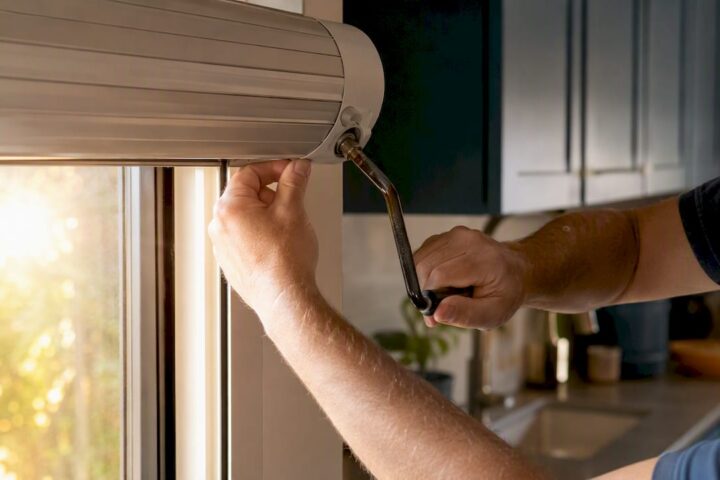
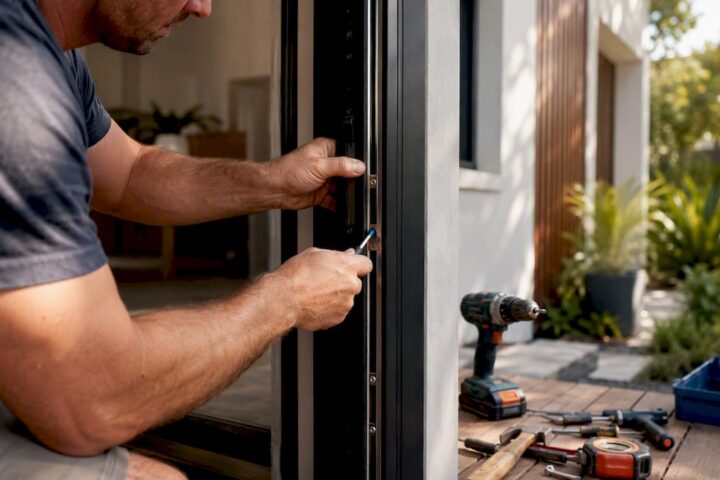
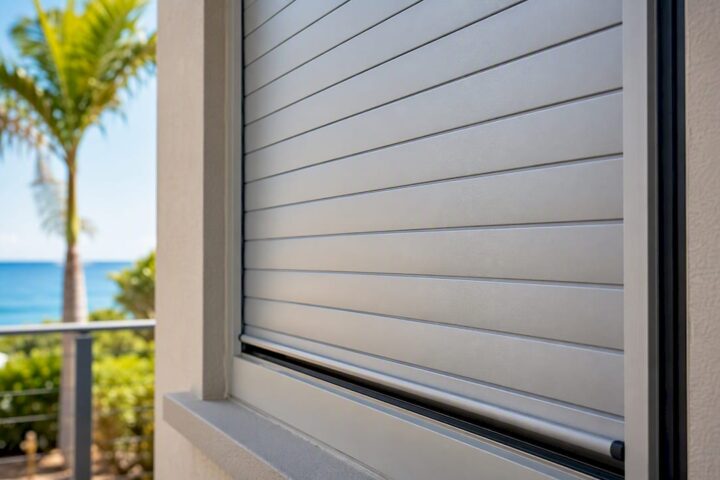
Yes, roller shutters materially improve home security for most Australian homes. The protection works through three distinct mechanisms: a visible deterrent that signals higher effort and risk to opportunistic offenders, a physical delay-and-deny barrier that buys time for alarms and neighbours to respond, and concealment of interior sightlines so intruders cannot assess occupancy or valuables before attempting entry. Many insurers recognise shutters as hardened frontage measures, and the Australian Institute of Criminology’s research on convicted burglars confirms that shutters rank among the physical features most likely to redirect an offender to an easier target.
- Visible deterrent: A closed shutter signals that forced entry will be slow, noisy, and tool-intensive.
- Physical barrier: Double-walled interlocking slats with anti-lift mechanisms resist impact and prying far better than standard glazing.
- Concealment: Blocked sightlines prevent casing, removing the information an intruder needs to decide whether a property is worth targeting.
Table of Contents
- 1. How roller shutters improve home security
- 2. Secondary benefits: insulation, noise, weather, and privacy
- 3. Which shutter types and features matter most for security
- 4. What roller shutters don’t do, and what maintenance they need
- 5. Australian evidence, insurer notes, and security standards
- 6. Questions to ask your installer before you sign
- Key takeaways
- Why specification matters more than brand name
- Easterndoors: professional installation with the specs that matter
- Useful sources for further reading
1. How roller shutters improve home security
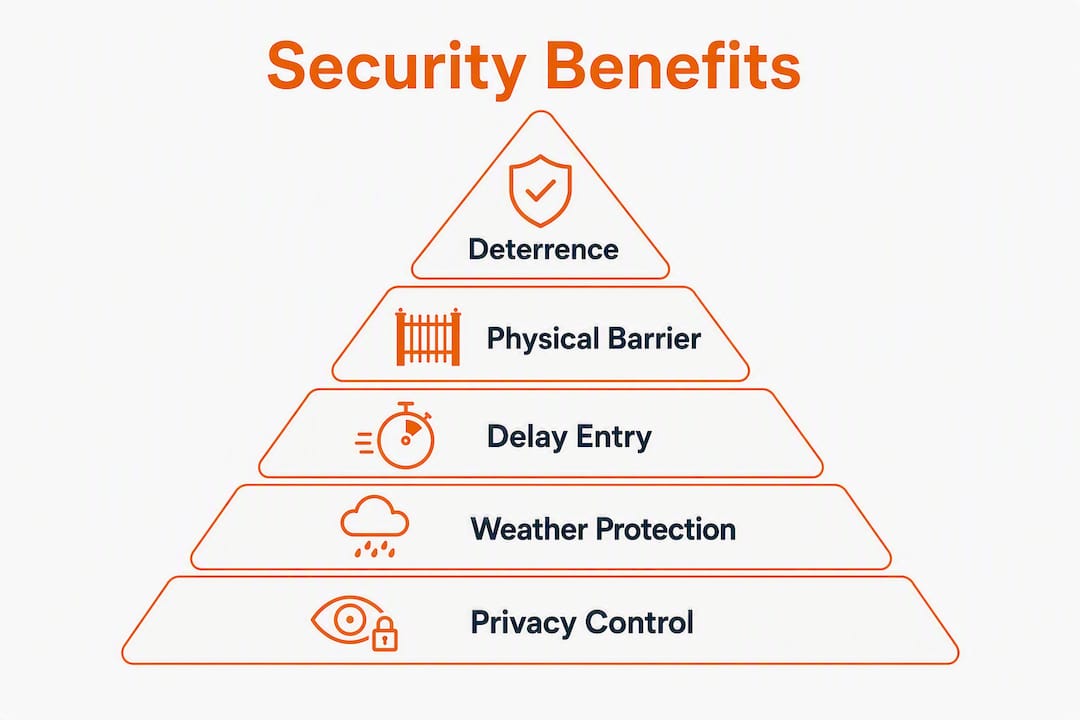
The deterrent effect is the primary security value. Convicted burglars consistently identify roller shutters and security screens as effective physical deterrents because breaking through them is noisy, slow, and requires specialist tools. Opportunistic offenders, who account for the majority of residential break-ins, choose easier targets when shutters are present. That behavioural shift is the most reliable security outcome shutters deliver.
Beyond deterrence, the physical construction of a quality shutter creates genuine delay. Double-walled, interlocking aluminium slats with anti-lift mechanisms eliminate the need for auxiliary locks and turn the curtain into a rigid barrier that resists impact better than glass. Deep guide channels prevent the curtain being lifted out of its tracks, and auto-locks engage automatically when the shutter closes, removing the human error of forgetting to lock up.
Concealment adds a third layer that is often underestimated. By blocking sightlines completely, shutters prevent an intruder from assessing whether the home is occupied, where valuables are located, or whether an alarm panel is visible near the door. Removing that information is a major behavioural deterrent in its own right.
Statistic: Research into offender behaviour confirms that opportunistic burglars actively avoid properties with visible physical barriers like roller shutters, redirecting to easier targets rather than investing the time and noise a forced entry would require.
Pro Tip: When specifying a shutter for security, ask for internal barrel fixing so the operating components sit on the protected side of the opening. This prevents an offender from tampering with the mechanism from outside.
2. Secondary benefits: insulation, noise, weather, and privacy
Security is the headline reason most homeowners install shutters, but the day-to-day advantages extend well beyond it.
Thermal insulation and energy savings
Foam-filled slats trap an insulating air layer between the shutter and the window, reducing both heat gain in summer and heat loss in winter. External shading devices like roller shutters can block up to 90% of solar heat before it reaches the glass, a performance level that internal blinds cannot match because they intercept solar gain after it has already entered the room. For Australian homes facing west or north, that difference is felt directly in cooling bills. More detail on foam-filled slat options and expected energy savings is available in Easterndoors’ roller shutters insulation guide.

Noise reduction: realistic expectations
Roller shutters are sound-resistant rather than fully soundproof. Quality foam-filled shutters typically reduce perceived noise at mid-to-high frequencies, which covers traffic noise, barking dogs, and most neighbourhood sounds. Independent laboratory tests on domestic roller shutters show that for low frequencies between 100 Hz and 300 Hz, shutters provide minimal acoustic benefit; the stronger reduction of 3–10 dB applies to frequencies between 300 Hz and 1,250 Hz. Bass-heavy noise from nearby venues or heavy trucks will pass through largely unaffected. Sealing gaps around the head box and guides is essential to realise even the mid-frequency gains.
Weather and impact protection
Shutters provide effective protection from storm-driven debris and flying objects during severe weather. Cyclone-rated shutters use wind-lock systems that mechanically interlock slats into guides to resist suction forces, making them a practical consideration for homes in Queensland and northern Western Australia. In bushfire-prone areas, shutters with appropriate ember-resistance ratings can contribute to Bushfire Attack Level (BAL) compliance, though homeowners should confirm specific BAL requirements with their local council or a licensed building professional.
Privacy and light control
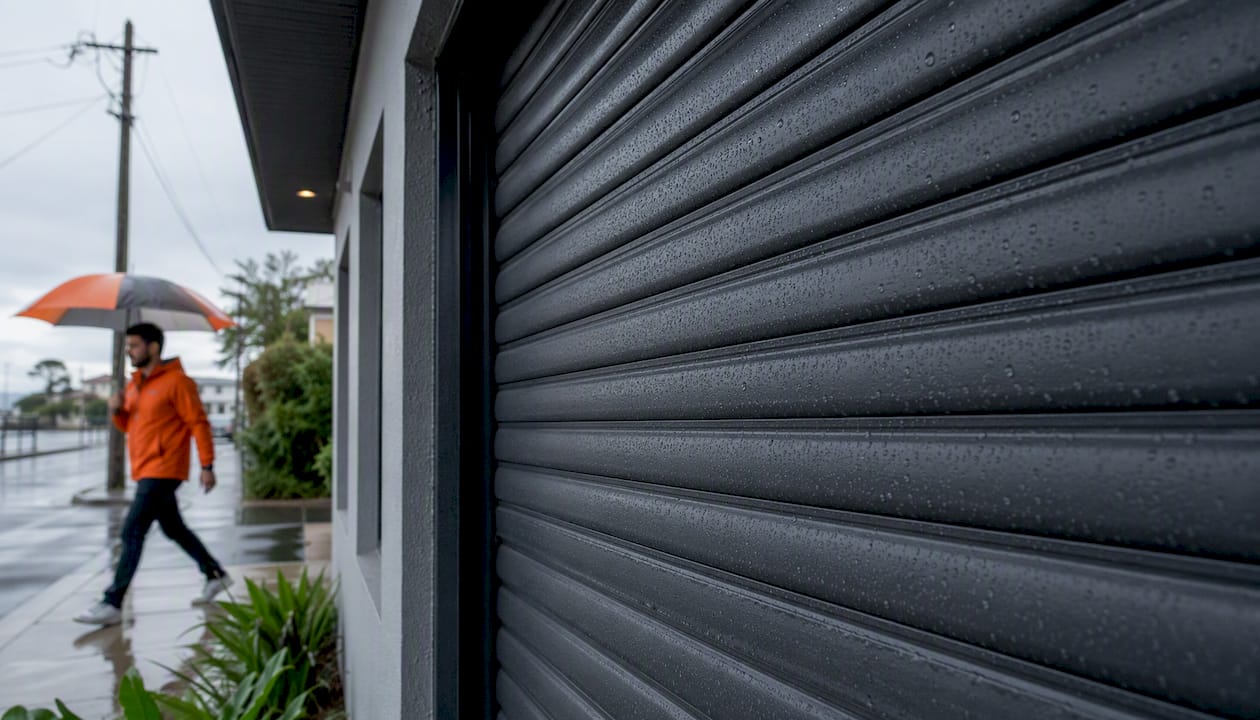
Solid slats provide full blackout and maximum concealment, which suits bedrooms and street-facing rooms. Perforated slats allow filtered daylight while still denying clear sightlines from outside, a useful trade-off for living areas where complete darkness is not wanted. For a broader look at how window treatments can balance privacy, light, and style, the window treatments guide at a-z.house covers complementary approaches worth considering alongside shutters.
| Benefit | Typical performance | Key condition |
|---|---|---|
| Solar heat block | Up to 90% | External shading, correct sizing |
| Noise reduction | 6–12 dB (mid/high frequencies) | Sealed gaps, foam-filled slats |
| Low-frequency noise | Minimal benefit below 300 Hz | Glazing upgrade needed |
| UV and light block | Near 100% (solid slats) | Solid lath profile selected |
| Storm debris protection | High | Wind-lock system specified |
Pro Tip: Pair shutters with well-sealed double glazing to address the low-frequency gap. The glazing handles bass frequencies; the shutter handles mid-to-high. Together, the combination outperforms either product alone.
3. Which shutter types and features matter most for security
Not all roller shutters offer the same level of protection. The material and profile of the slat, the locking configuration, and the installation method all affect how much security value you actually get.
Slat materials and profiles
- Single-skin aluminium: Lightweight and economical, but lower-spec single-skin laths can be cut quickly with power tools. The main value at this level is deterrence rather than sustained resistance.
- Double-walled aluminium: The most effective common residential configuration. The hollow core can be foam-filled for added rigidity and insulation, and the interlocking profile resists impact and prying.
- Steel: Heavier and more resistant to cutting than aluminium, but adds weight to the motor load and is more prone to corrosion without proper coating. Suited to higher-risk frontages.
Security features to specify
- Anti-lift mechanisms built into the bottom rail and guides
- Internal barrel fixing (operating components on the protected side)
- Auto-locks that engage on closure without manual intervention
- Tamper-resistant external fixings
- Deep guide channels (minimum 40 mm engagement on each side)
- Battery backup on motorised units so the shutter closes during a power outage
Rated products and when you need them
For general residential deterrence, a quality double-walled aluminium shutter with the features above is sufficient. Where an insurer or a high-risk site requires certified products, the LPS 1175 standard provides a tiered framework. Entry-level SR1/A1 rating suits most homes; SR3 or SR4 is appropriate for higher-threat scenarios or where an insurer specifically requires it. Each rating step typically adds to cost and requires heavier motors and stronger fixings, so confirm the requirement with your insurer before specifying up.
Pro Tip: For street-facing openings or any location where the shutter mechanism is accessible from outside, specify an internal face-fix installation. This configuration places all operating components on the interior side, making them significantly harder to tamper with.
4. What roller shutters don’t do, and what maintenance they need
A quality roller shutter is a strong deterrent and a meaningful physical barrier, but it is not invulnerable. A lower-spec single-skin shutter can be cut with an angle grinder in under two minutes under controlled conditions. Even higher-rated products are designed to delay rather than permanently prevent a determined, well-resourced attacker. The practical security benefit comes from making a break-in slow, noisy, and conspicuous enough that an opportunistic offender moves on.
Operational reliability matters as much as the specification. A shutter that is correctly specified and used nightly delivers real security value; one with a noisy motor or awkward controls tends to be left open, and a shutter left open provides no deterrent at all. Battery backup and smooth motorisation are not optional extras for security-focused installations.
Maintenance checklist
- Annual inspection of slats, guides, and fixings for damage or corrosion
- Silicone lubrication of guide channels and bottom rail (avoid petroleum-based products)
- Clear debris from guides and head box after storms
- Test manual override every six months
- Test battery backup quarterly and replace the battery on the manufacturer’s schedule
- Check auto-lock engagement on every service visit
One additional consideration for integral garages: confirm that the shutter has a safe manual override accessible from inside. In a power failure or motor fault, an occupant must be able to exit without tools.
5. Australian evidence, insurer notes, and security standards
The Australian Institute of Criminology’s research on offender behaviour confirms that convicted burglars identify shutters as effective deterrents because forced entry becomes noisy, slow, and tool-intensive. The mechanism is straightforward: when a property presents a higher effort-to-reward ratio, opportunistic offenders redirect to easier targets. Shutters raise that ratio visibly and physically.
Statistic: Convicted burglars consistently identify roller shutters and security screens among the physical features most likely to cause them to abandon a target, according to Australian Institute of Criminology research on residential break-in behaviour.
Insurer and standards considerations
Insurers in Australia increasingly treat shutters as hardened frontage measures. Some policies offer premium reductions for certified products; others require evidence of compliance before paying claims related to forced entry. The practical steps for homeowners are:
- Check your Product Disclosure Statement (PDS) for any mention of shutter or barrier requirements.
- Ask your insurer whether LPS 1175 or an equivalent Australian standard certificate is required for a premium reduction.
- Request a test certificate from your installer at the time of installation and keep it with your policy documents.
- In cyclone-rated zones, confirm that the product meets the relevant wind-load requirements under AS/NZS 1170.2.
- In bushfire-prone areas, check BAL requirements with your local council and confirm shutter ember resistance with the supplier.
Pro Tip: Photograph the installed shutter, record the product name and model number, and file the installer’s invoice and any test certificates together. If you ever need to make a claim, this documentation demonstrates that a compliant product was professionally installed.
| Point | Details |
|---|---|
| Deterrence is primary | Shutters work mainly by redirecting opportunistic offenders to easier targets. |
| Specify anti-lift and deep guides | These two features prevent the most common forced-entry methods against shutters. |
| Check your PDS | Some insurers require certified products; confirm before purchase to avoid a gap in cover. |
| Cyclone and BAL zones | Wind-lock systems and ember-resistant ratings are available; confirm local requirements first. |
| Easterndoors | Supplies and installs shutters to the specifications discussed, with certificate provision and ongoing service. |
6. Questions to ask your installer before you sign
Knowing what to look for is only useful if you can translate it into a briefing for an installer. The checklist below gives you the specific questions that separate a well-specified installation from a low-spec one.
Pre-quote checklist
- Measure every opening and note whether it faces the street, a laneway, or a rear yard.
- Identify your BAL rating and cyclone zone if applicable.
- Decide whether noise reduction, blackout, or thermal performance is a priority alongside security.
- Set a realistic budget that accounts for motorisation and battery backup, not just the curtain.
Questions to ask the installer
- What is the slat profile and wall thickness? Is it foam-filled?
- What anti-lift mechanism is included, and how does it engage?
- What motor brand is fitted, and does it include battery backup?
- Are the fixings face-fixed internally, or do any components sit on the exterior?
- Can you provide an LPS 1175 or equivalent test certificate for this product?
- What is the warranty on the motor, the curtain, and the installation labour?
- Do you carry out the installation yourselves, or do you subcontract?
Red flags to watch for
- Guide fixings anchored only into the lintel with no structural wall fixing
- A padlocked bottom rail presented as the sole locking mechanism
- No manual override offered for an integral garage installation
- Inability to provide a product test certificate when asked
Pro Tip: Ask for site photos of completed installations similar to yours. A reputable installer will have them readily available. Also request the warranty in writing before signing, covering both the motor and the curtain separately.
Key takeaways
Roller shutters deliver their strongest security value through deterrence and physical delay, and the specification details, particularly anti-lift mechanisms, deep guides, and internal fixing, determine how much of that value you actually receive.
| Point | Details |
|---|---|
| Deterrence and delay | Shutters work by making entry slow, noisy, and conspicuous, redirecting opportunistic offenders. |
| Anti-lift and deep guides | Specify these two features as non-negotiable; they prevent the most common bypass methods. |
| Noise reduction is frequency-selective | Expect 6–12 dB reduction at mid-to-high frequencies; low-frequency noise requires glazing upgrades. |
| Check insurer requirements | Review your PDS and request LPS 1175 certificates if your insurer requires certified products. |
| Easterndoors | Provides on-site consultation, professional installation, certificate provision, and ongoing service for roller shutters. |
Why specification matters more than brand name
The most common mistake homeowners make when buying roller shutters is treating them as a commodity purchase, comparing headline prices without comparing specifications. Two shutters that look identical on a quote can differ significantly in slat wall thickness, guide depth, anti-lift design, and motor quality. The cheaper one may still provide a deterrent effect, but it will not provide the same physical resistance, and it may not satisfy an insurer’s requirements.
The secondary benefits, particularly thermal performance and noise reduction, follow the same logic. A foam-filled double-walled slat paired with sealed guides and good glazing delivers measurably better acoustic and thermal outcomes than a single-skin slat with loose-fitting guides. The performance gap is real, and it shows up in energy bills and sleep quality over the life of the product.
For homeowners comparing security screens versus roller shutters, the trade-offs are different: screens maintain ventilation and visibility but do not provide blackout, thermal insulation, or weather protection. Shutters and screens serve overlapping but distinct purposes, and many homes benefit from both on different openings. The Easterndoors guide to home security doors covers how to layer perimeter security products effectively.
Easterndoors: professional installation with the specs that matter
Easterndoors supplies, measures, manufactures, and installs security roller shutters for residential properties across Melbourne and surrounding areas, with the specifications this article recommends: double-walled aluminium slats, foam-fill options, anti-lift mechanisms, internal barrel fixing, and motorisation with battery backup. Every installation includes an on-site consultation to assess your specific openings, exposure, and any insurer or BAL requirements before a product is selected.
Certificates, written warranties on both the motor and curtain, and ongoing service and repair are standard parts of the process, not add-ons. If your insurer’s PDS specifies a certified product, bring that document to your consultation and the team can recommend a compliant option from the range. To see available materials and styles, visit the Easterndoors product range, or contact the team directly to book an on-site measure and quote.
Useful sources for further reading
Homeowners who want to verify specifications, check standards, or compare products will find the following sources useful:
- Australian Institute of Criminology — research on residential burglary patterns and offender behaviour in Australia.
- QBCC (Queensland Building and Construction Commission) — licensing requirements for installers and building compliance guidance in Queensland.
- Roller shutters insulation guide, Easterndoors — detailed information on foam-filled slat options and thermal performance for Australian homes.
- Smart roller shutters, Easterndoors — how motorisation, timers, and app control can simulate occupancy and improve real-world security outcomes.
- Roller shutter cost in Australia: 2026 price guide, Easterndoors — ballpark costs and installation timelines to help homeowners compare quotes.
This article provides general information about roller shutter products and security considerations. It is not professional legal, insurance, or building compliance advice. Confirm current standards, BAL requirements, and insurer conditions with the relevant authority or a qualified professional before purchasing.
Recommended
- Solar roller shutters: the Australian homeowner’s guide | Eastern Security Doors
- Roller shutters insulation: the Australian homeowner’s guide | Eastern Security Doors
- Smart roller shutters: security and energy savings for homeowners | Eastern Security Doors
- Roller shutter cost in Australia: 2026 price guide | Eastern Security Doors