For most Australian heritage homes, a custom steel or stainless security door that replicates period timber profiles delivers the best balance of authentic period character and modern protection. The key is welded construction, concealed multi-point locking, and finishes matched to your existing door profiles — not a standard off-the-shelf screen bolted over a Federation entrance.
Here is what that recommendation means in practice:
- Custom steel or stainless steel replicates the moulding depth and proportions of original timber doors more faithfully than aluminium, and resists forced entry at a level that standard aluminium screens cannot match.
- Concealed hardware (hinges, lock barrels, closers) preserves the period look from the street while meeting modern security requirements.
- Welded, unitised construction eliminates the weak points that riveted or site-assembled frames introduce, making on-site disassembly significantly harder.
- RAL or custom colour matching to your existing paintwork means the door reads as part of the original fabric, not an afterthought.
The immediate next step is to book a measure and written quote with a specialist installer who has direct experience with heritage properties. Easterndoors offers custom steel security doors for Melbourne homes, including heritage and conservation-area properties, with a consultation that covers profile matching, finish samples and council documentation support.
Table of Contents
- What heritage styles work best for Australian period homes?
- Which materials and mesh brands give you the best security?
- Can you fit a security door on a heritage-listed home?
- What does a heritage security door cost, and how long does it take?
- How do you pick the right heritage security door and installer?
- What does installation involve, and how do you maintain the door?
- Why Easterndoors is a practical choice for heritage homes
- Key takeaways
- The case for getting both things right
- Book a measure and quote with Easterndoors
- Useful sources
What heritage styles work best for Australian period homes?
Australian heritage homes span roughly a century of residential architecture, and each style carries distinct door proportions and decorative details worth preserving.
Victorian (1840s–1900) entries typically feature tall, narrow openings with six-panel or four-panel door layouts, deep mouldings, and fanlight glazing above. Replicating this in steel means matching the panel depth and the ogee or ovolo profile of the surrounding beading.
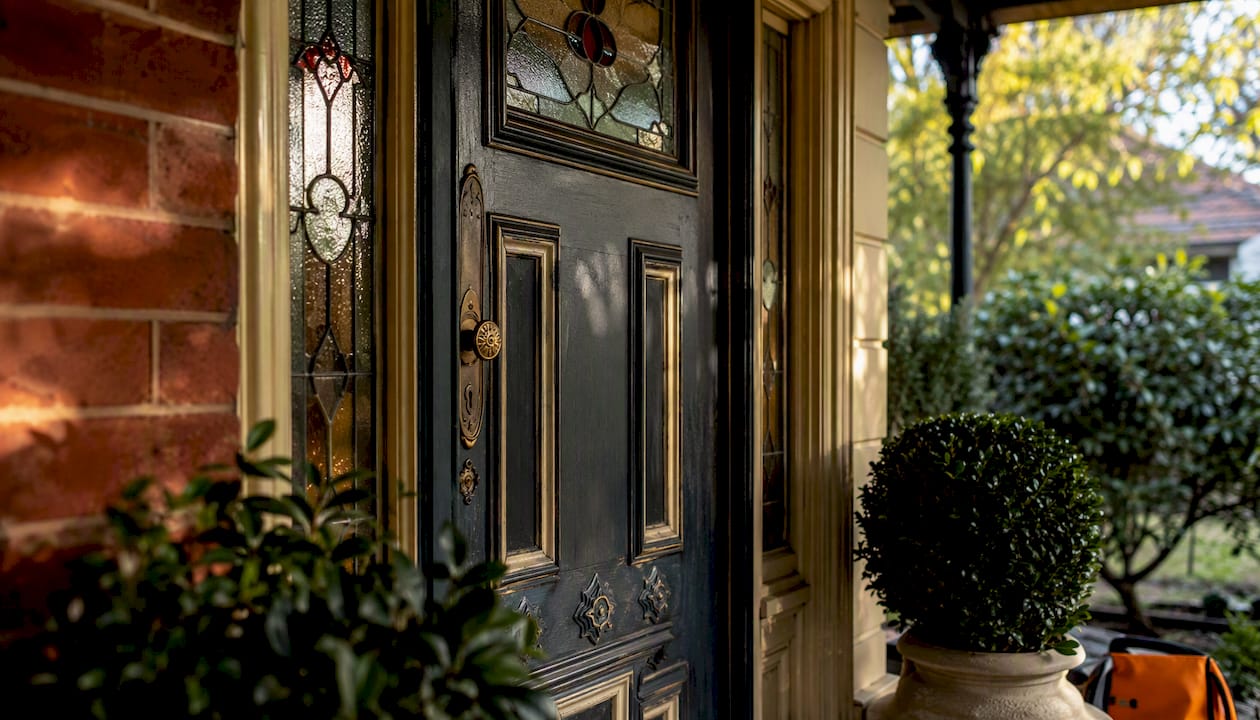
Federation (1890s–1915) homes are the most common heritage type across Melbourne, Sydney and Adelaide. Their doors often combine leadlight or stained-glass sidelights with a solid lower panel and a glazed upper section. A Federation style security door needs to accommodate that glazing arrangement without blocking light or disrupting the symmetry of the entrance.
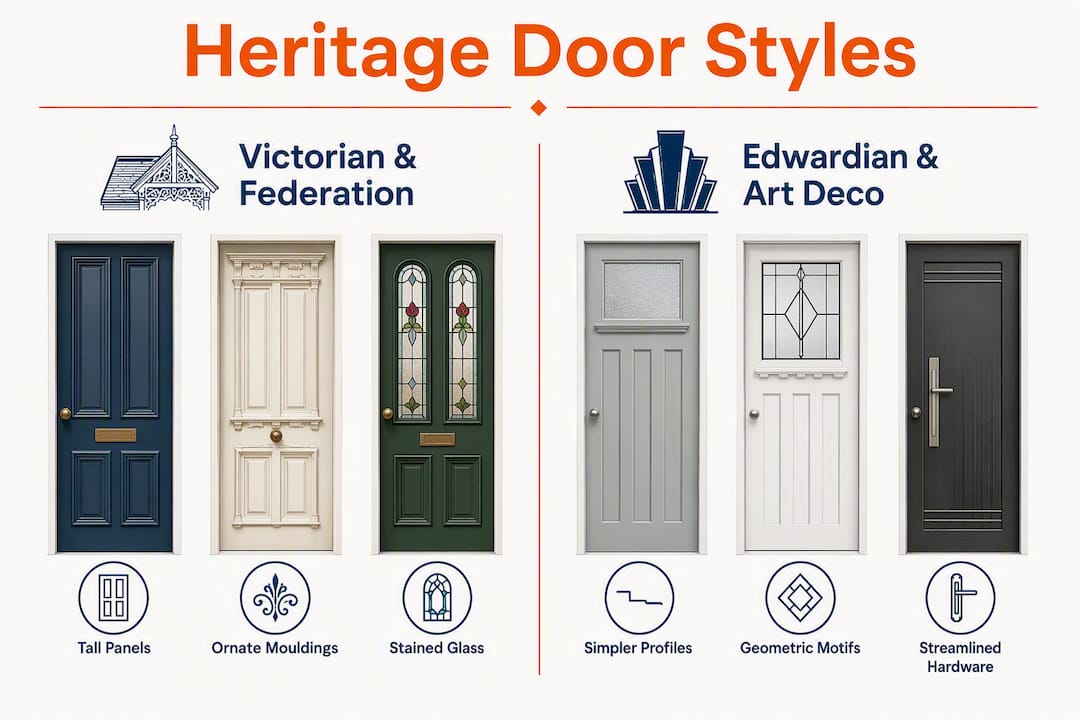
Edwardian (1901–1920) entries share many Federation characteristics but tend toward simpler moulding profiles and wider openings. The challenge here is matching a lighter, less ornate profile in a material that still provides security.
Art Deco (1920s–1940s) doors use geometric motifs, stepped reveals and streamlined hardware. Steel suits Art Deco particularly well because the material’s rigidity allows crisp, angular detailing that timber can struggle to hold over time.
Parkville and Kew-style patterns refer to the ornate cast-iron and wrought-iron decorative screens common in Melbourne’s inner suburbs. These can be replicated in laser-cut or pressed steel panels, often with scrollwork or geometric infill that references the original ironwork of the property.
When preparing for a measure and quote, photograph your existing door from the front and at a 45-degree angle to show moulding depth. Bring a paint chip or note the existing colour code. If you have original hardware (knockers, letterbox plates, numerals), photograph those too — a good installer will work around or replicate them. Choosing a door style that harmonises with your period interior from the outset avoids costly changes after manufacture.
Which materials and mesh brands give you the best security?
Material choice shapes everything: how closely the door replicates your original profiles, how it performs near the coast, and what security rating it can achieve.
Steel, stainless steel and aluminium compared
| Feature | Mild steel | Stainless steel | Aluminium |
|---|---|---|---|
| Best for | Replicating period profiles; maximum forced-entry resistance | Coastal and high-humidity areas; long-term corrosion resistance | Lightweight applications; budget-conscious upgrades |
| Mesh/screen brand | Crimsafe, Prowler Proof, Amplimesh | Crimsafe Ultra, stainless mesh options | Amplimesh, standard aluminium mesh |
| Finish/colour | Powder coat to any RAL; can match timber profiles closely | Powder coat or brushed finish; excellent paint adhesion | Powder coat; limited profile depth |
| Price range | Mid to high | High to premium | Entry to mid |
| Warranty | Frame and finish typically — | Frame typically — | Frame typically 5 years |
| Heritage-listed suitability | High — profile replication is most accurate | High — preferred for coastal heritage properties | Moderate — profile depth is shallower |
| Lead time | 3–6 weeks custom | 4 weeks custom | 2–4 weeks |
Mild steel is the workhorse for heritage replication. Its rigidity allows moulding profiles to be pressed or welded to depths that match original timber, and steel security doors can be specified to meet the proportions conservation officers expect. Stainless steel costs more but is the right call within two kilometres of the coast, where salt air degrades mild steel powder coat over time regardless of maintenance. Aluminium is lighter and cheaper, but its profile depth is shallower, which makes it harder to replicate the deep ogee mouldings of Victorian and Federation doors convincingly.
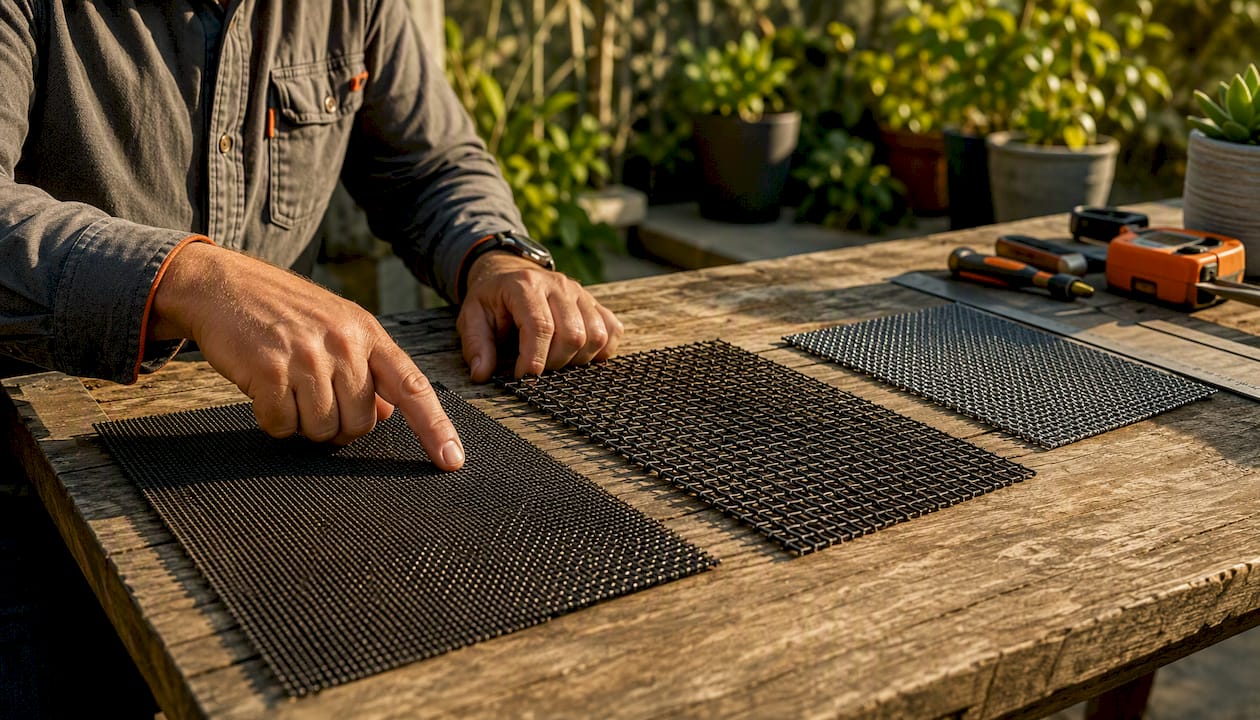
Security mesh: Crimsafe, Prowler Proof and Amplimesh
These three are the most widely specified mesh brands in Australia, and each makes different trade-offs.
- Crimsafe uses a screw-clamp system that locks the mesh into the frame, resisting knife-cut and pull attacks. Its 304-grade stainless steel mesh offers good visibility and airflow. Crimsafe’s testing is conducted to Australian Standard AS 5039, which covers forced-entry resistance, impact and knife-shear.
- Prowler Proof welds the mesh directly to the frame rather than clamping it, which removes the screw-clamp as a potential weak point. The result is a very rigid panel with strong resistance to corner attacks.
- Amplimesh is a heavier-gauge aluminium or stainless mesh that prioritises visibility and airflow. It suits heritage applications where the goal is a fine, unobtrusive screen rather than maximum forced-entry resistance.
Welded, unitised construction — where the frame is assembled and welded before leaving the factory — materially improves resistance to on-site disassembly compared with bolted or site-assembled builds. Ask any installer whether their frames are factory-welded or assembled on site; the answer tells you a great deal about the product’s integrity.
Pro Tip: Ask your installer to show you the test certificate for the mesh brand they propose. AS 5039 compliance is the minimum standard for a security screen door in Australia; some products also carry AS 5040 (installation) and AS 5041 (hinges and locks) certification. A supplier who cannot produce these certificates is selling you a decorative screen, not a security one.
Can you fit a security door on a heritage-listed home?
Yes, but the process requires more preparation than a standard installation. Heritage-listed properties in Australia are regulated at the local council level, and requirements vary between councils and between state heritage registers. The general principle is that any new element must be reversible, must not damage original fabric, and must be sympathetic in appearance.
Steps to navigate council approval
- Confirm your listing status. Check whether your property is on a local heritage overlay (LHO), a state heritage register, or both. The obligations differ. A local overlay typically requires a planning permit for works to the primary facade; a state register listing may require Heritage Victoria (in Victoria) or the relevant state body to be notified.
- Prepare drawings and a specification. Your installer should provide dimensioned drawings showing the door in context, a written specification of materials and finishes, and a colour sample matched to the existing paintwork.
- Request a sample panel. Many conservation officers will approve a door on the basis of a physical sample showing the profile depth, mesh type and finish before manufacture begins. This avoids costly changes after the door is made.
- Submit early. Planning permit applications for heritage works can take four to twelve weeks. Factor this into your project timeline before ordering.
- Keep records. Retain copies of the permit, the approved drawings and the installer’s specification. These are useful if you sell the property or if a future owner wants to modify the door.
Modifications that typically satisfy conservation officers include RAL colour matching to existing paintwork, concealed hinges and closers, mesh that reads as fine and unobtrusive from the street, and profile replication that matches the moulding depth of the original door. Changes that tend to trigger refusal include visible modern hardware in contrasting colours, mesh that obscures the original door entirely, and frames that alter the proportions of the opening.
Pro Tip: Choose an installer who has submitted heritage applications before and can provide examples of approved projects. Submitting a sample finish panel to the conservation officer before manufacture begins is the single most effective way to avoid a refusal or a costly remake.
What does a heritage security door cost, and how long does it take?
Price is driven by material, mesh brand, the complexity of decorative detailing, door size and access conditions. The figures below reflect typical Australian market ranges for custom heritage-style security doors; coastal or difficult-access premiums apply on top.
| Stage | Typical duration |
|---|---|
| Initial enquiry and consultation | A few days |
| Measure and written quote | Several days after consultation |
| Council/heritage approval (if required) | Several weeks |
| Manufacture (custom steel or stainless) | Several weeks after approval |
| Powder coat and finishing | About a week, sometimes concurrent with manufacture |
| Installation (fit-off) | Less than a day to a full day |
A standard custom steel heritage door for a single opening typically costs a few thousand dollars, depending on specifications. Doors with stained-glass integration, ornate laser-cut panels or complex double configurations can be significantly more expensive. Porch enclosures and multi-door projects are priced individually. Stainless steel is generally more expensive than mild steel for equivalent detailing.
A detailed written quote should include:
- Measured dimensions of the opening (width, height, reveal depth)
- Specified material, gauge and mesh brand
- Finish colour (RAL code or matched sample reference)
- Hardware specification (lock brand, hinge type, closer if applicable)
- Installation scope (removal of existing door, frame preparation, fit-off, adjustment)
- Exclusions (painting of surrounding frame, council fees, glazing supply)
- Warranty terms for frame, mesh, finish and hardware separately
How do you pick the right heritage security door and installer?
A well-specified door from a poorly qualified installer is still a risk. Use this checklist when comparing quotes.
Questions to ask every installer
- Are your frames factory-welded or assembled on site?
- Which Australian Standard does your mesh comply with, and can you provide the test certificate?
- What gauge steel (or stainless) do you use for the frame and the infill panels?
- How do you match existing timber profiles — do you use pressed steel, welded beading or a combination?
- What is your warranty on the frame, the mesh, the powder coat and the hardware, and what does each cover?
- Have you completed installations on heritage-listed or conservation-overlay properties? Can you provide references or before-and-after images?
- What documentation can you provide for a council submission?
Red flags to watch for
- A quote that specifies “steel door” without stating gauge, construction method or mesh brand
- No written warranty, or a warranty that covers only “manufacturing defects” without defining them
- No mention of AS 5039 or equivalent testing
- Pressure to proceed without a physical measure (phone-only quotes for custom doors are unreliable)
- No local reviews, no portfolio of completed heritage work, no ABN on the quote
Pro Tip: Request a copy of the installer’s public liability insurance certificate before signing. A reputable installer carries this as standard and will provide it without hesitation.
The Easterndoors buying checklist covers additional questions worth raising during your quote comparison, particularly around lock specification and hinge reinforcement.
What does installation involve, and how do you maintain the door?
The installation process
A professional installation of a custom heritage security door follows these stages:
- Pre-installation measure. The installer visits, takes precise measurements of the opening including reveal depth and any out-of-square conditions, and confirms the specification against the approved drawings.
- Manufacture and finishing. The frame is welded, the infill panels or mesh are fitted, and the door is powder coated to the specified colour. Hardware is fitted in the factory where possible.
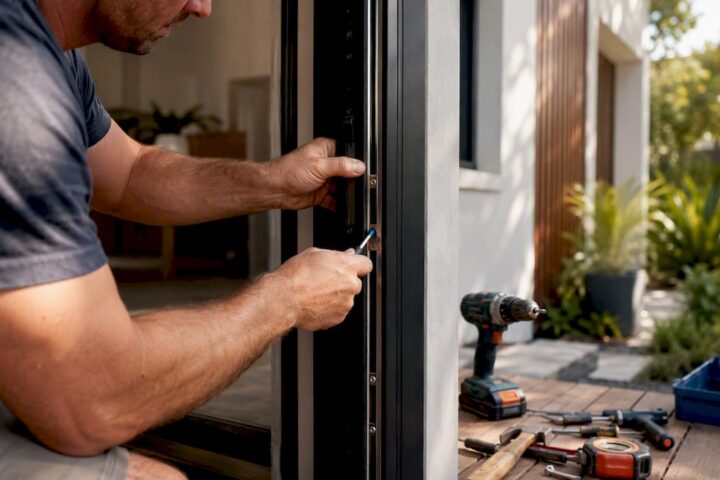
- Fit-off. The installer removes any existing screen or security door, prepares the frame (packing, shimming, or minor masonry work as needed), and hangs the new door. Hinges, locks and closers are adjusted for smooth operation and correct alignment.
- Final check. The installer demonstrates lock operation, checks that the door closes flush with no gaps at the perimeter, and hands over warranty documentation.
Expect the fit-off to take half a day for a single door in a straightforward opening. Difficult access, masonry frames or double configurations take longer. The professional installation guide from Easterndoors outlines what to expect at each stage.
Maintenance schedule
- Every six months: Wipe down the frame and mesh with a damp cloth and mild detergent. Check hinges for play and apply a light lubricant (dry PTFE spray, not oil, which attracts dust).
- Annually: Inspect the powder coat for chips or scratches and touch up with matched paint to prevent corrosion beneath the finish. Check lock alignment and adjust if the door has settled.
- Coastal properties: Rinse the door with fresh water monthly to remove salt deposits. Inspect the powder coat and any exposed metal edges every six months.
- If a problem arises: Contact your installer with a written description and photographs of the fault. A reputable installer will respond within a few business days and schedule a service visit for warranty repairs.
Why Easterndoors is a practical choice for heritage homes
Easterndoors manufactures and installs custom steel, stainless steel and aluminium security doors for residential properties across Melbourne, with direct experience on heritage and conservation-overlay homes. The full material range covers mild steel, 316-grade stainless steel and aluminium, with powder coat finishes matched to existing paintwork and profile options suited to Victorian, Federation and Art Deco entries.
The company’s process includes an in-home consultation, a detailed written quote with full specification, factory-welded construction, and professional fit-off with final adjustments. For heritage applications, Easterndoors can provide drawings and finish samples to support a council submission.
Key capabilities for heritage homeowners:
- Custom profile replication to match existing timber mouldings
- RAL and custom colour matching with physical sample provision
- Experience with heritage overlay and conservation-area submissions
- Factory-welded frames with concealed multi-point locking
- Warranty documentation provided at installation
Key takeaways
A custom steel or stainless security door with welded construction and concealed hardware is the most reliable way to protect a heritage home without compromising its period character.
| Point | Details |
|---|---|
| Material matters most | Steel or stainless steel replicates period profiles most accurately and resists forced entry better than aluminium. |
| Welded construction is non-negotiable | Factory-welded frames resist on-site disassembly; always ask whether the frame is welded or site-assembled. |
| Heritage approval needs preparation | Prepare drawings, a written specification and a physical finish sample before submitting to your council or conservation officer. |
| Get a fully itemised quote | A reliable quote specifies gauge, mesh brand, AS 5039 compliance, finish code and warranty terms for each component separately. |
| Easterndoors for Melbourne heritage homes | Easterndoors manufactures and installs custom steel and stainless security doors with heritage profile matching and council submission support. |
The case for getting both things right
The conventional wisdom in the security door industry tends to split into two camps: the security-first camp that treats aesthetics as a secondary concern, and the heritage-restoration camp that sometimes treats security as an afterthought. Neither position serves a heritage homeowner well.
A door that looks period-correct but uses a lightweight aluminium frame and a standard mesh screen is not a security door in any meaningful sense. Equally, a door that passes every forced-entry test but reads as a modern grille bolted over a Federation entrance does real damage to the property’s character and, in a heritage overlay, may not be approvable at all.
The more useful framing is this: the best heritage security doors are the ones where the security specification and the aesthetic specification are developed together from the first measure, not traded off against each other at the end. That requires an installer who understands both sides of the brief — the gauge and weld quality that the security standard demands, and the profile depth and colour match that the conservation officer expects. Choosing on price alone, or on aesthetics alone, is where most heritage door projects go wrong.
Book a measure and quote with Easterndoors
Easterndoors provides custom-made heritage security doors for Melbourne homeowners, with an in-home consultation, a detailed written quote, and factory-welded manufacture to match your period profiles and finishes. The process starts with a single visit: a specialist measures your opening, reviews your existing door profiles, and provides a written specification with finish samples you can take to a conservation officer if needed.
To get started, request a measure and written quote for your heritage home. Every quote covers material, mesh brand, finish code, hardware specification, installation scope and warranty terms — no vague line items, no surprises after manufacture.
Useful sources
The following sources support the technical claims and product references in this article.
| Source | Relevance |
|---|---|
| Steel Security Doors Melbourne — Easterndoors | Custom steel door capabilities and heritage property experience for Melbourne homes. |
| Everything You Need to Know About Home Security Doors — Easterndoors | Buyer selection criteria, trust signals and quote inclusions. |
| How To Install Home Security Doors — Easterndoors | Professional installation stages and what to expect on fit-off day. |
| Choosing the Right Security Door — Easterndoors | Practical buying checklist and questions to ask installers. |
| Heritage Security Doors for Listed Buildings — MultiSteel | Steel door specification for listed buildings; profile replication and RAL matching for conservation compliance (UK market). |
| Security Screen Doors — Native Sun Home Accents | Unitised welded construction and lifetime structural warranty language (US market). |
| Stained Glass Iron Security Door — First Impression Ironworks | Custom glass integration and bespoke decorative options for heritage entrances (US market). |
| How Do I Choose an Interior Door Style — One Day Doors & Closets | Guidance on matching new door styles to period interiors during renovation. |